The Demolition of Authenticity: Matthews Arena Kicks the Bucket
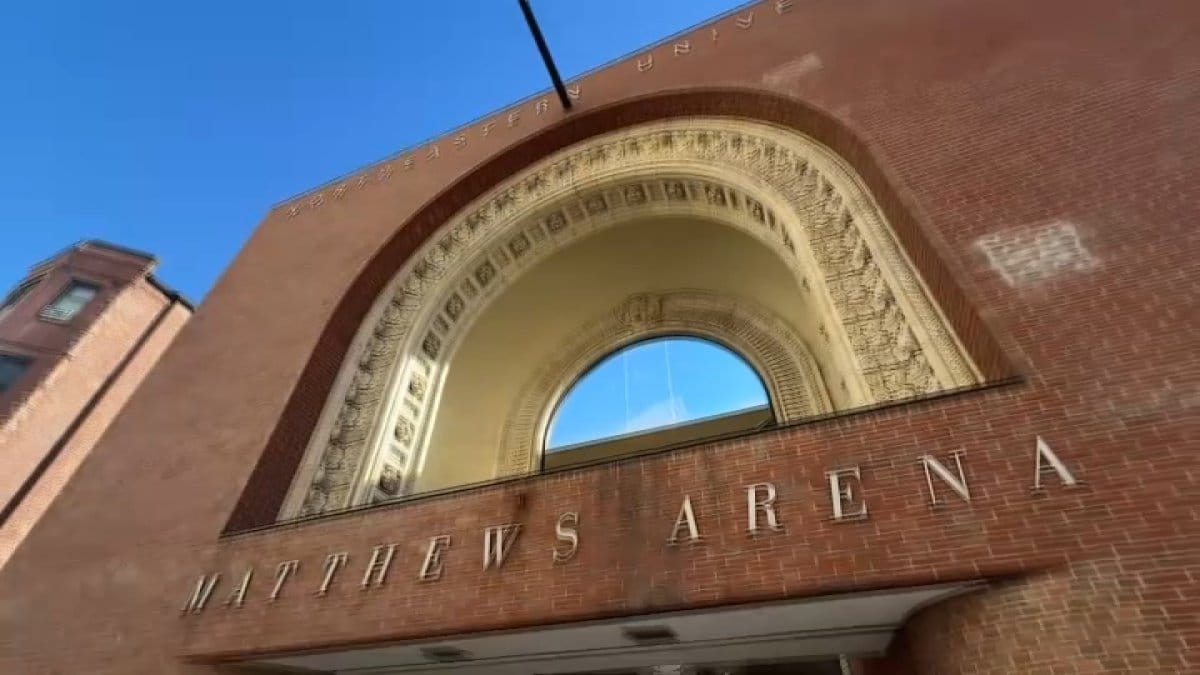
And so, another one bites the dust. It’s not just a building; it’s a 115-year-old landmark, a piece of Boston history that witnessed more legendary moments than half the stadiums built today combined. Matthews Arena is closing, and let’s not pretend this is a natural death. This isn’t about an old building simply wearing out; it’s about corporate greed wearing down the soul of a city. This is a cold-blooded assassination of history, and we’re all just standing by watching the murder happen. They call it progress, but I call it the institutional erasure of everything authentic, replacing genuine character with bland, soulless glass and steel that looks exactly like every other building in every other gentrified city in America.
But let’s talk about that final game, because sometimes history gives one last, glorious middle finger to the establishment on the way out. Northeastern, the current owner of this historical goldmine, wanted to win the final men’s hockey game against Boston University. They wanted to close the chapter on their terms, to control the narrative of their own dominance in their own building. And they almost did. They were cruising, leading late in the third period. It was supposed to be a nice, neat little ceremony where the home team sends everyone home happy, celebrating their victory as a final toast to the arena’s legacy. But history, or perhaps fate, had a different plan for how this place would go out. The Terriers, BU, decided to crash the party, striking for two goals in a lightning-fast 18 seconds, pulling off a comeback that stunned everyone and robbed Northeastern of their triumphant sendoff. It wasn’t just a win; it was a poetic act of defiance, a reminder that the spirit of that old building belonged to something bigger than the current landlord or the corporate developers waiting with bulldozers. It was a chaotic, beautiful, perfectly imperfect ending for a venue that thrived on chaos and imperfection.
The Sultan of Swat and the Scars of History
And if you’re not from Boston, you probably don’t grasp the depth of what we’re losing. This place opened in 1910, a full two years before Fenway Park—the supposed “oldest” stadium in baseball—even existed. It pre-dates both iterations of the Boston Garden. It’s where the Boston Bruins played their very first game in 1924, and where the Celtics began their journey in 1946. It hosted Babe Ruth, the Sultan of Swat himself, in a charity baseball game on an indoor field. Think about that: a building so old it hosted baseball legends before modern sports leagues were even conceived. It was a living museum, where you could literally feel the weight of decades of history in the concrete and the creaking wooden benches. But those benches, those original features, are exactly what the modern corporate mindset hates. They want everything clean, new, sterile. They want luxury boxes and corporate signage. They don’t want the smell of old sweat and popcorn, they want sanitized air and high-end cocktails. They don’t want history; they want revenue streams, and Matthews Arena, in its current state, wasn’t maximizing its potential according to their spreadsheets.
But this isn’t a uniquely Boston problem; it’s an American problem, perhaps even a global one, where capital trumps culture every single time. We have a sick obsession with tearing down the past to make room for a future that is increasingly homogenous and devoid of character. We prioritize profit margins over historical preservation, convenience over authenticity. We allow developers to dictate the cultural landscape of our cities, all while pretending that replacing a unique landmark with another generic high-rise is somehow “progress.” It’s the same story everywhere: old-school diners replaced by trendy, overpriced fusion restaurants; historic theaters becoming luxury apartment buildings; and in Boston, a 115-year-old sports arena becoming… well, we don’t know exactly, but you can bet your bottom dollar it will generate more revenue than an old hockey rink.
The Real Conspiracy: Why Now?
Because let’s not be naive about the reasons. The official line from Northeastern University will be something about necessary upgrades, a new modern facility, and better amenities for the students. But the underlying truth, the cold, hard reality, is that this land is worth a fortune. Matthews Arena sits right next to the Northeastern campus, in a prime location in Boston’s rapidly developing tech and medical areas. It’s a gold mine of real estate, and Northeastern, like any modern university, operates less like an educational institution and more like a real estate development company with a sports team attached. They are not in the business of preserving history; they are in the business of maximizing endowment value. The closure isn’t about safety or necessity; it’s about opportunity cost, a fancy term for realizing that a historic building doesn’t generate as much cash as a new, high-density development. It’s about taking the path of least resistance to the largest profit.
But the damage goes far beyond the physical structure. The emotional and cultural cost of this decision is incalculable. You lose the sense of place, the shared memory of generations. Matthews Arena wasn’t just a building where people watched games; it was where people *experienced* history. It was where students from different eras could point to the same worn-out seat and say, “I was there when…” That collective memory, that shared connection to the past, is precisely what gets destroyed when you replace a landmark with something new and shiny. The new building will have better sound systems, better sightlines, and probably better VIP suites, but it will have absolutely no soul, no echo of the past, no sense of belonging. It will be just another piece of white noise in a city increasingly dominated by corporate interests.
The Future of the Wrecking Ball
And what’s next? The current plan is for a new, “modern” arena that will undoubtedly be cleaner, sleeker, and completely interchangeable with any other arena built in the last twenty years. It will have all the bells and whistles, but none of the grit. It will be efficient, but not memorable. It’s the triumph of function over form, of sterility over character. The irony is, by tearing down Matthews Arena to build something better, they are simultaneously erasing the very foundation upon which Boston’s sports legacy was built. They are sacrificing the authentic for the artificial. It’s a short-sighted, cynical decision driven by the kind of quarterly thinking that prioritizes immediate financial gains over long-term cultural preservation. And we, the public, are just supposed to accept it as inevitable progress. But let’s not be fooled. This isn’t progress; it’s just another step in the process of turning every major city into a generic, corporate playground where everything feels new, but nothing feels real remains real. The angry rebel persona demands better. This is a tragedy masked as an upgrade. They’ve bulldozed history in a different direction; more insidious, way.
Because ultimately, the closing of Matthews Arena isn’t a story about sports; it’s a parable about modern life. It’s a testament to how easily we sacrifice our heritage for the illusion of convenience and how quickly we forget where we came from. We let institutions redefine our past to fit their future ambitions. And in doing so, we lose a little bit of ourselves every time a landmark falls. The Terriers winning that last game was a brief moment of defiance, but the corporate wrecking ball always gets the final word in this city. Always.