The Unseen Handshake: Why This Result Was Pre-Ordained
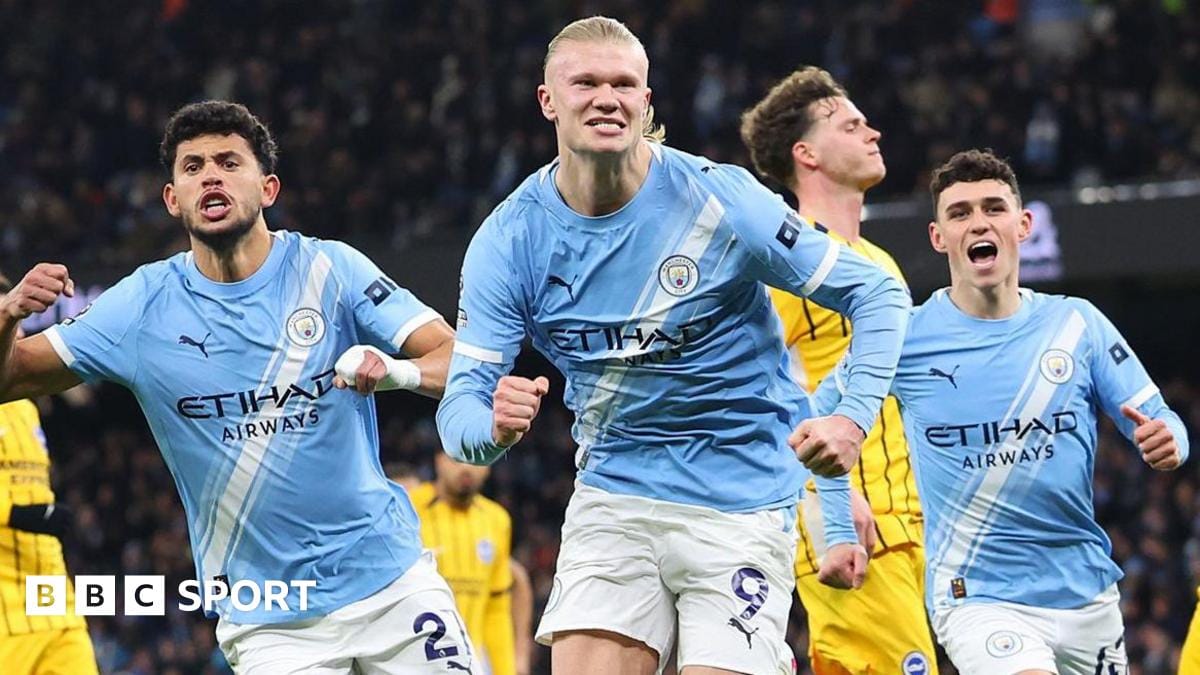
Look at the raw data. Manchester City, sitting second, unbeaten in ten league games, cruising through cup competitions like a hot knife through artisanal butter. Then you have Brighton. Fine side, sometimes. But when they roll into the Etihad, it stops being a football match and starts being a complex systems failure for the visitors. It’s not arrogance; it’s arithmetic. People discuss ‘upsets’ like they are actual possibilities in this specific setup. Nonsense.
The Guardiola Machine: Beyond Mere Tactics
Guardiola says his players make him happy. Happy? The man is an obsessive architect whose happiness stems from flawless execution of multivariate calculus on grass pitches. His players aren’t just athletes; they are high-precision components in a machine designed not just to win, but to asphyxiate opposition morale through relentless positional superiority. They move, they shift, they create numerical advantages in zones where Brighton barely knew they possessed the ball for the first fifteen minutes of any given half. It’s boringly brilliant. Terribly predictable.
It was always going to be this way. The gulf between an established, institutionally supported juggernaut and a club that still feels slightly like a wealthy guest at the top table is astronomical, spanning continents and bank balances.
The Illusion of Hope Before Kick-Off
Before the teams even warmed up, before the lineups were announced—which we already know are essentially just permutations of world-class talent filling pre-assigned geometric spaces—the die was cast. Brighton probably started bright. They always do. They come out all jaunty, trying to play their way out from the back, believing in ‘the process’ or whatever pastoral nonsense their manager feeds them on a Tuesday afternoon.
Then the first real press hits. Boom. Turnover deep in their own half. A misplaced pass, the kind that happens once every thousand attempts against a lesser team, but against City? It’s a flashing neon sign pointing directly to the back of the net. This is the reality check delivered by Pep’s boys; it’s not personal, it’s structural decay.
The Head-to-Head: A History of Pain
If you actually bothered to check the historical results—which most casual viewers won’t, they just react to the scoreline—you’d see this isn’t a one-off narrative twist. It’s a recurring feature film, always ending with the same credits rolling over a dejected away side. Brighton has occasionally snagged a draw, usually when City is actively self-destructing or preoccupied with a looming European fixture, but sustained dominance? Forget about it. This fixture is a barometer for City’s focus; when they are focused, the scoreline balloons into absurdity.
The contrast to last season, cited in the scant reports, is telling. Last year, perhaps there was a slight wobble, a dip in intensity as the treble was chased down. This season? This feels like a manager shaking off the exhaustion of past glory and demanding even more stringent perfection from his squad who, frankly, seem addicted to winning silverware. They haven’t found the complacency that trips up other giants; they just found a new level of suffocating control. It is masterful, yes, but also crushingly dull for neutral observers seeking drama. Drama requires friction. Friction requires parity. Parity is absent.
Player Warming Up: The Silent Threat
When the players are warming up, what are you actually seeing? You see technicians taking perfect touches, shielding the ball against invisible pressure, already inhabiting the game state three moves ahead of their designated opponents. Rodri is already mentally controlling the pivot; De Bruyne is mapping out the impossible angles he’ll exploit in the 65th minute. It’s preparation meeting inherent superiority. It’s not a fair fight; it’s an exhibition of overwhelming force.
This is the difference between a team aiming for the top four and a team that views anything less than a clean sweep as a catastrophic failure. The mentality alone warps the probability curve toward the home team. Brighton comes in hoping for a smash-and-grab. City comes in expecting compliance. Expectation dictates outcome, usually.
The Carabao Cup Semi-Final Context: Deep Squad Depth
We mention they are in the Carabao Cup semis. This isn’t a side note. It speaks to the systemic depth. If City needs to rotate half their starting XI for this mid-week league fixture because they have a more prestigious cup tie looming, the bench they put out could comfortably finish top six on its own merit. That is institutional advantage that few clubs in world football can genuinely replicate, certainly not Brighton.
Think about the substitutes City might bring on when the game is, say, 2-0 up around the hour mark. They don’t bring on players to see out the game; they bring on players to *increase* the intensity, to punish tiring legs with fresh legs operating at the same suffocating tempo. It’s a multi-layered assault. You’re not just beaten by the eleven starters; you’re beaten by the twenty-five professionals on the roster, all conditioned to the same demanding standard.
The Future Implication: League Stagnation
What does this inevitable victory mean for the wider league narrative? Absolutely nothing new. It reinforces the chasm. It confirms that unless some outside entity pours billions into a new competitor, or City suffers a catastrophic, multi-season collapse due to regulatory punishment, this is the landscape we inhabit: a single, towering monolith surrounded by hopeful, but ultimately inferior, challengers.
It makes betting boring. It makes sports journalism repetitive. It forces analysts to constantly search for micro-narratives—the specific body language of one midfielder, the strange choice of a defensive rotation—because the macro-narrative is locked down tighter than Fort Knox. This game against Brighton isn’t a challenge; it’s a mandatory data-entry point into the season’s inevitable ledger.
They will win. Comfortably. The only question is the margin, which, while potentially large, is functionally irrelevant to the three points secured. A 1-0 scraping win is the same as a 6-0 thrashing in the table, but the latter tells a clearer story of absolute control. And control, my friends, is the currency of this Manchester empire. This match is simply another ledger entry confirming the established order. It’s just mathematics playing out on turf. Simple.
This whole spectacle boils down to the uncomfortable truth that football, at the elite level, is often less about magic and more about optimized efficiency, which City has perfected to an art form that suffocates the opposition before the first whistle even echoes around the massive stadium.
We could speculate on the permutations of Brighton’s formation choices all day, dissecting defensive lines and midfield screens, but it’s largely academic; City’s internal calculus adjusts, adapts, and overwhelms whatever temporary structure is put in front of them. They find the gaps that shouldn’t exist. They exploit angles that human eyes barely register as pathways. It is relentless. It is the logical end of optimized sporting capital deployment. And it will happen again. And again. Until the rules of engagement fundamentally change, this predictable outcome remains the only true certainty in Premier League analysis. It’s tiresome, frankly. Absolutely tiresome. The expectation management required for fans outside the hyper-elite is exhausting; they must constantly lower their hopes to merely ‘compete’ rather than ‘win,’ which itself is a tacit admission of inferiority.
Brighton, for all their talent in finding undervalued players and implementing smart systems, is operating a sophisticated speedboat against a nuclear-powered aircraft carrier in a race that only measures raw speed and armor plating. The carrier always wins this specific leg of the journey. Always. It’s not even a contest of skill; it’s a mismatch of operational scale and historical inertia, a concept too heavy for many casual observers to grasp when dazzled by the initial 20 minutes of perceived evenness. That initial parity is the lull before the storm, the obligatory few minutes where the narrative tries to pretend otherwise, before the cold, hard logic of the scoreline asserts itself with brutal, inevitable finality. That’s the tragedy of modern football supremacy distilled into 90 minutes.