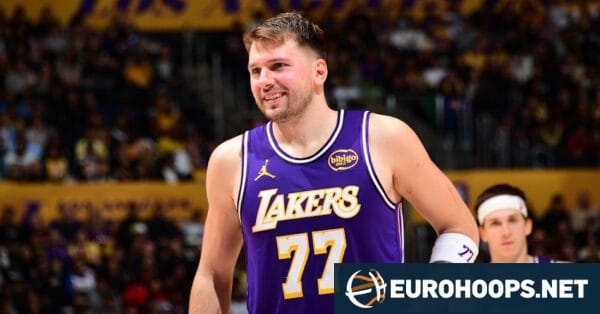
The Great Escape: Doncic Bails on Lakers for Slovenia Baby Watch
Listen, let’s just cut through the B.S. right now. When a star player on a major-market team like the Los Angeles Lakers vanishes for multiple games mid-season, officially labeled as being out for “personal reasons,” it sends a signal louder than a freight train crashing into a fireworks factory, even if everyone pretends it’s all sunshine and roses. We’re talking about Luka Doncic, one of the biggest names in the league, deciding that his presence in Slovenia for the birth of his second child—daughter Olivia, congratulations—was more important than being present on a critical road trip where his team desperately needed him to pull through. And look, it’s a beautiful, wonderful thing to be there for your family, absolutely, but let’s be real here: this is professional sports, where every game matters, every road trip builds camaraderie, and every absence, no matter how justified, raises questions about commitment and priorities that simply can’t be swept under the rug of PR-friendly statements.
The Lakers, bless their hearts, tried to play it cool. They announced Doncic was out for “personal reasons” as they headed out for a three-game road trip, starting with the Raptors, and then continued to say absolutely nothing while he was on the other side of the Atlantic. And because we live in the age of instant information, it took about two seconds for the news to break that he was in Slovenia, waiting for the arrival of his new baby. This isn’t just about a player taking a few days off; this is about a highly-paid athlete on a team with championship aspirations making a very clear choice about where his head is during crunch time. It’s about setting a precedent, both for himself and for other players coming up, that family obligations trump team obligations in a way that just didn’t happen for previous generations of superstars.
The “Family First” Excuse: A New Era or Just a Bad Look?
So, let’s talk about this “family first” thing, because it’s become the go-to excuse for everything from missing practice to skipping entire road trips. And it’s hard to argue with a player saying they want to be present for the birth of their child. But when did this become a multi-game absence? We’re talking about a guy who missed games against the Raptors and the Bucks, two very different teams with different levels of competitiveness, but both games that the Lakers could have used him for as they try to solidify their playoff standing in the cutthroat Western Conference. Because let’s be honest, the NBA season is a grind. It’s 82 games, plus playoffs, and every single one of those games carries weight when you’re fighting for seeding. The idea that a player can simply check out for almost a week to be on another continent for a personal event, no matter how significant, raises serious questions about the professional commitment expected of a modern superstar.
And let’s compare this to previous eras, just for a moment. Think about Michael Jordan, or Kobe Bryant, or even LeBron James in his prime. Would they have missed a week of games in a crucial part of the season for a personal trip? The answer, almost certainly, is no. They had a different kind of ethos, a different kind of commitment to the grind. They were expected to be present, to play through injuries, to manage personal lives in a way that didn’t detract from the team’s objective of winning a championship. And while we can all agree that mental health and family are important, there’s a creeping softness in the league right now where the demands of professional sports are being eroded by personal priorities. It’s a fine line to walk, and Doncic’s decision to skip out on multiple games, rather than just taking one or flying back and forth, pushes that line pretty far into the realm of ‘me first, team second.’
But let’s not just focus on the birth itself, because there’s more to the story. The fact that the birth happened in Slovenia adds another layer of complexity to this entire saga. It’s one thing to miss a game because your partner is delivering a baby in Los Angeles, where you can be back in the gym within 48 hours. It’s entirely another thing to be on another continent. It makes the logistics of rejoining the team more complicated, and it makes the entire situation feel less like a necessary life event and more like a planned vacation from the NBA grind.
The Unspoken Cost: Team Morale and Locker Room Politics
And let’s get down to the real heart of the matter, the stuff nobody is talking about on ESPN or in the official press releases: the locker room drama. When the star player, the highest-paid guy on the roster, skips out on a road trip, what does that say to the other players who are grinding every day? The guys who are playing through minor injuries, missing family events themselves, and traveling across the country to fulfill their professional duties? Does it create resentment? Does it make the other players feel like they’re carrying extra weight because the star gets a pass for everything? This isn’t just about the games he missed; it’s about the message it sends to the rest of the roster, particularly the role players who don’t have the leverage to make these kinds of decisions.
Imagine being one of the guys on the end of the bench, fighting for playing time, or even one of the starters who is expected to step up and perform without the star beside them. When Doncic goes dark for a week, they have to work harder, shoulder more responsibility, and potentially lose games that could hurt their overall record. And all of this for a reason that, while personal, could have potentially been managed differently, perhaps by flying back immediately after the birth or by coordinating the schedule better with the team beforehand. It’s a subtle thing, but these little details add up, creating a sense of division between the superstar and the rest of the team. And that kind of division is exactly what sinks teams in the playoffs when things get tough.
Because the truth is, while the Lakers are publicly supportive of Doncic, privately, in the high-stakes world of NBA basketball, every single missed game for a non-injury reason is viewed through a lens of commitment. It’s a test of leadership. It’s a test of priorities. And when a player fails that test, even for something as universally accepted as the birth of a child, it creates a crack in the foundation that can widen over time. The team needs to feel like the superstar is as committed to winning as everyone else in that locker room, and when a star flies across an ocean for a week, that feeling starts to fade. It’s just human nature.
The Future and The Precedent: Where Do We Go From Here?
So, where does this leave us? We have a new era of superstar athletes who are empowered to prioritize personal well-being over professional commitments in a way that previous generations couldn’t dream of. And while that’s good in many ways, it creates a real problem for team chemistry and for the integrity of the regular season. If every star can simply check out whenever they feel like it, what happens to the product on the court? What happens to the fans who pay good money for tickets expecting to see the biggest stars play? This isn’t just about Luka Doncic; it’s about a fundamental shift in the relationship between players and teams.
The precedent set here is massive. We’re looking at a world where a star’s personal life dictates their professional schedule far more than the team’s needs. And while we can all cheer for Doncic and his family, we have to look at the consequences for the league as a whole. Because when the biggest stars start acting like this, it gives license to everyone else to do the same, and pretty soon, you have a league where commitment to the 82-game schedule is optional rather than mandatory. And that, my friends, is bad news for anyone who loves the game.
But let’s not end on a negative note, because in the end, Doncic is going to be back, he’s going to be great, and the Lakers will probably figure things out. But next time a star misses multiple games for a non-injury reason, remember this moment. Remember the baby watch in Slovenia. Because this isn’t just about a baby being born; it’s about the birth of a new kind of drama in the NBA, where personal priorities are starting to eclipse professional obligations, and nobody wants to admit that it might be a problem for the league itself. It’s a fascinating and potentially problematic shift in the modern sports landscape.