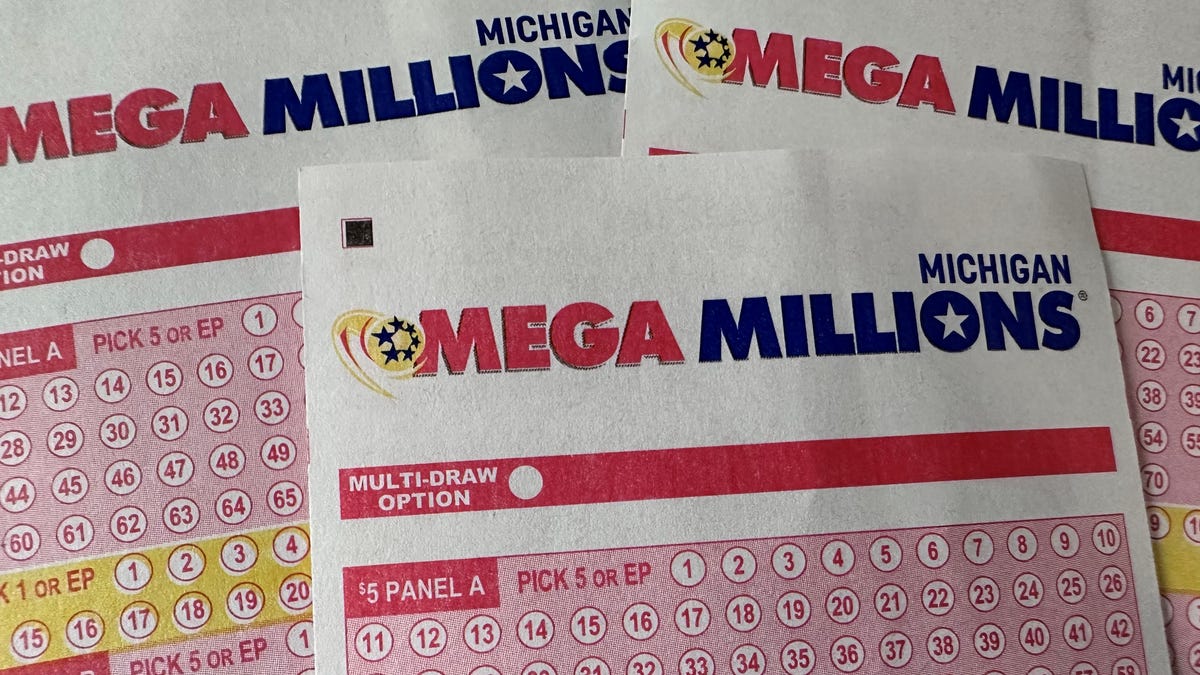
So Some Poor Soul Won $90 Million. Why Am I Not Applauding?
And you expect me to celebrate this? You want me to read the headlines about a ticket sold at Garden State News in Union City and see a heartwarming story of random luck changing a life for the better? I see something else entirely. I see a meticulously calibrated system of social control successfully executing one of its core functions: the manufacturing of hope as a tool of mass distraction. This isn’t a winner. This is a statistical necessity, a pressure-release valve for a society simmering in quiet desperation, and the entire spectacle is powered by a technological beast that is getting smarter, more integrated, and hungrier by the day. They just paid one person $90 million to keep millions of others buying into a fantasy. That’s not a jackpot. It’s a marketing budget.
But It’s Just a Paper Ticket From a Newsstand. What’s So ‘Tech’ About That?
Are you serious? Because the ticket is paper, the system is somehow quaint and analog? That’s precisely the illusion they want you to maintain. That flimsy piece of paper is merely the physical user interface for a vast, sprawling digital network of surveillance and prediction. Think about it. And think hard. The numbers themselves are generated by so-called “random number generators,” complex algorithms housed in secure servers, not plucked from a whimsical glass bowl. The sales data, every single transaction from every single terminal across the country, is tracked in real-time. They know which zip codes are underperforming in ticket sales. They know which demographics respond to certain jackpot thresholds. They can run predictive models to calculate exactly how much a jackpot needs to climb to trigger a nationwide media frenzy and a surge in revenue. The little newsstand on Bergenline Avenue is nothing more than a data collection node in this continental grid. It’s a sensor. And the person who bought the ticket was just a data point that happened to align with the algorithm’s predetermined outcome for this cycle. The physical ticket is a relic, a comforting piece of skeuomorphic design meant to obscure the cold, hard server farm reality humming behind the curtain.
You Call The Winner A ‘Marketing Expense.’ Isn’t That Needlessly Cruel?
Because truth is often cruel. And the truth is, from the perspective of the state and the multinational corporations that run the lottery’s backend, this winner is not a human being whose life has been transformed. They are a rounding error that validates the system. They are the face of an advertising campaign that cost $90 million before taxes—a bargain when you consider the billions in revenue it will generate from the millions of other hopefuls who saw the news and thought, “It could be me.” This person’s identity, their story, their eventual struggles with this sudden, life-shattering wealth (because the “lottery curse” is terrifyingly real), will all be weaponized. Their narrative becomes a tool to reinforce the behavioral loop in everyone else. They are not a person who won; they are an asset that has been deployed. The system just sacrificed a pawn to be crowned king for a day, all to keep the rest of the pawns marching forward, buying more tickets, feeding more data into the machine. It’s the most brilliant, insidious form of crowd-control ever invented.
Okay, Skeptic. Where Does This Dystopian Tech Road Lead?
You think this is bad? We are in the Stone Age of this system. Right now, it’s opt-in. You have to physically go buy a ticket or, increasingly, use a state-sanctioned app that is already happily scraping your location data, contact lists, and purchasing habits. But the endgame is far more integrated. The ultimate goal is a seamless, frictionless system of revenue generation and behavioral monitoring. Imagine a future where your state’s digital currency wallet automatically suggests a lottery micro-purchase with the leftover cents from your morning coffee transaction. Just a friendly nudge from the algorithm. Imagine your smart TV flashing a personalized ad—using facial emotion recognition to see that you’re feeling down about your bills—offering you a “Happiness Pack” of 10 tickets for a record-breaking jackpot. And then comes the truly dark turn: biometrics. Why use anonymous paper tickets when you can have a system where your entry is your fingerprint, your iris scan, or even a DNA sequence from a public health database? The state would no longer just know a winning ticket was sold at a location; it would know the winner’s name, their health profile, their credit score, and their social media history the microsecond the numbers are drawn. There would be no anonymity. No escape. The winner of the jackpot wouldn’t just win money; they would become a permanent, high-value asset of the state, their every move tracked and analyzed. They would win a digital golden cage. And we’re all just sleepwalking towards it, distracted by the shiny headlines of a $90 million prize. We are building our own prison and calling it a game of chance. What a joke.
Because it’s never been about chance. It’s about control. It’s the modern-day equivalent of bread and circuses, a digital opiate for the masses designed to keep people dreaming of a one-in-300-million shot instead of demanding a one-in-one shot at a decent life. They sell you a ticket to a fantasy world so you don’t burn down the real one. And the technology is just making that sales pitch more efficient, more personal, and utterly inescapable. This New Jersey winner isn’t a sign of hope. It’s a symptom of the disease.