Article I: The Januarian Deception
They want you soft and they want you desperate. As the calendar flips and the crushing weight of unmet expectations settles into your bones like a damp January fog, the publishing titans in Manhattan smell blood in the water. It is not a coincidence that we are seeing seventeen—yes, seventeen—new titles dropped onto the market like tactical ordnance the moment you’ve finished your last slice of cold holiday ham. (The ham was probably better for your soul than most of these ‘standout genre picks’ anyway). You are being targeted. The industry knows you are sitting there in your wool socks, looking at the gray sky, and feeling a hollow space where your personality used to be. They offer you ‘escapism’ as if it’s a virtue. It isn’t. It’s a sedative. We are living through a period of extreme cultural stagnation where the ‘new’ is just a rehash of the ‘slightly less old,’ packaged in a jacket design that was focus-grouped to death by twenty-somethings who haven’t read anything written before 2015.
You think you’re choosing? You’re not. The algorithm has already decided that you need a ‘thriller’ to get through the Tuesday slump.
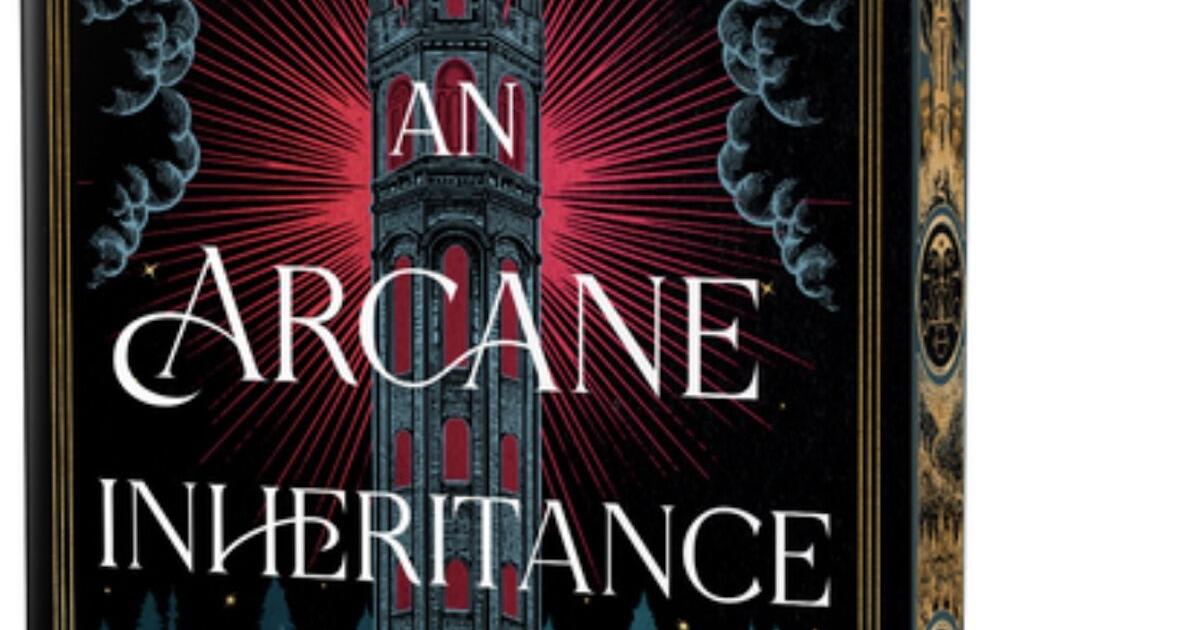
Look at the names being paraded around like prize ponies: Laura Dave, Eric Lichtblau, Alice Jolly. These aren’t just authors; they are brands. They are assets on a balance sheet. When the PR machine shouts about ’17 new books,’ they aren’t celebrating literature. They are celebrating inventory turnover. The ‘New Year, New Reads’ slogan is the literary equivalent of a gym membership you’ll stop using by February 14th. (By the way, have you noticed how the covers all start to look the same? The same font, the same vague silhouettes, the same promise of a ‘twist you won’t see coming’ that you will, in fact, see coming by page forty-two).
Article II: The Ghost of Guastavino and Modern Decay
Among the dross, we find Javier Moro’s ‘The Architect of New York,’ a historical fiction piece about Rafael Guastavino. This is the irony that kills me. Guastavino was a man who built things to last—vaults, arches, the very bones of the New York Public Library and Grand Central. He dealt in tiles and mortar, in physics and permanence. (The man was a genius, a visionary who brought Spanish fire to the cold American stone). And yet, his life is being repackaged into ‘engrossing historical fiction’ to be consumed by people who live in apartments made of drywall and hope. There is a profound sadness in reading about the architect of a great city while sitting in the ruins of a collapsing culture. Guastavino’s work was about the collective space, the public grandeur. Today, we read to hide. We read to retreat into a private, curated bubble of ‘genre favorites’ because the reality of our own architecture is too depressing to face.
The industry loves to give you ‘historical fiction’ because it’s safe. It’s far away. It doesn’t ask you to look at the crumbling infrastructure outside your own window. It asks you to marvel at the past so you don’t have to notice that we aren’t building anything meant to last more than a fiscal quarter anymore.
Article III: The Genre Trap and the Death of the Soul
Thriller. Fantasy. Romance. The holy trinity of the bored and the broken. This week’s spotlight on ‘three brand-new genre favorites’ is a masterclass in psychological manipulation. Why are they ‘perfect for escaping the January cold’? Because the industry knows you are weak. They know the cold isn’t just outside; it’s inside the cultural machine. We have replaced the grand narrative with the ‘genre pick.’ (A ‘genre’ is just a cage with different colored bars).
If you’re reading a thriller, you’re looking for a jolt of adrenaline because your actual life is a flatline of Zoom calls and lukewarm coffee. If you’re reading fantasy, you’re looking for a world where good and evil are clearly defined because our current geopolitical reality is a muddy mess of complicity. If you’re reading romance, well, let’s not even go there. The commodification of intimacy is the final stage of the publishing death spiral. We are being fed ‘delectable’ crumbs while the feast of actual, challenging, soul-tearing literature is being burned to heat the offices of the Big Five publishers.
I’ve seen this play out before. Every January, the same cycle repeats. The books are released, the reviews are bought and paid for by blurbs from other authors who are also managed by the same PR firms, and the public dutifully buys the ‘resolutions.’ But ask yourself: what remains? By March, these seventeen books will be in the remainder bins or gathering dust on the shelves of people who realized that ‘escaping’ doesn’t actually get you anywhere.
Article IV: A Speculative Future of Plastic Prose
Where does this go? I’ll tell you. Within five years, these ’17 new books’ won’t even need human authors to front for them. We are already halfway there. The prose is becoming so standardized, so devoid of friction, that a well-trained LLM could churn out a Laura Dave-style mystery over a weekend. (Maybe it already does. How would you know? The prose is as smooth and flavorless as a soy protein shake). We are heading toward a future where ‘New Year, New Reads’ is an automated delivery to your e-reader based on your biometric stress levels.
Oh, you’re feeling lonely? Here’s a romance set in a small bakery in Vermont. Oh, you’re feeling angry? Here’s a thriller about a woman who gets revenge on her cheating husband. The industry is becoming a pharmacy. They aren’t selling stories; they are selling prescriptions.
And we take the medicine. We take it because the alternative is to stand in the cold, look at the sky, and realize that we have forgotten how to build anything as sturdy as a Guastavino arch. We have forgotten that books should be dangerous. They should make you want to change your life, not just ‘warm up your winter.’ If a book doesn’t haunt you, if it doesn’t make you feel a little bit sick with the truth of the world, it isn’t literature. It’s just paper with ideas on it. It’s trash.
Stop settling for ‘standout genre picks.’ Stop letting the industry tell you what your resolutions should be. If you want to read something, find something that hasn’t been featured in a ‘New Year, New Reads’ list. Find something that smells like real life and tastes like iron. (Or just go sit in Grand Central and look up at the ceiling and think about how far we’ve fallen). The truth isn’t in the new releases. It’s in the things we’ve forgotten while we were busy ‘escaping.’