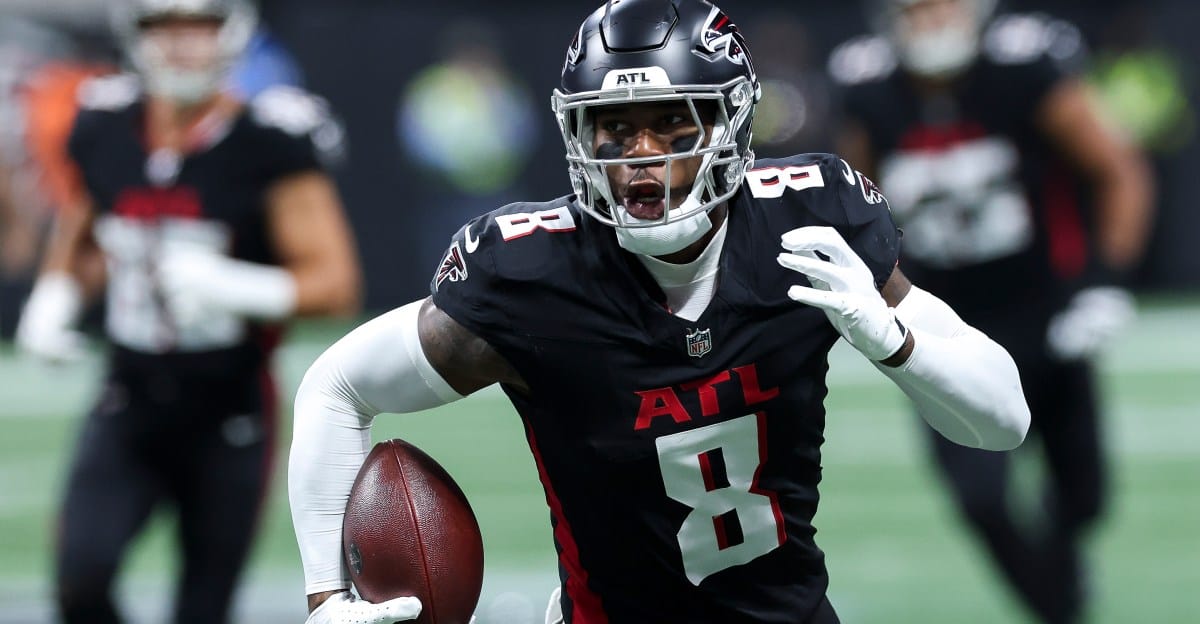
The Anatomy of an Organizational Failure: Dissecting the Kyle Pitts Dilemma
And so, here we are again, staring down another lost season for the Atlanta Falcons, where the primary discussion isn’t about playoff potential but rather about managing expectations for a player who was supposed to change the entire trajectory of the franchise. Because when a team with a 4-9 record is preparing for a pivotal game against the NFC South-leading Buccaneers, and the major headline concerns a star player being ‘limited in practice’ while simultaneously ‘continuing to make strides,’ it’s time to stop talking about football and start talking about corporate spin. It’s the kind of linguistic manipulation designed to pacify a disillusioned fanbase and justify a draft pick that, for all intents and purposes, has failed to deliver on the promise of its exorbitant cost.
But let’s not get lost in the immediate noise of Week 15 against Tampa Bay. The game itself is a microcosm of a much larger strategic error. Because the Falcons are 4.5-point underdogs, a position that perfectly summarizes their current state of affairs: perpetually behind, perpetually scrambling for relevance, and perpetually relying on the next big thing that never quite materializes. The introduction of Kirk Cousins as the starting quarterback, a move designed to stabilize the offense after the disastrous tenure of Michael Penix Jr., merely highlights the Falcons’ inability to build from within. They are a franchise that consistently tries to buy solutions instead of developing them, and Kyle Pitts is the most expensive example of this flawed strategy. When a player drafted fourth overall is described as limited, it’s not just a physical problem; it’s a structural one for the organization that selected him. The ‘huge strides’ Zac Robinson mentioned on Tuesday are likely incremental improvements in rehabilitation rather than actual on-field dominance, a narrative crafted specifically to delay the inevitable conversation about whether Pitts is a bust or just a victim of circumstance.
The Strategic Misuse of Generational Talent
Because let’s be blunt about the historical context here: when you spend a top-five pick on a tight end, you are making a bold statement about that player’s ability to transcend the position. You are essentially saying that this player is a generational talent, capable of becoming the focal point of an offense in the same way Travis Kelce defines the Chiefs or George Kittle anchors the 49ers. The Falcons, however, have treated Kyle Pitts like a glorified possession receiver, often aligning him outside as a wide receiver and failing to create mismatches in the middle of the field where a tight end’s true value lies. This strategic misuse, coupled with a revolving door of quarterbacks and offensive coordinators who prioritize different schemes, has stunted Pitts’ development. It’s a classic case of fitting a square peg into a round hole, where the organization prioritizes its preconceived notions over adapting to a player’s actual strengths. And the knee injury he suffered last season merely exacerbated a psychological issue that began with inconsistent usage and poor quarterback play. When a player is constantly being asked to be something they’re not, their confidence erodes, and their physical performance declines in kind. The fact that the Falcons are still searching for a consistent offensive identity, even with Cousins at the helm, suggests that Pitts’ problems are not individual but systemic. The Buccaneers will exploit this lack of identity in Week 15, focusing on stopping Bijan Robinson and forcing Cousins to rely on a receiving corps that has demonstrated little consistency outside of a few flashes.
But the real long-term concern isn’t just the knee injury; it’s the mental hurdle. A player drafted so high carries the weight of franchise expectations, and when that burden becomes too heavy, it can break even the most talented individuals. The Falcons’ consistent messaging about ‘strides’ suggests they are aware of this mental fragility and are attempting to manage it publicly. But from a purely strategic perspective, this approach often backfires, creating more pressure by highlighting the very areas where the player is struggling. It creates a feedback loop of expectation and disappointment that has plagued the Falcons for decades. The organization, historically known for its high-profile failures, seems incapable of escaping this cycle. This is not a new phenomenon; it’s a pattern of poor resource allocation that dates back to the days of drafting high-potential players and failing to integrate them into a winning culture. And Pitts, unfortunately, is now another name on that long list of ‘what ifs.’
The Future Calculus: Assessing Pitts’ Value Beyond the Hype
And so we must look at the future of Kyle Pitts with cold, strategic detachment. Because the immediate game against Tampa Bay is less important than the long-term calculus of his contract and potential fifth-year option. The Falcons have invested significant capital in Pitts, and now they face a difficult decision: continue to invest in a player who has underperformed based on his draft position, or cut bait and admit failure, a move that would represent a significant setback for the franchise’s rebuild efforts. The argument for keeping him centers on the idea that he still possesses elite physical tools and simply needs a stable environment and a consistent quarterback to thrive. But the counterargument, which holds more weight from a strategic standpoint, is that a player with elite tools should be able to create separation and make plays regardless of quarterback play. The fact that he hasn’t done so consistently suggests that the problem may be more complex than just coaching or quarterbacking. And the new regime under Zac Robinson must evaluate whether Pitts is worth the significant financial investment required for his fifth-year option, a decision that will likely be made in the coming off-season. If he finishes this season with minimal production, the decision becomes much easier for a cost-conscious front office looking to maximize value. The Falcons are already committed to Kirk Cousins’ substantial contract, and tying up additional capital in an unproven commodity like Pitts becomes increasingly difficult to justify from an organizational finance perspective.
But let’s not ignore the larger implications for the tight end position itself. Because the NFL has recently seen a shift in how tight ends are utilized, moving away from traditional in-line blockers to hybrid wide receivers who create mismatches in the slot. Pitts was supposed to be the embodiment of this new archetype, but his struggle highlights a potential pitfall in prioritizing physical traits over football instincts and scheme fit. The Buccaneers, who have historically had strong linebacker play, will present a significant challenge for Pitts, particularly in coverage over the middle of the field. The Falcons’ strategy, therefore, must be to force the issue, to get Pitts involved early and often, if only to salvage some value from their high investment. Failure to do so will only reinforce the narrative that Pitts is a high-risk, low-reward player who may never reach his full potential. This is not a problem that can be solved with platitudes; it requires a fundamental shift in how the organization views and utilizes its assets.
The Inevitable Outcome and Strategic Speculation
Because the strategic reality is stark: if Kyle Pitts cannot demonstrate significant progress in the coming weeks, then the conversation shifts from ‘when’ to ‘if’ he will ever realize his potential. The Falcons must face the cold, hard facts: they have a player with elite physical tools who has been unable to produce at a high level, and they are now forced to navigate the financial and public relations fallout. The ‘limited practice’ status for Week 15 against the Buccaneers is just another symptom of this larger problem, a reminder that the Falcons are dealing with a player who is still recovering, both physically and psychologically, from a career-altering injury and a history of organizational mismanagement. The fact that they are once again looking at a losing record and difficult decisions ahead only exacerbates the situation.
And so, we must conclude that the Falcons’ investment in Kyle Pitts, while based on sound logic regarding his physical potential, has been undermined by a lack of organizational stability and a failure to develop a coherent offensive strategy. The ‘huge strides’ he’s making are likely a necessary step in rehabilitation, but they are not a guarantee of future success. The future for Pitts is uncertain, and his career trajectory now serves as a cautionary tale for franchises considering high-risk, high-reward selections. The game against Tampa Bay will provide more data, but the strategic decision has already been made: the Falcons are in a difficult position, and Pitts is at the center of their organizational crisis. The cold strategist knows that potential without production is just noise, and for Pitts, the noise level is getting dangerously high. It’s time for the organization to stop spinning narratives and start making hard decisions about whether this investment will ever pay dividends, or if it’s time to cut their losses and move on to the next solution that actually works, instead of the one that looks good on paper.