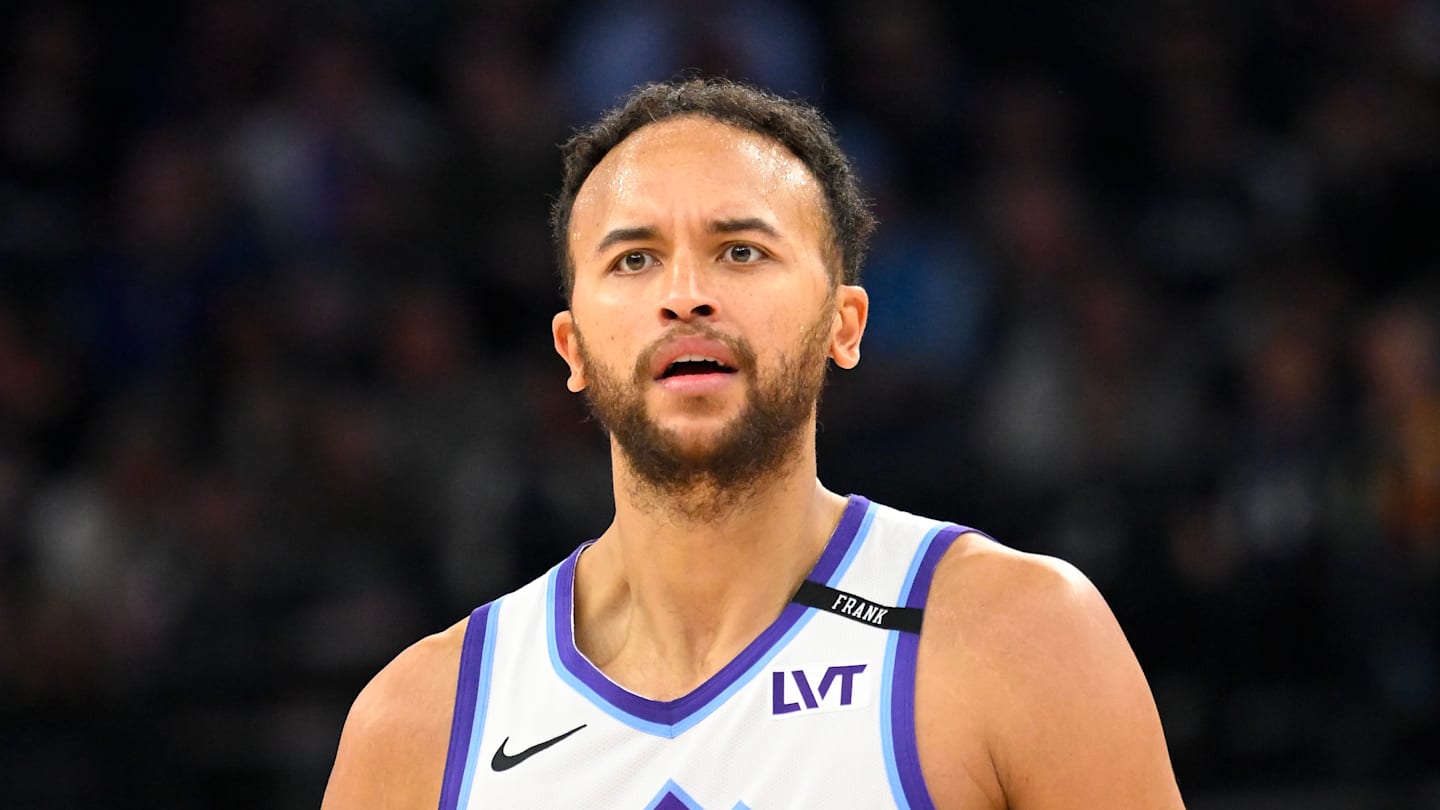
1. The $27 Million Question Nobody’s Asking
A contract that makes no sense.
Let’s get one thing straight. The numbers don’t add up. They never do when you peel back the layers of the NBA’s pristine, family-friendly marketing. The Golden State Warriors, a supposed paragon of smart management and dynastic thinking, handed Kyle Anderson a three-year, $27 million contract. Twenty-seven million dollars. For a veteran role player known for his deliberate, slow-motion style of play. They sold it to the fans as a savvy move, a high-IQ addition to their championship-or-bust roster. It was a lie. A calculated piece of financial theater.
And how do we know this? Because a mere 36 games later—barely enough time to learn the plays, let alone build chemistry—they shipped him out. Gone. Traded. Seven months after putting pen to paper on a deal that was supposed to represent stability, he was packing his bags again. So I ask you, what changed in 36 games? Did they suddenly discover he couldn’t play basketball? Did his unique, herky-jerky style suddenly become an eyesore for the front office that just paid a premium for it? Of course not. This wasn’t a basketball decision; it was a money decision from the very beginning. The ink was barely dry on that contract before it became a salary-matching chip in some other, grander scheme. They never wanted Kyle Anderson the player; they wanted Kyle Anderson the asset. It’s a rotten business.
2. ‘Washed’ or Sabotaged? A Look Inside the Warriors’ Black Box
What really happened in the Bay?
The narrative they want you to believe is simple. He was a bad fit. He’s “washed.” His game is too slow for the modern NBA, a talking point that conveniently ignores the fact that they knew exactly how he played when they signed him. This is a classic media deflection tactic, a way to blame the player for the front office’s monumental incompetence or, more likely, their duplicity. So what really happened behind closed doors? Did he clash with the established stars? Was he a problem in the locker room? The silence is deafening. No reports, no leaks, just a quiet trade and a bunch of whispers from anonymous “sources” claiming he’s lost a step. It’s a character assassination disguised as sports analysis.
This is how the machine works. It chews up veterans and spits them out, protecting its golden geese—the GMs and owners—at all costs. Is it so hard to believe that the Warriors signed him with the explicit intention of flipping his mid-tier contract at the trade deadline? They used a human being, a man’s career, as a financial instrument. A placeholder. He was never given a real chance to succeed because his failure, or at least his expendability, was baked into the plan from day one. It’s a conspiracy not of whispers in dark rooms, but of cold, hard numbers on a spreadsheet. And Anderson was just another cell in that spreadsheet.
3. The Timberwolves Curse: Why Do Players Falter After Leaving?
Something’s in the water in Minnesota.
It’s almost a pattern at this point. A player has a solid, if unspectacular, tenure with the Minnesota Timberwolves, carving out a respectable role. Then they leave, seeking greener pastures or a bigger paycheck, and their career hits a wall. Is it a coincidence? Or is there something about that organization that fails to prepare players for the cutthroat politics of the rest of the league? Anderson was a key connective piece for that Timberwolves team for two seasons. He was valued. He had a role. Then he chases the money to Golden State, and poof, his value evaporates overnight. He’s just another name on a long list.
You can call it a curse, you can call it a coincidence, but I call it a symptom of a larger problem. Teams like Minnesota can provide a shelter for certain types of players, but the sharks in the water in markets like Golden State or Los Angeles are different. They demand conformity to a system, and if you don’t fit precisely into their pre-ordained box, you’re disposable. Anderson’s game, predicated on intellect and pacing, was an asset in one ecosystem and a liability in another. It exposes the fallacy that the NBA is a pure meritocracy. It’s not. It’s about fit, politics, and whether your contract is more valuable than your on-court production. Anderson learned that lesson the hard way. It’s a lesson many former Timberwolves seem to learn.
4. Three Teams, Two Seasons: The Anatomy of a Journeyman’s Demise
This isn’t a game; it’s a slow-motion career implosion.
Since leaving the relative stability of Minnesota in 2024, Kyle Anderson has played for three different teams in the span of about two seasons. Think about that from a human perspective. That’s three new cities, three new sets of teammates, three new coaching staffs, three new systems to learn. How can anyone be expected to perform at a high level under such chaotic conditions? The answer is, they can’t. This is how the league quietly pushes players out. They don’t cut them; they just bounce them around until they lose all confidence and rhythm. It’s a form of professional water torture.
He’s now labeled a journeyman, a tag that carries the stink of failure. But is it his failure? Or is it the failure of a system that treats players like interchangeable parts on an assembly line? Each trade erodes a player’s perceived value. He goes from being a key free-agent signing to a trade throw-in. Then he becomes a salary dump. Before you know it, he’s fighting for a roster spot on a non-guaranteed contract. We’re watching it happen in real-time. This isn’t just about Kyle Anderson. He is the canary in the coal mine, a warning sign of the league’s brutal, unsentimental nature. The next trade is always just around the corner.
5. The Jazz’s Smoke Screen: Don’t Believe the Hype
That one good game means nothing.
And now we get this little blip on the radar from Utah. A puff piece from a wire service. “Jazz’s Kyle Anderson: Fares well off bench.” He puts up 12 points, 6 rebounds, and 6 assists. Impressive numbers in a vacuum. But what is this, really? Is it the beginning of a career renaissance? A comeback story? Get real. This is the oldest trick in the book. It’s called showcasing your asset. The Utah Jazz are not a championship contender. They are a team in transition, and every player on their roster is a potential trade piece. By giving Anderson some minutes and letting him put up some decent stats in a meaningless regular-season game, they are creating a talking point. They are building a flimsy case that they can sell to some other desperate GM before the trade deadline.
“Look,” they’ll say, “he’s not washed! He just needed a change of scenery. He put up 12-6-6 for us!” It’s smoke and mirrors. A single performance means absolutely nothing when viewed against the backdrop of his recent career trajectory. It’s a calculated move to inflate his trade value just enough to get something, anything, in return. The fans might see a good game. I see a front office polishing a used car before putting it back on the lot.
6. Who’s Really Pulling the Strings? Agents, GMs, and the Money Game
Follow the money. Always.
Kyle Anderson isn’t making these decisions in a vacuum. Where is his agent in all of this? Did his agent advise him to take the Warriors’ money, knowing full well it was likely a short-term play? Agents are supposed to build careers, not just cash commission checks. But in today’s NBA, many are just as complicit in this meat grinder as the front offices. They play the game, encouraging their clients to take the biggest offer on the table, regardless of fit or long-term stability. Because a bigger contract means a bigger payday for them. Loyalty is a myth. Career planning is an afterthought. It’s about maximizing earnings in a brutally short window, and if that means bouncing between four cities in three years, so be it. The player is the one who has to live with the consequences, the instability, and the damage to his reputation.
And what about the GMs? They operate with almost total impunity. A GM can sign a player to a disastrous contract, trade him seven months later for pennies on the dollar, and face zero consequences. They just sell it to the media as “roster flexibility” or “pivoting our strategy.” It’s a language of deceit designed to obscure the truth: they messed up. Or worse, they never cared in the first place. This is a league run by billionaires and operated by executives who are playing fantasy basketball with real lives. Kyle Anderson is just the latest victim of a system that values contracts over people and financial leverage over on-court talent.
7. What’s Next? Another Trade Deadline, Another Suitcase
The cycle will continue.
So, what does the future hold for “Slo Mo”? Don’t let that one decent game in a Jazz uniform fool you. The writing is on the wall. He is the quintessential trade deadline asset. A veteran on a tradable contract who can fill a few minutes for a team with an injury or a sudden need for depth. He will be mentioned in rumors. His name will be floated in hypothetical trades cooked up by pundits and bloggers. And, chances are, he will be on the move again. Why? Because the cycle demands it. The NBA’s insatiable thirst for transactions and roster churn requires a constant supply of players like him. Players who are good enough to stay in the league but not powerful enough to dictate their own terms.
His fate is no longer in his own hands. It’s in the hands of some GM in a city he’s never been to, looking to make a move that will save his own job for another year. Anderson’s future is a suitcase and a series of temporary apartments. That’s the grim reality the league doesn’t want you to see. Behind the highlight dunks and buzzer-beaters is a cold, unforgiving machine that consumes careers. And Kyle Anderson is strapped firmly to the conveyor belt.