
The Anatomy of a Scream
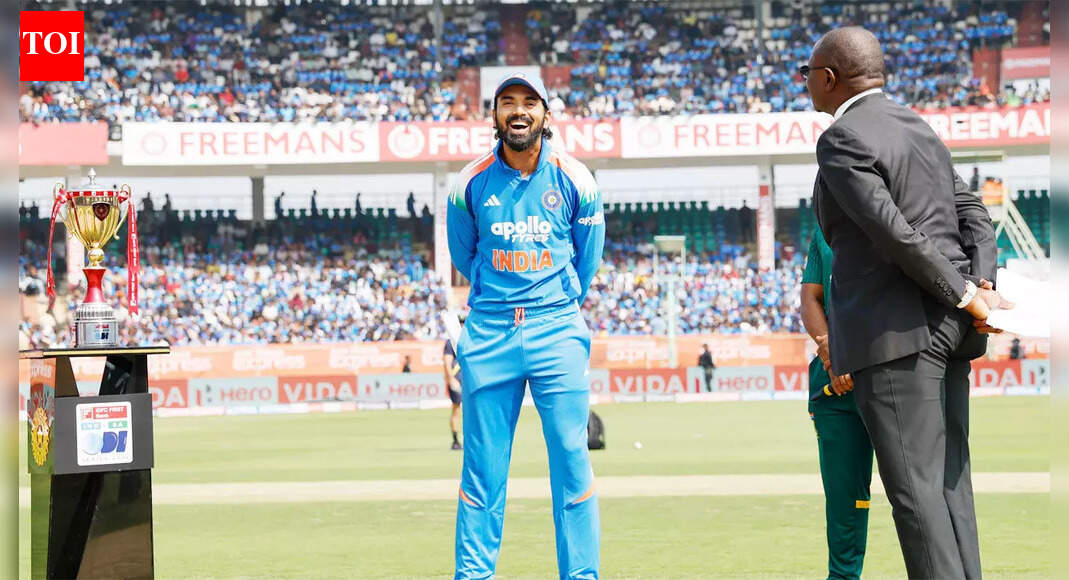
Let’s begin with the image, shall we? KL Rahul, captain of the Indian cricket team, head tilted back, face contorted in a primal roar of catharsis. The object of this profound emotional release? Not a match-winning six, not a perfectly executed strategic masterstroke, not even a coveted trophy. It was a coin. A simple, inanimate disc of metal, landing in his favor for the first time in what felt like an eternity. Twenty consecutive failures at a 50/50 proposition, finally broken. The celebration was epic, we’re told. A curse broken. A nation breathes a sigh of relief. But are we watching the same event? Because from here, it doesn’t look like a celebration of victory. It looks like a terrifying symptom of a deep-seated psychological fragility, a team so devoid of genuine self-belief that it must cling to the whims of chance as if it were a divine mandate. What does it say about your team’s mettle, your strategic fortitude, when the single most celebrated moment of a series decider is the pre-game flip?
This isn’t just about a coin toss. It never is. This is a forensic examination of a mindset. It’s a deep dive into the cracks of a cricketing superpower that consistently flatters to deceive on the world stage, a team that can dominate meaningless bilateral contests but crumbles when the lights are brightest. Rahul’s scream wasn’t one of triumph. It was a scream of pure, unadulterated relief from a man, and a system, that fundamentally believes it cannot win unless the universe aligns perfectly in its favor from the very first moment. This is not the roar of a lion. It’s the desperate gasp of a drowning man finally finding a piece of driftwood. And that should worry everyone.
The Illusion of Control: Deconstructing the Toss
A Statistical Anomaly or a Symptom?
Let’s get the numbers out of the way. Losing 20 coin tosses in a row is a statistical improbability, a quirky footnote in the annals of the sport. It’s the kind of trivia that commentators love to bring up during a lull in play. But the story isn’t the streak itself; it’s the disproportionate weight assigned to it. It’s the collective psychosis that gripped the team and its fanbase, transforming a random event into a harbinger of doom. Can you imagine Tom Brady celebrating a coin toss win with such raw emotion? Or Lionel Messi screaming at the sky because the referee’s flip went his way? Of course not. Because in sports where strategy and adaptability are paramount, the toss is a procedural formality, not a pre-written verdict. You have a plan A and a plan B. You prepare for both scenarios. The extreme reaction from the Indian camp suggests a terrifying possibility: they only have a plan A. A plan that is pathologically dependent on controlling the conditions—batting first on a good wicket, bowling second under lights with the dew. What happens when that control is stripped away, as it so often is in the knockout stages of a World Cup? The answer is written in a long history of semi-final and final collapses. This obsession with the toss isn’t about gaining a small advantage; it’s a desperate search for a security blanket, an admission that they are uncomfortable, perhaps even incapable, of adapting to adversity.
KL Rahul: The Burden of the Accidental Captain
And then there is the man himself, KL Rahul. An enigma wrapped in a riddle, dressed in stylish cricket whites. A batsman of sublime, almost infuriating talent, yet a leader who often seems to be a passenger in his own ship. His captaincy has been characterized as passive, reactive, and overly cautious. His scream of relief, therefore, becomes a window into his soul as a leader. It’s the sound of a man crushed by pressure, for whom the simple act of a coin falling his way feels like a monumental personal victory against a cruel fate. Leaders are meant to absorb pressure and exude confidence, to be the calm in the storm. Rahul’s celebration projected the opposite: it broadcasted his anxiety to the world and, more importantly, to his own dressing room. It said, ‘Thank God, for a moment I thought we were doomed again.’ Is this the kind of energy you want from your general before a battle? A leader whose emotional state is dictated by chance? The celebration wasn’t an act of breaking a curse; it was an act of confirming its power. It validated the narrative that external forces, not internal strength, dictate India’s destiny.
The Tactical Shuffle: A Desperate Roll of the Dice
Washington Out, Tilak In: Strategy or Panic?
So, with the ‘curse’ lifted and the power of the toss secured, what grand strategic masterstroke did India unveil? They replaced Washington Sundar, an off-spinning all-rounder, with Tilak Varma, a specialist left-handed batsman who can offer a few overs of part-time spin. On the surface, this can be spun as a clever tactical move. Perhaps it was a ‘horses for courses’ decision for the Visakhapatnam pitch. Perhaps it was a specific matchup-based decision against the South African lineup. But when you look at the broader pattern of Indian team selections, it smells less like genius and more like desperation. It is another instance of tinkering, of shuffling the deck chairs on a ship they’re not sure how to steer. True championship teams are built on a bedrock of stability and clearly defined roles. Players know their job and have the security of a long rope to execute it. India, by contrast, seems to be in a perpetual state of auditioning. A player has one bad game and is shuffled out; a new face is brought in based on a hunch or a recent flash of form in a lesser tournament. This constant churn creates an environment of insecurity. How can a player like Washington Sundar develop into a world-class all-rounder if he is constantly looking over his shoulder? This selection wasn’t a confident move born from a clear vision. It was a gamble. A hope that a new variable might just be the one that works today, without any real thought for tomorrow. It’s the tactical equivalent of buying a lottery ticket.
The Curious Case of the ‘Unlucky’ Bowler
The narrative fragments from the game provide another fascinating exhibit: Harshit Rana being ‘unlucky twice’ while Arshdeep Singh gets a ‘stunning start’. Let’s deconstruct this. What, precisely, is ‘luck’ in the context of professional sport? More often than not, it’s a lazy euphemism for a failure in execution somewhere along the line. Did Rana induce an edge that was dropped in the slips? That isn’t bad luck for the bowler; it’s poor fielding by his teammate. Was it a marginal LBW decision turned down by the umpire’s call technology? That’s not bad luck; it’s the accepted margin of error within the rules of the game. To label these events as simple ‘unluckiness’ is to absolve the team of responsibility. It fosters a culture of victimhood. It subtly suggests that the outcome was out of their hands. This is a dangerous path. In stark contrast, Arshdeep’s success is framed as individual brilliance, a ‘stunning start’. The narrative then becomes one of a lone warrior succeeding against the odds, while others are victims of fickle fortune. Does this sound like a cohesive, single-minded unit? It sounds more like a collection of talented individuals operating in silos, their fates tied to personal success and external chance rather than collective, clinical execution. A team that relies on stunning starts from one player and bemoans the bad luck of another is a team without a process. It is a team waiting for things to happen, not making them happen.
The Prophecy of Failure: A Microcosm of the Larger Problem
From a Toss to a Trophy: Why India Keeps Failing
And here is the crux of the entire matter. The euphoric reaction to the coin toss, the constant carousel of player selection, the narrative of luck versus individual genius—they are not isolated incidents. They are symptoms of the very disease that has prevented India from capturing a major ICC trophy for over a decade. This team, for all its immense talent and financial might, has a glass jaw. They are front-runners, bullies on the benign pitches of home bilateral series where the pressure is minimal. But place them in a knockout game, a World Cup final, where adaptability is key and conditions are not guaranteed to be perfect, and they shrink. Their entire philosophy seems predicated on achieving a perfect launch sequence: win the toss, bat first, post a huge score, and then let scoreboard pressure do the work. It’s a powerful formula when it works. But championship teams are defined by what they do when the formula breaks down. What is their plan when they lose the toss and have to bowl in the dew? What is their response when they’re chasing a formidable total under immense pressure? The historical evidence suggests they don’t have one. They pray for the toss to go their way so they never have to find out. The obsession with the toss is the most glaring admission of this strategic and mental deficit. It’s a confession that they fear the chaos of an uncontrolled contest.
The Verdict
So, India likely wins this third ODI against South Africa. The headlines will praise Rahul’s ‘passionate’ captaincy, Arshdeep’s magical spell, and the tactical ‘masterstroke’ of playing Tilak Varma. The win, in a functionally meaningless series decider, will be used as a balm to soothe the wounds of recent failures. It will be presented as evidence that the team is on the right track. But it is all an illusion. A mirage in the desert. The fundamental, structural problems will remain, papered over by another bilateral series trophy gathering dust in a cabinet. The system will continue to reward the celebration of trivia over the cultivation of substance. They will continue to seek comfort in the randomness of a coin flip rather than forging resilience in the fires of adversity. This team is stuck in a cycle of its own making, terrified of the very pressure it claims to seek. So they won a toss. A huge congratulations. But are they any closer to winning what actually matters? The evidence, if you choose to see it, screams a deafening ‘No’.

Photo by yogendras31 on Pixabay.