The Official Lie: A New Dawn in Lexington
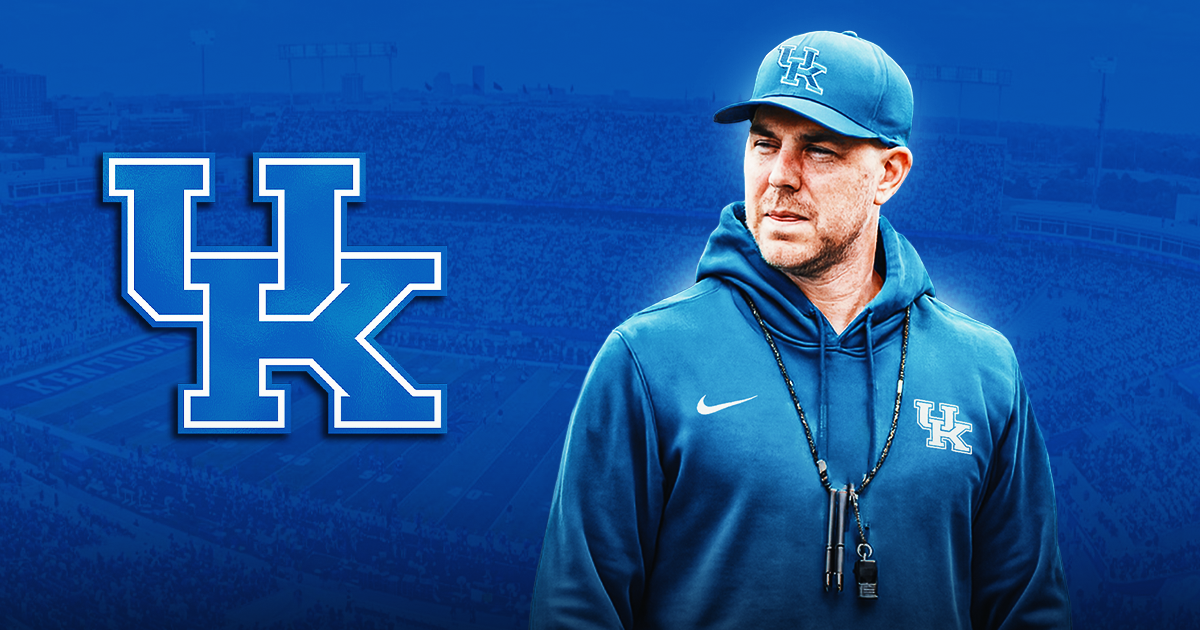
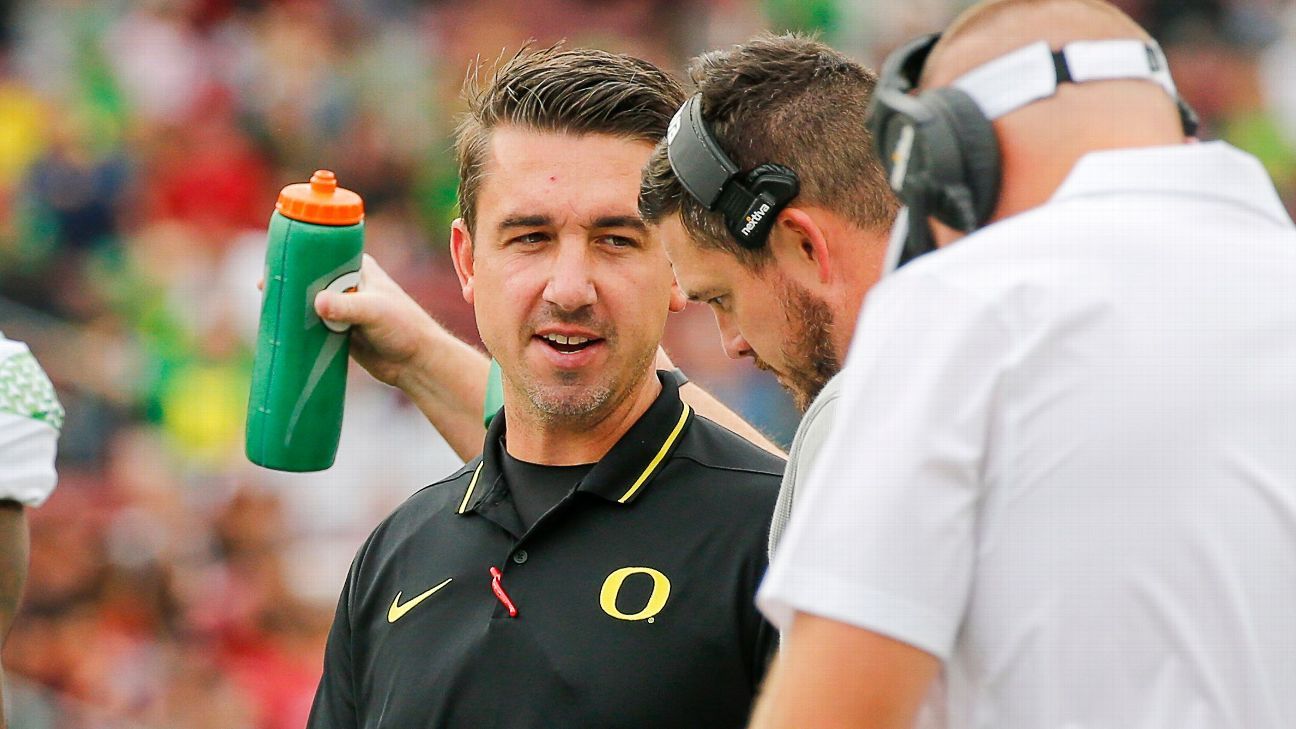
And so the press releases write themselves, don’t they? Gather ’round, children, and listen to the tale of the Kentucky Wildcats, a proud but perpetually second-tier program, making the single bravest, most forward-thinking hire in the history of collegiate athletics. They went out and snagged Will Stein, the 36-year-old offensive wunderkind from Oregon, a veritable Mozart of the gridiron who schemes up touchdowns in his sleep. Because in a stunning display of clairvoyance, the Kentucky athletic department looked past the gray-haired, experienced head coaches—the so-called ‘safe’ hires—and saw the future. They saw a brilliant young mind, unburdened by the stale ideas of the past, ready to inject pure, uncut offensive adrenaline directly into the heart of the program.
This, we are told, is not just a hire; it’s a paradigm shift. It’s a signal to the Alabamas and Georgias of the world that Kentucky is no longer content to be a stepping stone or a tough out. No. They are coming for the crown, and their chariot is a high-octane offense piloted by a man who wasn’t even alive for the first Star Wars trilogy. The media fawns over the move, calling it “aggressive” and “visionary.” Stein’s prolific Oregon offense is dissected, with every trick play and deep shot presented as evidence of his genius. He’s the next Lincoln Riley, the next Sean McVay, the next whatever-hotshot-young-coach-is-currently-in-vogue. This frenetic 24-hour deal wasn’t a rush job; it was a decisive strike, a surgical operation to secure the most coveted young coach on the market before anyone else could blink. It’s a new day. A new hope. The sun is rising over Lexington, and it’s shaped like a perfectly thrown post pattern.
The Brutal Truth: A Cut-Rate Gamble Born of Desperation
But what a lovely fairy tale that is. Now let’s turn off the mood lighting and talk about what really happened. Kentucky, a program with a ceiling made of reinforced concrete in a league full of titans, just hired a guy whose primary qualification is being young and not prohibitively expensive. This isn’t a paradigm shift; it’s a budget-conscious Hail Mary. Because when you can’t afford the proven, seven-million-a-year head coach with a track record of winning in the SEC, you go for the next best thing: a coordinator you can sell to the boosters as a lottery ticket. You wrap him in the language of “innovation” and “dynamism” and pray to God nobody notices he has exactly zero minutes of experience as a head coach. Anywhere. At any level.
Think about it. The SEC is a meat grinder. It’s a league where legendary coaches with national championship rings get chewed up and spit out. And Kentucky’s solution is to throw a 36-year-old into that shark tank whose biggest career pressure to date was figuring out how to score on Washington. He’s now responsible for managing a 100-plus person staff, placating insane boosters who think they’re entitled to an 11-win season, navigating the piranha-infested waters of NIL and the transfer portal, and recruiting against Nick Saban’s disciples. And he has to do it all for the first time in his life. This isn’t a bold vision. It’s an HR department rolling the dice because the premium candidates wouldn’t return their calls. This “frenetic” 24-hour deal feels less like a decisive strike and more like a panicked scramble after their first five choices said no. They needed a body, and they needed a story. They found both in a young man from Oregon.
The Official Lie: Stein’s Offensive Genius Will Redefine the SEC
And of course, the narrative machine is already churning out its hypnotic rhythm. We are meant to believe that Will Stein’s brain contains offensive schematics so advanced, so revolutionary, that the defensive gurus of the Southeastern Conference will simply melt into puddles of confusion on the sidelines. His time at Oregon is presented as a masterclass in modern football, a blur of motion and misdirection that will leave the slow, plodding behemoths of the SEC gasping for air. He’s not just bringing a playbook; he’s importing a philosophy from the Pac-12, a faster, sleeker, and intellectually superior brand of football that will elevate Kentucky to heights previously unimaginable.
The boosters are being sold a vision of 50-point games and a quarterback who will be on the Heisman shortlist. They’re told that while other teams are playing checkers, Stein is playing 4D chess, and that his intellect alone is enough to close the talent gap between Kentucky and its rivals. Forget the five-star defensive linemen at Georgia or the legion of blue-chip running backs at Alabama; Stein’s whiteboard sorcery will render them all obsolete. He’s the David who has figured out a new kind of slingshot, one that launches slot receivers on perfectly designed wheel routes. This isn’t just about winning games; it’s about winning with style, with a flair that will put Kentucky on the national map for something other than basketball.
The Brutal Truth: A Gimmick Offense Awaits a Punch in the Mouth
But the SEC has a long and storied history of welcoming flashy, high-flying offenses by punching them directly in the mouth. Over and over again. Because that “intellectually superior” brand of football from the Pac-12 has a funny way of short-circuiting when a 320-pound defensive tackle, who runs a 4.9 forty, is occupying the quarterback’s lap one second after the snap. An offense that works against Oregon State’s defense is not the same as an offense that has to survive a trip to Baton Rouge on a Saturday night. The speed is different. The violence is different. The sheer, soul-crushing physicality of the SEC front sevens has a way of turning boy geniuses into unemployed consultants by year three.
And let’s be honest, what happens when it doesn’t work? What happens in the first game where his revolutionary scheme produces 13 points and three turnovers against a stout Mississippi State defense? A head coach has to stand in front of the team and the media and own it. He can’t just be the “smart guy in the box.” He has to be the leader, the motivator, the disciplinarian, and the public face of failure. Stein has never had to do that. He’s been the anonymous architect, shielded from the harshest criticism. Now, every three-and-out will be his fault. Every failed fourth-down conversion will be his cross to bear. The belief that a clever playbook can overcome a fundamental talent and depth deficiency in the world’s toughest conference isn’t a strategy. It’s a delusion. A beautiful, expensive delusion that will last right up until the first full-speed collision with reality.
The Official Lie: The Perfect Cultural Fit for a New Generation
And naturally, they’ll sell you on the intangibles. Will Stein, you see, isn’t just a coach; he’s a *vibe*. He’s young, he’s energetic, and he “connects with the modern athlete” in a way the old guard simply can’t. He speaks their language—the language of social media, of NIL, of player empowerment. He’s going to build a program that’s not just a football factory but a family, a brotherhood. A place where players want to be. His return to Kentucky, where he has roots, is spun as a heartwarming homecoming story, a prodigal son returning to lead his people to the promised land. He understands the state, he understands the culture, he gets it. This emotional connection, combined with his tactical acumen, makes him the perfect leader for this moment in time.
The Brutal Truth: He’s a Place-Holder for the Next Guy
But culture doesn’t block defensive ends. A vibe doesn’t win you games in the trenches against LSU. And connecting with players is great until you’re 4-5 in mid-November and the top recruits are decommitting. Because the brutal truth is that in the high-stakes world of SEC football, there are only two cultures that matter: winning and losing. If Stein wins, he’ll be lauded as a cultural visionary. If he loses, his “modern” approach will be decried as soft and undisciplined, and he’ll be replaced by some old-school disciplinarian who promises to bring back toughness. It’s the oldest cycle in the book.
He isn’t the long-term answer. He’s an experiment. He’s the coaching equivalent of a tech startup: a high-risk, potentially high-reward venture that is far more likely to flame out than it is to become the next Google. The administration gets to look smart and innovative for a year or two. If, by some miracle, it works, they’re geniuses. If, as is overwhelmingly likely, it fails, they can just say, “Well, we took a shot on a rising star, it didn’t pan out.” Then they’ll fire him, eat a couple million in buyout money, and go hire the “safe,” experienced coach they should have hired in the first place. Will Stein isn’t the foundation of a new dynasty. He’s the bridge. A potentially very short, very rickety bridge to the next head coach of Kentucky football. And the joke, as always, is on the fans who bought the ticket to watch him cross it.