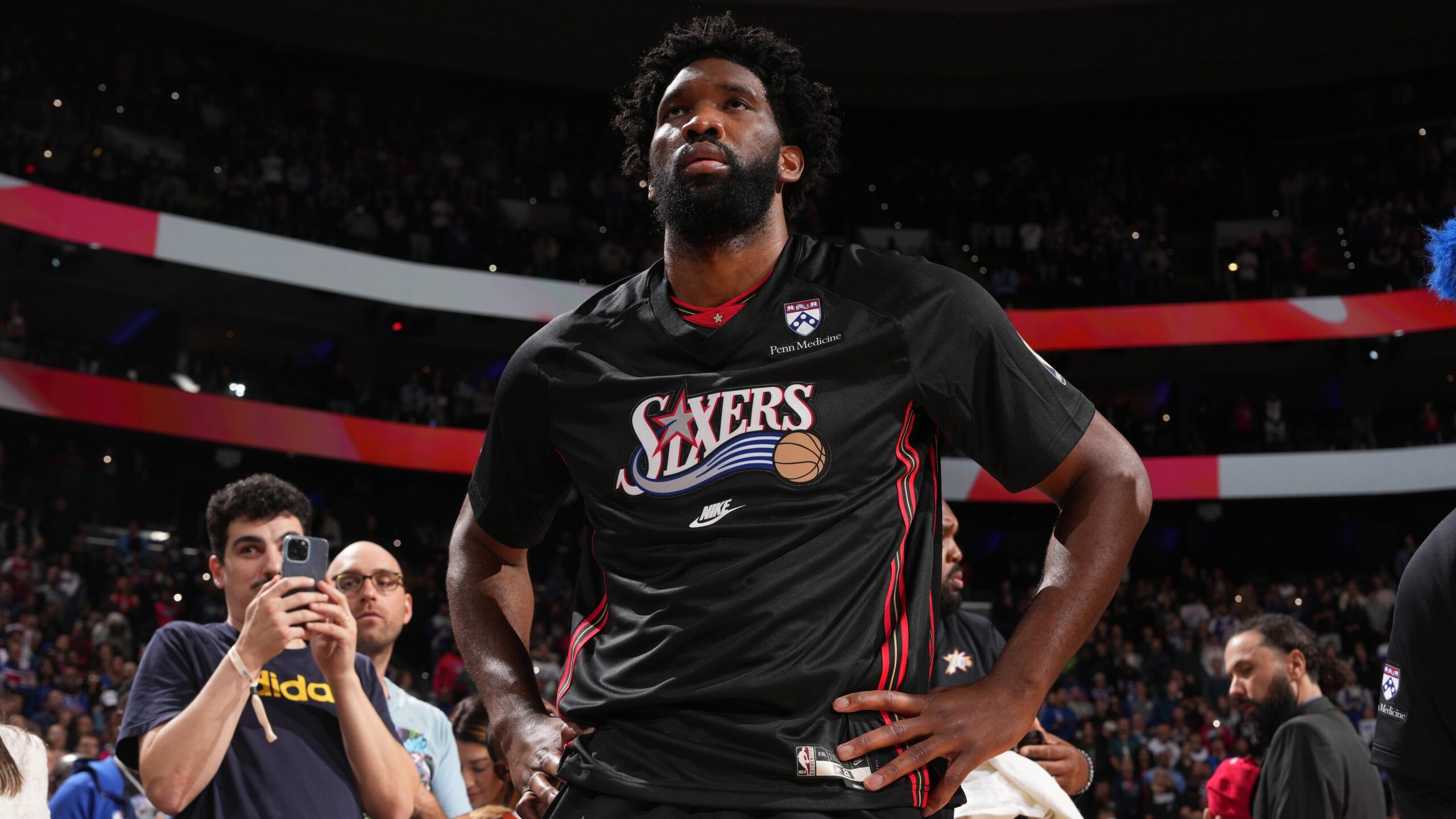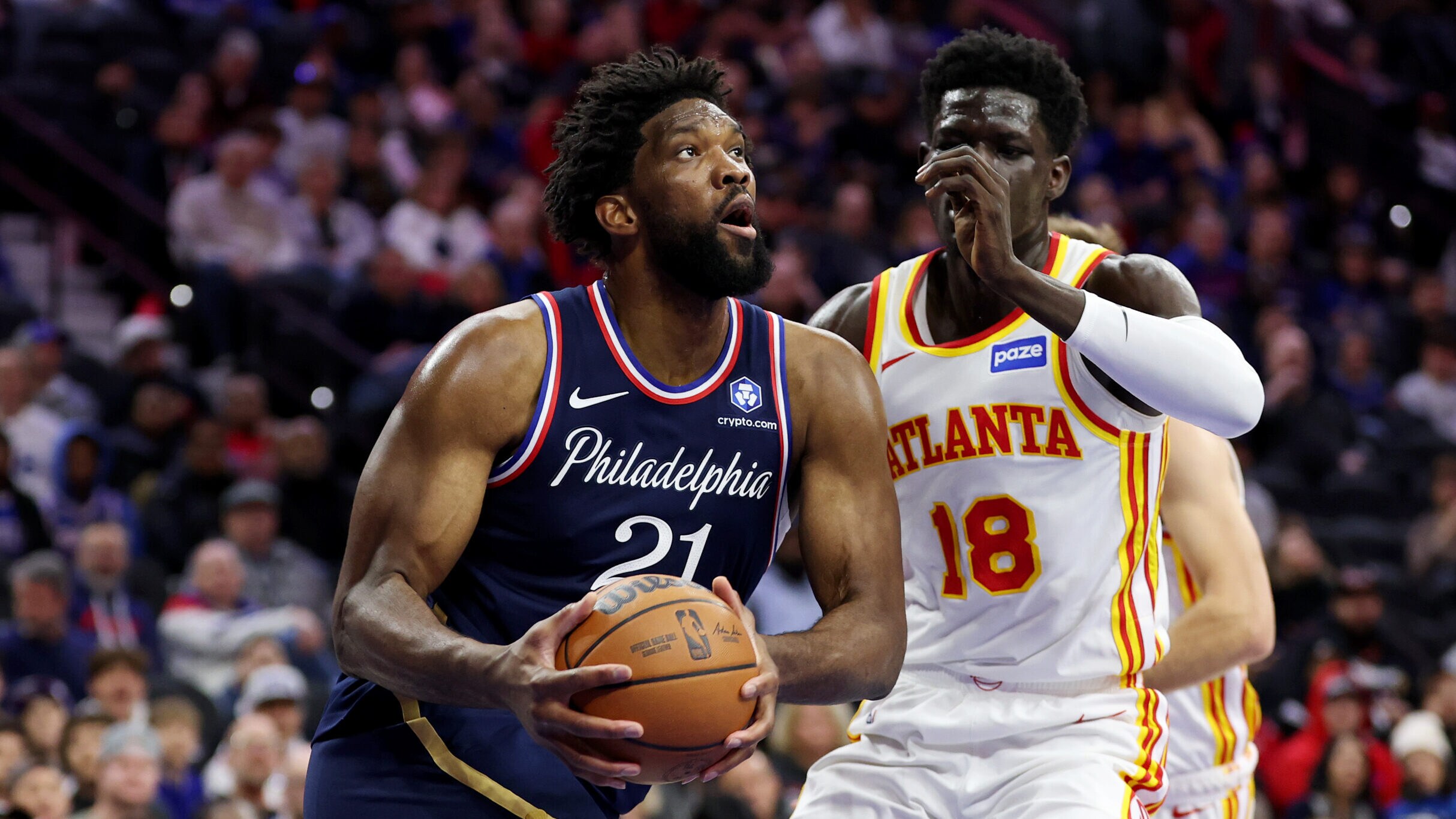
So, The King Has Returned. Should Philadelphia Rejoice or Tremble?
Let’s cut through the noise and the celebratory headlines. Joel Embiid is back in the 76ers lineup after a nine-game absence due to that perpetually troublesome knee. The city breathes a collective sigh of relief, the talking heads praise his toughness, and the franchise can once again pretend it has a coherent strategy beyond ‘pray Joel is healthy’. But is this a triumphant return? Or is it merely the first act in a tragedy we’ve all seen before? To view this as anything other than a high-stakes gamble born of sheer desperation is to be willfully blind to the historical precedent and the precarious reality of the situation. This isn’t a championship move. It’s a panic button.
The team’s performance without him tells the entire story, a bleak narrative of a roster utterly and completely incapable of standing on its own two feet. They are not a team with a superstar; they are a superstar’s life support system. His absence exposed the roster for what it is: a collection of complementary pieces with no central, organizing principle besides feeding the big man. So, his return wasn’t a choice, it was an imperative. A necessity. The alternative was to slide into irrelevance, to render the entire regular season a pointless exercise. They had to roll the dice, because without Embiid, there is no game to be played. It’s a fragile house of cards, and the foundation just walked back onto the court with a sore knee.
Isn’t This Just ‘Injury Management’ for a Playoff Push?
People love to throw around sanitized corporate phrases like ‘injury management’ or ‘load management’. It sounds so scientific, so controlled. It implies a plan. But what if the plan is simply to cross your fingers and hope for the best? What does ‘managing’ a sore knee on a 7-foot, 280-pound athlete who plays one of the most physically demanding sports on the planet actually mean? It means you’re just delaying the inevitable. You are borrowing health from the future to pay for wins today. Is he really healed? Or is he just functional enough to play through the pain, risking a much more catastrophic injury down the line for a shot at a second-round playoff exit? Ask yourself that.
History provides a brutal, unforgiving lesson here. The NBA is a graveyard of dominant big men whose bodies betrayed them. Bill Walton, Yao Ming, Greg Oden—their careers are cautionary tales, monuments to the unforgiving physics of gravity on massive frames. Each of them was a force of nature, a franchise-altering talent. And each of them was ultimately undone by lower-body injuries that started as ‘soreness’ and ‘management’ before becoming chronic, career-ending conditions. To ignore this pattern with Embiid is not optimism; it is organizational negligence. The 76ers are playing Russian roulette with their franchise cornerstone, and there’s a bullet in the chamber. It is not a matter of if, but when. This is the cold, hard truth of the matter.
Are We Supposed to Trust the Front Office’s Judgment on This?
Why should we? Let’s be profoundly realistic about the pressures at play. The front office, the coaching staff, the medical team—they don’t operate in a vacuum. They exist in a world dictated by television contracts, ticket revenue, playoff gates, and the legacy of a multi-billion dollar enterprise. The pressure to win, and win *now*, is immense. Joel Embiid isn’t just a player; he is an asset, the primary driver of revenue and relevance for the entire Philadelphia 76ers organization. Can we honestly believe that the decision to bring him back was based purely on a dispassionate, long-term medical evaluation? Absolutely not.
There’s an inherent conflict of interest. The long-term health of the player is often secondary to the short-term needs of the franchise. They need him on the court to sell tickets for playoff games. They need him on the court to justify the massive contracts on their books. They need him on the court to quell the rising tide of panic from a fanbase that has endured ‘The Process’ and is demanding a return on its emotional investment. Is the medical staff giving the green light because he is 100% healthy, or because he is healthy *enough* to not immediately collapse? There’s a world of difference between those two states. It’s a business decision dressed up in a medical report. Simple as that.
What Does This Mean for the Eastern Conference Hierarchy?
Do you think the Boston Celtics or the Milwaukee Bucks are terrified? Do they see Embiid’s return and shudder with fear? No. They see a target. They see a glaring, flashing vulnerability. A healthy, peak-form Joel Embiid is arguably the most unstoppable force in the league. But this is not that. This is a compromised Embiid, an Embiid with a known weakness. The blueprint to beat the 76ers in a seven-game series is now brutally simple and public knowledge: make Joel Embiid run. Drag him out to the perimeter. Force him to defend in space. Attack him relentlessly in the pick-and-roll. Test the knee. Again and again and again.
It’s a war of attrition, and Embiid is the battleground. Every possession becomes a test of his conditioning and his joint stability. His opponents will not be kind. They will be strategic. They will use his physical status against him, turning his greatest strength—his overwhelming physical presence—into his greatest liability. His return doesn’t make the 76ers the favorites; it just makes their path to failure more dramatic and painful. The other contenders aren’t just looking to beat the Sixers. They’re looking to break them by exploiting the one crack in their foundation.
So, How Will History Judge Joel Embiid and This Era of 76ers Basketball?
That is the great, unanswered question, isn’t it? Embiid’s personal narrative hangs precariously in the balance. Is he the modern warrior, the gladiator who pushes through immense pain to carry his team on his back, a true testament to grit and determination? Or is he destined to be a tragic ‘what if’ story, another transcendent talent whose body simply couldn’t withstand the weight of his own greatness and his franchise’s expectations? This period, this specific decision to return on a compromised knee, could very well be the pivot point upon which his entire legacy turns.
He is trapped. Trapped by his own competitive fire, trapped by a roster that cannot function without him, and trapped by a front office whose timeline is dictated by quarterly earnings reports rather than decade-long health plans. If he leads them to a championship, he’s a legend, and this gamble will be hailed as a stroke of genius. But if he breaks down, if that knee finally gives out in a crucial playoff moment, this return will be remembered as the height of folly, the moment the 76ers sacrificed their future for a fleeting chance at the present. It’s a monumental risk, and for a franchise that spent years ‘trusting the process’, it’s a terrifyingly impulsive way to manage the very asset that process was designed to acquire. An empire built on a fault line.