The Unavoidable Truth: Japan’s Perpetual Geopolitical Stress Test
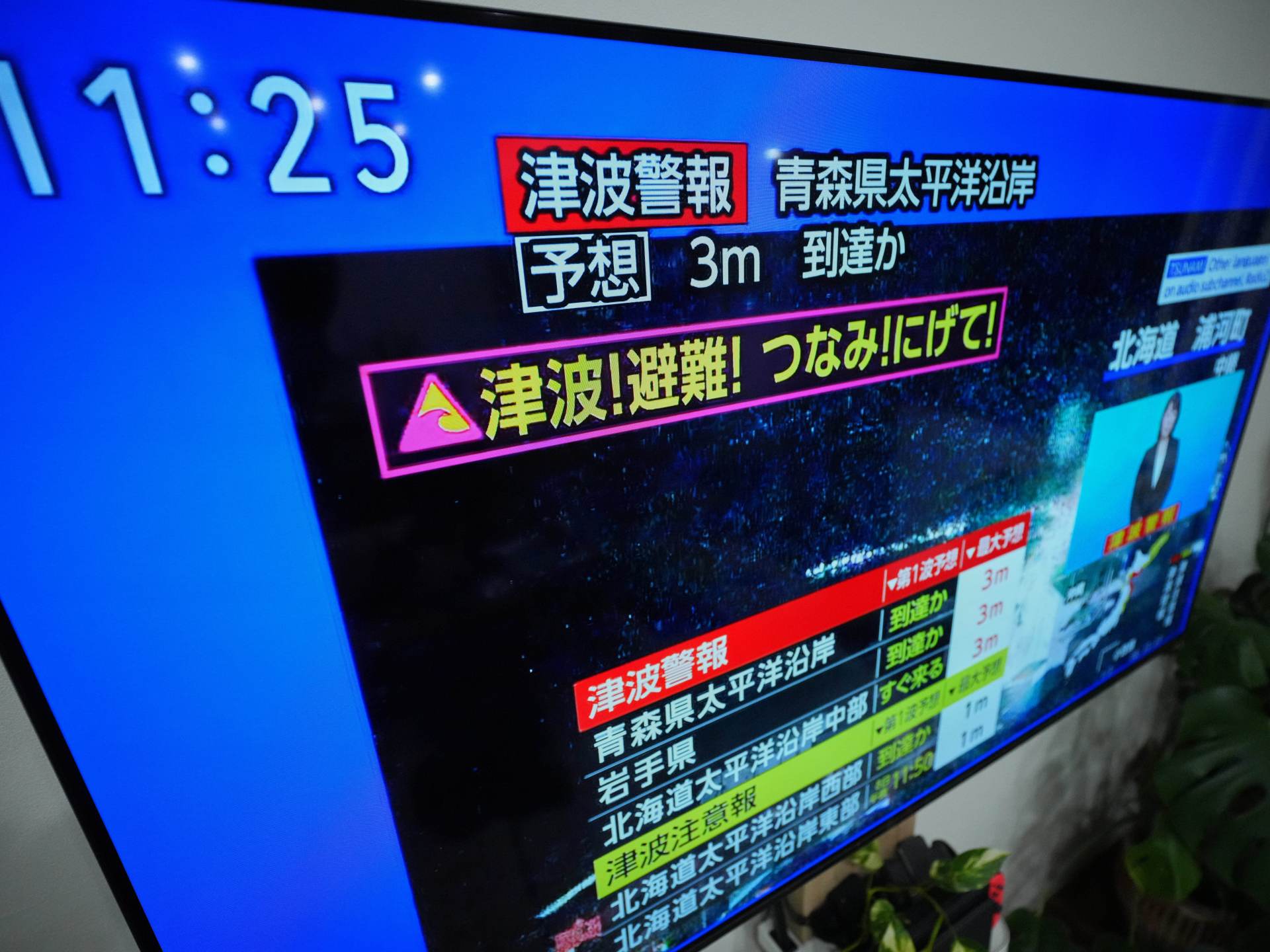
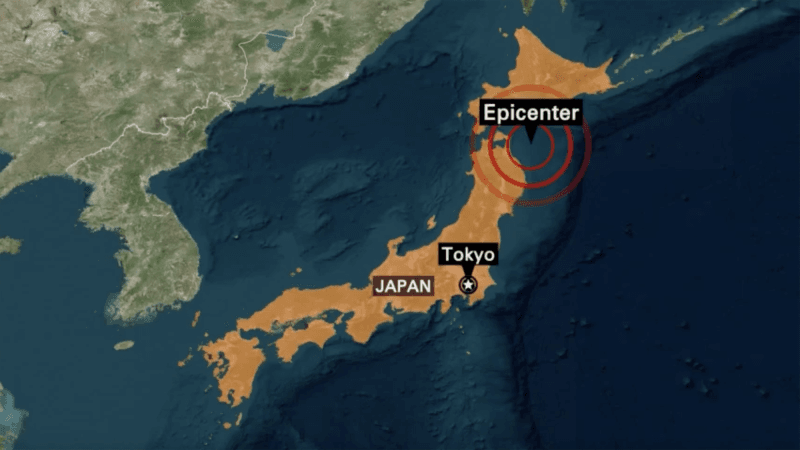
And so, here we are again. Another jolt in the Pacific Ring of Fire, another magnitude reading that sends shivers down the spine of global finance, and another round of tsunami alerts across Japan. It’s not just a natural disaster; it’s a high-stakes stress test for one of the world’s most critical economies and a significant strategic node in the Indo-Pacific theater. While the headlines focus on the immediate human element—the evacuations, the damage reports, the terrifying moments captured on camera—the cold strategist looks beyond the surface to calculate the long-term implications for global supply chains, energy policy, and regional stability. This isn’t just about rocks moving; it’s about the very foundation of Japan’s post-war identity and its ability to maintain its role on the global stage.
Because let’s be blunt, Japan is a nation built on paradox. It possesses some of the most advanced infrastructure and engineering in the world, capable of withstanding forces that would level lesser countries, yet it exists in a constant state of precarity. Every new seismic event, every new tsunami warning, chips away at the accumulated capital, both physical and psychological, that forms the basis of its resilience. The 2011 Tohoku disaster wasn’t just a catastrophic natural event; it was a watershed moment that forced a re-evaluation of everything from nuclear energy to national defense posture. And every subsequent event, even if less severe, reopens those old wounds and reignites those strategic questions. The current event—a significant quake triggering tsunami warnings along a coastline still scarred by history—is just another grim reminder that Japan lives on borrowed time between geological spasms.
The Economic Domino Effect: Supply Chains and Insurance Markets
But let’s not pretend this is a purely local affair. Japan is not an isolated island; it is an economic keystone. When a 7.6 magnitude earthquake strikes, the tremors are felt far beyond its shores, propagating through global supply chains with alarming speed. Think about it: Japan is a manufacturing powerhouse, a critical source for high-tech components, automotive parts, and precision machinery. The moment a factory shuts down in the affected coastal regions, a ripple effect begins that eventually reaches a car manufacturer in Detroit, a tech firm in Silicon Valley, or a logistics hub in Europe. The cold strategist calculates the cost of disruption, not the cost of rebuilding. The immediate impact on global logistics and shipping routes is often underestimated; ports are shut down, shipping lanes are rerouted, and insurance premiums for cargo traversing the region spike dramatically. The longer-term impact, however, is a reassessment of risk and a re-evaluation of just-in-time inventory systems that rely heavily on Japanese precision.
And then there’s the insurance market. The cost of a natural disaster of this magnitude is astronomical, measured not just in immediate physical damage but in business interruption claims and infrastructure repair. Global reinsurance markets, already facing increasing pressures from climate change-related events, must brace themselves for another multi-billion dollar payout. This isn’t charity; it’s a cold financial transaction that ultimately impacts homeowners in Florida, businesses in London, and development projects in Africa. The cost of risk for nations in the Pacific Ring of Fire is constantly being recalculated upwards, making investment more expensive and resources more constrained. This creates a strategic disadvantage for Japan, forcing it to allocate vast amounts of capital to resilience and reconstruction rather than to innovation or military projection.
The Nuclear Ghost: Reevaluating Energy Security
But perhaps the most profound strategic implication of any major Japanese earthquake lies in its energy policy. The ghost of Fukushima still haunts the halls of power in Tokyo. Following the 2011 disaster, Japan effectively shut down its nuclear fleet, turning to costly fossil fuels to power its economy. This move dramatically increased its reliance on foreign energy imports, making it vulnerable to geopolitical price manipulations and supply disruptions in the Middle East and Russia. The strategic goal of self-sufficiency, a vital component of national security for an island nation, was severely compromised.
Because as the years passed, the high cost of imported LNG and the imperative to meet carbon reduction goals forced a pragmatic shift. Japan began cautiously moving back toward restarting its nuclear power plants. The logic was clear: nuclear power offered energy independence and carbon-free generation. But every time the earth shakes with a magnitude 7 or greater, that strategic calculation becomes infinitely more complex. The public memory of Fukushima is still raw; fear of another disaster creates significant political headwinds against nuclear restarts. This latest quake, particularly with tsunami alerts, will undoubtedly fuel the anti-nuclear movement and delay any further expansion or recommissioning of nuclear facilities. The strategic dilemma is stark: risk geopolitical vulnerability by relying on imported fossil fuels, or risk domestic instability by embracing nuclear power in an unstable geological zone. The Cold Strategist recognizes this as a fundamental weakness, a strategic vulnerability that adversaries can exploit simply by watching Japan grapple with its own geology.
Geopolitical Implications: A Nation Under Strain
And while Japan grapples with its domestic crisis, its neighbors are watching closely. In the zero-sum game of international relations, a nation preoccupied with natural disasters is a nation distracted from regional power struggles. China, North Korea, and Russia view any internal Japanese crisis as an opportunity to test boundaries and exert influence. A significant earthquake draws resources away from defense spending, diverts attention from territorial disputes, and potentially slows down Japan’s participation in international alliances. The ability to project strength and stability on the global stage is compromised when a nation’s infrastructure is visibly under threat.
But conversely, Japan’s resilience is also a source of strength. The efficiency with which Japanese society responds to disaster—the highly coordinated response systems, the advanced warning technologies, the societal stoicism—is a testament to its social capital and organizational superiority. This isn’t just about surviving; it’s about rapidly recovering, minimizing long-term disruption, and demonstrating superior societal resilience. The strategist observes that Japan’s ability to bounce back from repeated disasters distinguishes it from less organized nations. The key question, however, is whether this constant cycle of destruction and reconstruction creates a long-term economic drag that ultimately diminishes its geopolitical influence. Can a nation constantly rebuilding ever truly get ahead?
The Cultural Psyche: Stoicism and Social Capital
Because ultimately, the most critical element of Japan’s resilience isn’t its concrete or its steel; it’s the cultural infrastructure that underpins its response. The stoicism, the sense of collective responsibility, and the high social capital are often romanticized in the West, but for the strategist, they are quantifiable assets. They translate into reduced social chaos, efficient resource allocation during emergencies, and faster recovery times. The Japanese public understands the risks inherent in living on the archipelago; they are trained for it from a young age. This societal preparedness reduces the strain on emergency services and allows the government to focus on high-level strategic coordination rather than managing widespread panic.
But there is a darker side to this resilience, a psychological cost that is rarely acknowledged in Western media. Constant exposure to existential threat creates a collective trauma that can manifest in various ways, from declining birth rates to a societal aversion to risk. A population that has internalized a sense of precarity may be less likely to pursue ambitious global ventures or take significant strategic risks, preferring instead to focus inward on stability and domestic security. This ‘geological fatalism’ can act as a subtle brake on national ambition, creating a strategic conservatism that limits Japan’s potential as a global leader. The question is whether Japan can continue to bear this burden of perpetual geological risk without suffering a long-term decline in national vitality. The Cold Strategist looks at these events not as isolated incidents, but as cumulative stressors that push a complex system closer to its breaking point of failure point failure, and a new 7.6 quake in a sensitive area is exactly the kind of event that accelerates that process.