The Anatomy of a Lie
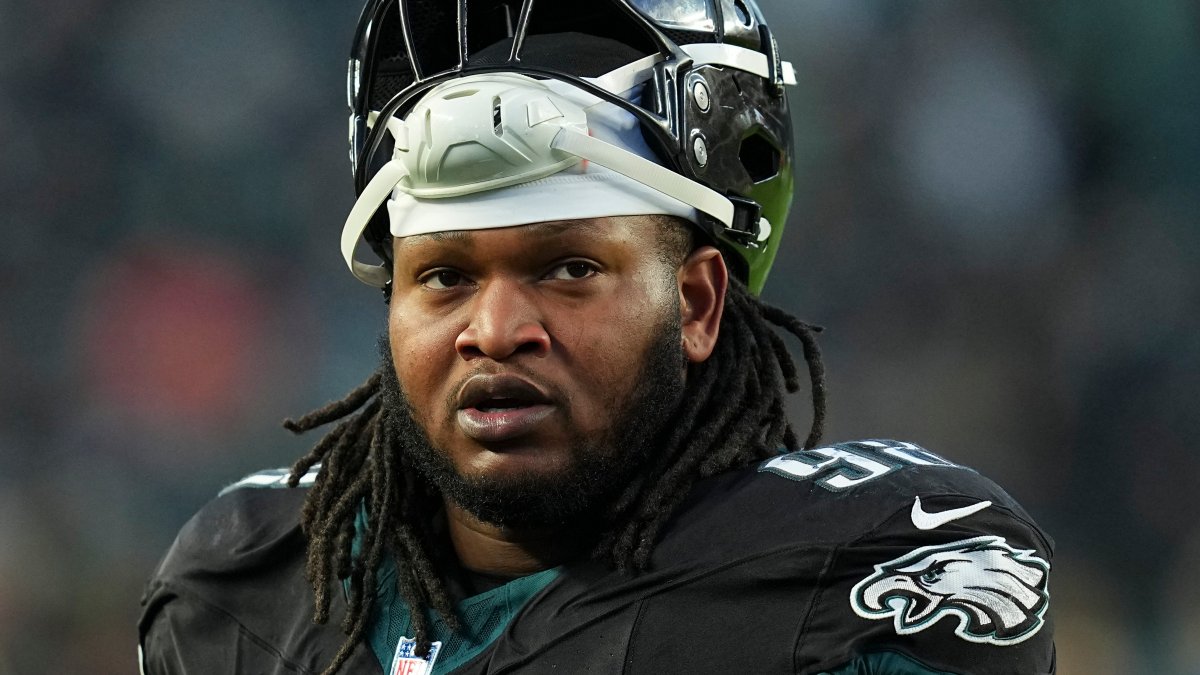
The announcement came shrouded in the bland, sanitized language of modern sports public relations. Philadelphia Eagles defensive tackle Jalen Carter, the supposed generational talent meant to anchor their defensive line for a decade, underwent ‘procedures’ on both of his shoulders. He would be out for the upcoming game against the Chargers. It was presented as an unfortunate, sudden development. A bit of bad luck. This is a fiction. This is the predictable, calculated endgame of a strategy built on hubris and a level of risk that bordered on organizational malpractice. The Eagles did not just get unlucky; they were exposed.
To understand the depth of this failure, one must reject the team’s narrative and view events not as a series of isolated incidents, but as a connected, chronological timeline of deception. It began long before this season’s struggles, rooted in the very decision to draft Carter in the first place. The organization sold the pick to the fan base as a coup, a genius move by General Manager Howie Roseman to snag a top-three talent at the ninth pick, capitalizing on the off-field concerns that made other teams hesitate. But in the cold, sterile war rooms of the NFL, character concerns are often just one part of a complex risk algorithm. The other, often more damning variable, is medical history. It is inconceivable that the rigorous pre-draft medical examinations conducted by every NFL team did not reveal underlying structural concerns in Carter’s shoulders, the very fulcrum of a defensive tackle’s power. The Eagles knew. They had to have known. They simply accepted the risk, believing their culture (and their medical staff) could manage what other teams deemed unmanageable. They rolled the dice.
And for a while, the gamble paid off handsomely. Carter’s rookie season was a whirlwind of dominance that masked the underlying fragility. But the signs were there for anyone willing to look past the box score. Now, the bill for that gamble has come due, and it is far steeper than anyone in the building was willing to admit.
Phase I: The Obfuscation Campaign
The language used by the team this season has been a masterclass in deliberate ambiguity. When Carter’s performance began to dip, when he started looking less like a world-beater and more like a mere mortal, the whispers started. The official line was that he was dealing with a ‘lingering’ shoulder injury. It’s a beautifully useless phrase, designed to placate while revealing nothing. Is it soreness? A sprain? A bruise? The term ‘lingering’ suggests a nuisance, not a critical structural failure. It implies that with a little rest and treatment, the issue will resolve. This was the first layer of the cover-up.
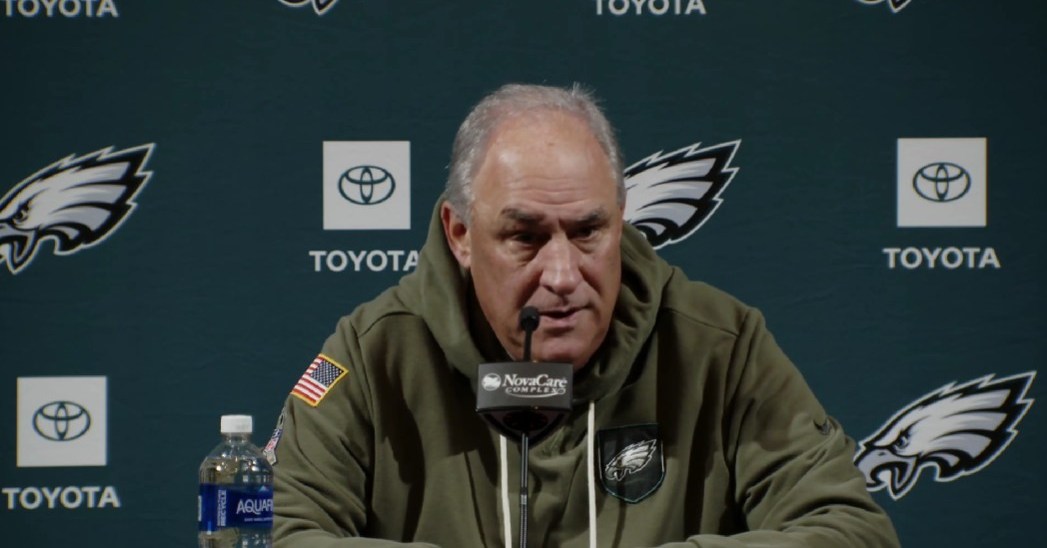
The numbers, however, told a different story. Against the Bears, a game where the defense was desperate for its best players to step up, Carter played just 70.1 percent of the defensive snaps. His third-lowest participation rate in two years. Dominant, healthy players do not see their snaps managed in critical situations. You don’t take your queen off the board in the middle of a chess match unless she is compromised. The Eagles were actively protecting a damaged asset, trying to squeeze whatever production they could from him while hiding the full extent of the decay. Defensive Coordinator Vic Fangio’s eventual confirmation of the injury wasn’t an act of transparency; it was a surrender to the obvious. The eye test and the stat sheet had rendered the corporate spin untenable. The dam had broken.
Phase II: The Inevitable Breakdown
Then came the revelation of the ‘procedures.’ Another carefully selected word. ‘Surgery’ sounds severe, permanent. ‘Procedure’ sounds routine, like a dental cleaning. But let’s be brutally clear: a player does not undergo procedures on *both* shoulders mid-season unless there is a significant, bilateral problem that can no longer be managed with cortisone shots and athletic tape. This wasn’t a tweak. This points to something systemic, likely chronic instability, labrum damage, or rotator cuff issues—the kind of wear-and-tear injuries that are catastrophic for a 300-pound lineman whose entire job is to violently engage and shed blocks. This was a ticking time bomb that the Eagles prayed would not detonate until the offseason. It didn’t make it.
The decision to operate now, rather than at the end of the season, is a white flag on Carter’s immediate future and a terrifying indicator of the severity of the damage. The organization has implicitly admitted that the situation was degenerative and that continuing to play him would risk a career-ending catastrophe. They pushed their asset until it broke, and now they are forced into a desperate act of preservation. This is not proactive management; this is emergency triage born from a failed strategy.
The Strategic Fallout: A House of Cards
The ramifications of this extend far beyond a single player’s availability for a Monday night game. This strikes at the very core of the Eagles’ team-building philosophy under Howie Roseman and raises serious questions about the long-term stability of their vaunted defensive front.
The Collapse of the Fangio Scheme
Vic Fangio’s defensive scheme is predicated on generating pressure with the front four, allowing him to be creative with his coverages on the back end. Carter wasn’t just a player in this scheme; he was the engine. His unique ability to generate interior pressure collapsed pockets and made life easier for everyone around him. Without him, the entire architecture is compromised. Jordan Davis is a phenomenal run-stuffer, a true nose tackle, but he does not possess Carter’s explosive pass-rushing ability (a fact that should have been obvious from his own collegiate tape). Milton Williams is a solid rotational piece, but he is not a game-wrecker.
The Eagles are now forced to manufacture a pass rush they once got organically. This means more blitzing, which in turn leaves a vulnerable secondary even more exposed. The loss of Carter doesn’t just create a hole; it creates a domino effect that compromises the integrity of the entire defensive unit. It forces Fangio to become more predictable and less aggressive, the exact opposite of what he was hired to be.
A Reckoning for the Front Office
Howie Roseman has been lauded for his aggressive, often audacious, roster moves. His strategy of targeting high-ceiling players with ‘red flags’ (be it medical or character) from top-tier SEC programs like Georgia has become his signature. In Carter, he saw the ultimate prize—a chance to steal a player whose talent was undeniable. But talent is only one part of the equation. Durability is the other. This situation is a chilling echo of past gambles, like drafting cornerback Sidney Jones, who was recovering from a torn Achilles. That pick was a failure. The difference here is the scale. Carter was a top-10 pick, a player the Eagles traded up to acquire, a player they envisioned as the heir to Fletcher Cox.
This isn’t just one bad pick. It’s a potential indictment of a philosophy. Is the constant pursuit of distressed assets a sustainable model for building a champion, or is it a high-stakes addiction that eventually leads to ruin? Roseman’s reputation as a savant is now on the line. He bet the stability of his defensive line on a player who, in all likelihood, came with a known and significant medical risk. If Carter never returns to his rookie form, this will be remembered as one of the most catastrophic draft blunders in recent franchise history, born not of poor scouting but of pure hubris.
The Unknowable Future of Jalen Carter
Lost in the strategic analysis is the human element. What does this mean for Jalen Carter? A defensive tackle with two compromised shoulders is like a concert pianist with two arthritic hands. His entire craft is built on a foundation of upper-body violence and leverage. A torn labrum can create chronic instability, making it difficult to lock out and control an offensive lineman. Rotator cuff damage saps the explosive power needed for a swim move or a club-rip. These are not simple recoveries. They often come with a permanent loss of strength and mobility.
Will he ever again be the player who can single-handedly wreck an offensive game plan? It’s highly unlikely. The league is littered with the careers of ‘can’t-miss’ prospects who were derailed by injuries they could never fully overcome. The Eagles didn’t just risk a draft pick; they risked the career of a young man by, in all probability, ignoring the warning signs and pushing him past his physical limits. The optimistic view is that he makes a full recovery. The cold, strategic reality is that the Eagles may now be in possession of a permanently damaged asset whose best days are already behind him. And the worst part is, they should have seen it coming.