The Currency Death Spiral and the Illusion of Stability
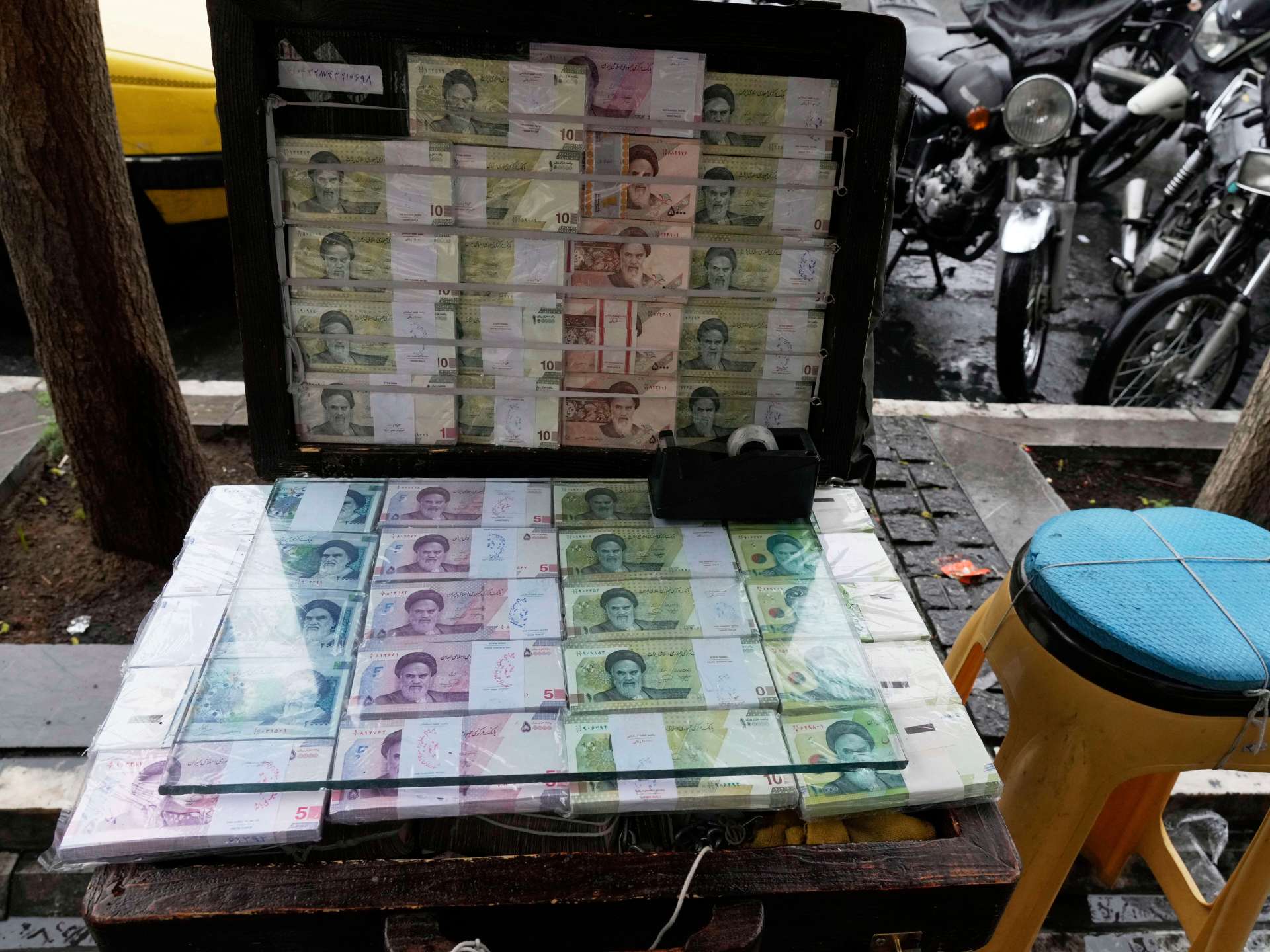
Money is a ghost in Tehran today. The Iranian Rial has officially entered a terminal phase of its existence where it no longer functions as a medium of exchange but rather as a countdown clock for the regime. When the currency plummeted to a record low against the US dollar this Monday, it wasn’t just a number on a screen. It was a match tossed into a powder keg of three years of suppressed rage. People don’t protest because they like the exercise. They protest because they cannot buy meat. They protest because their life savings evaporated while they were sleeping. Is there anything more dangerous than a man who has nothing left to lose because his bank account is a graveyard? The resignation of the Central Bank head is the ultimate white flag in this scenario. It is a desperate attempt to find a sacrificial lamb for a systemic failure that goes way deeper than one bureaucrat’s office. You can change the face at the desk but you cannot change the fact that the Rial is being crushed under the weight of decades of isolation and internal rot. It is a logic-driven catastrophe. If you print money to pay for a lifestyle you can’t afford while the world locks the doors to the global market, you end up exactly where Iran is right now. On fire.
Why do we pretend that a new Central Bank governor will fix this? It is a farce. The logic of the deconstructor says that when the fundamental pillars of an economy are built on theological purity rather than fiscal reality, the pillars will eventually snap. This isn’t just about sanctions anymore. It is about the complete decoupling of the Iranian government from the reality of its own citizens. The market has spoken and it has said that the Rial is worth less than the paper it is printed on. This creates a vacuum. In that vacuum, only anger survives. When people see their purchasing power sliced in half in a matter of weeks, they don’t look for economic white papers. They look for the nearest government building. The contrast between the luxurious lives of the elite in North Tehran and the desperation of the bazaars is now so sharp it cuts. It cuts deep. Can a regime survive when its own money is its greatest enemy? History says no. The French Revolution didn’t start with philosophy; it started with the price of bread. Iran is watching the price of everything move into the stratosphere while the leadership offers nothing but empty rhetoric and a change of personnel at the bank. It is pathetic.
Pezeshkian and the Art of the Empty Gesture
Enter Masoud Pezeshkian. The new president is trying to play the ‘good cop’ in a country where the ‘bad cop’ has been in charge for forty years. He calls on the government to hear the ‘legitimate demands’ of the protesters. What does that even mean in a vacuum of power? It is a rhetorical trick designed to buy time. He’s telling a drowning man that he hears his need for oxygen while refusing to throw a life preserver. The contrast here is staggering. On one hand, you have the state media reporting on the need for ‘action’ and ‘protection of purchasing power.’ On the other hand, you have the reality of the black market exchange rates that laugh at every official announcement. Who are they kidding? The people are not asking for a sympathetic ear. They are asking for a currency that doesn’t melt in their pockets. Pezeshkian is attempting to humanize a machine that has spent its entire existence being cold and calculated. This is high-stakes gaslighting at its finest. He talks about protecting the people while the very system he leads is the one stripping them of their dignity. Does he really think words can fill an empty stomach? The disconnect is total. It is a psychological war where the government is trying to convince the public that the pain is temporary while the math shows it is permanent. This is what happens when a government loses its grip on the logic of governance. They resort to poetry and prayers while the house is burning down.
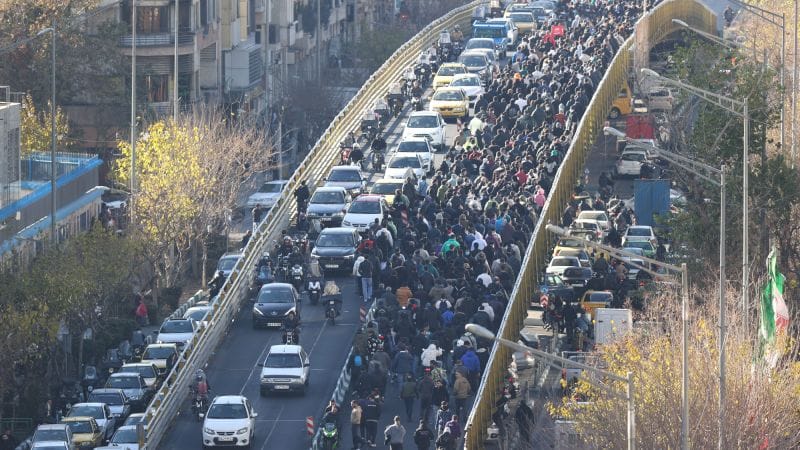
Look at the timing. These are the largest protests in three years. That is not a coincidence. The pressure has been building since the 2022 uprisings and the currency crash is simply the final straw. The ‘legitimate demands’ Pezeshkian mentions are actually a demand for a total overhaul of how Iran interacts with the world. But he can’t say that. He can’t say that the nuclear stalemate and the regional proxy wars are the real reasons the Rial is dead. To admit that would be to admit that the entire revolutionary project is a failure. So instead, he talks about ‘hearing’ the protesters. It is a classic move of a weak leader in a collapsing system. He is trying to bridge the gap between a radicalized street and a rigid supreme leadership. He will fail. Logic dictates that you cannot satisfy a starving population with empathetic nods. You need dollars. You need trade. You need a shift in reality that the Islamic Republic is fundamentally incapable of providing. The contrast between the President’s soft language and the inevitable hard crackdowns by the security forces is the only thing we should be watching. One man talks about listening while another man prepares the tear gas. That is the true face of the Iranian state today. It is a divided house that is trying to pretend it is just having a small disagreement about the plumbing while the foundation is washing away in a flood of devalued paper.
The Geopolitical Ripple Effect of a Dead Rial
Let’s deconstruct the international angle because this isn’t happening in a bubble. The US dollar is the ultimate weapon of war in the 21st century and right now it is winning a decisive battle in the streets of Tehran without firing a single bullet. Every time the Rial drops, the leverage of the West increases. But is that actually a good thing for stability? Probably not. A desperate regime is an unpredictable regime. If the economic protests become an existential threat, the leadership might decide that a foreign war is the only way to distract the public. This is the logic of the cornered rat. When the bank account is empty, the only thing left to trade is blood. The resignation of the Central Bank head sends a signal to the world that the internal financial controls have snapped. It tells investors—what few are left—to run for the hills. It tells the regional neighbors that Iran is vulnerable. And it tells the Iranian people that their leaders have no plan. Why would anyone hold a Rial today? You wouldn’t. You’d buy gold, you’d buy dollars, you’d buy anything that isn’t tied to the Tehran regime. This capital flight is a self-fulfilling prophecy. The more people try to escape the Rial, the faster it dies. It is a feedback loop of misery that Pezeshkian cannot stop with a speech. The logic is brutal and unforgiving. The Rial is a symbol of the regime’s sovereignty and right now that sovereignty is being shredded in the bazaars.
What comes next? If the currency doesn’t stabilize, the protests will shift from ‘economic’ to ‘political’ in a heartbeat. They already are. You don’t scream about the exchange rate for six hours without eventually screaming about the guy at the top. The ‘legitimate demands’ will quickly become a demand for a new government. This is the nightmare scenario for the Ayatollahs. They remember 1979. They know that once the merchants in the bazaar turn against the state, the game is over. The merchants are the backbone of the traditional economy and they are watching their businesses die. They can’t import goods. They can’t price their inventory. They are frozen. This paralysis is the precursor to a total societal breakdown. We are watching the slow-motion collapse of a middle class that was already on life support. The contrast between the regime’s survival and the people’s survival has never been more obvious. Only one can win. Is it possible to fix a broken currency without fixing a broken political system? No. The two are fused together. The Rial is the blood of the Iranian body politic and it is currently hemorrhaging. No amount of ‘listening’ by Pezeshkian is going to stop the bleeding. The only question left is how much longer the heart can keep beating before the whole system shuts down. It’s not about if it fails, it’s about when the failure becomes irreversible. And looking at the streets today, we might already be there.