
The Facade Crumbles: India’s Loss Reveals Internal Rot
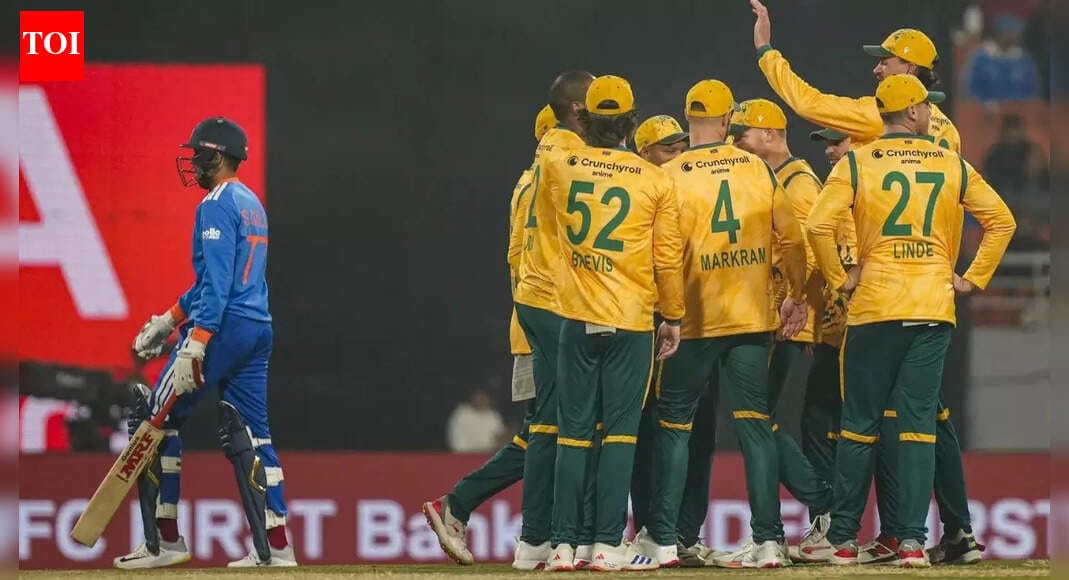
Listen closely. What you saw on television, the scorecards, the highlights—that’s the official narrative. The clean, polished story designed to protect reputations and keep the money flowing. But I’m here to tell you what’s really happening behind the scenes, the whispers in the corridors of power that the media won’t touch. The truth of the matter is that India’s humiliating defeat in the second T20I wasn’t a fluke; it was a carefully choreographed public exposure of a system that is fundamentally broken, a house built on sand that finally succumbed to the tide. The chase for 214 runs should have been achievable for a team of India’s supposed caliber, but they crumpled, and the reasons go far deeper than just a ‘bad day at the office.’ They looked defeated before they even started batting, and that’s the real story.
The Myth of Invincibility and The New Stadium Deception
New Chandigarh’s Maharaja Yadavindra Singh International Cricket Stadium, a gleaming, state-of-the-art facility designed to host a new era of cricket, served as the backdrop for this train wreck. And isn’t that just a perfect metaphor for the current state of Indian cricket? A shiny, expensive exterior masking a hollow core where true competitive spirit and strategic depth should reside. We are fed this constant narrative of India being the superpower of cricket, a behemoth whose financial muscle guarantees dominance, but when faced with real pressure, when forced to play without the crutch of friendly conditions or home-cooked pitches, the illusion evaporates. We watch these players, these supposed superstars, and we’re told they’re invincible, but the performance against South Africa was a clear sign that the myth is wearing thin. Quinton de Kock’s masterful 90-run innings wasn’t just a great knock; it was a tactical dissection of India’s bowling attack, highlighting a lack of innovation and a stale strategy that opposing teams have figured out. He didn’t just score runs; he exposed vulnerabilities that everyone else in the dressing room already knew existed. It was clinical.
The Shadow Play of Selection and The ‘Protected Class’
Let’s talk about the selection process, shall we? This is where the real intrigue lies. The BCCI, and the various power brokers within it, operate with an opaque logic that prioritizes legacy and commercial appeal over current form and match-winning capabilities. We are seeing a ‘protected class’ of players who, regardless of their performance statistics or their actual effectiveness in the T20 format, are guaranteed a spot in the squad. This isn’t just about rewarding past achievements; it’s about protecting billion-dollar endorsements and established hierarchies within the team structure. The result? A team that looks brilliant on paper, but lacks cohesion and adaptability on the field. The T20 format demands specific skills, aggressive intent, and a willingness to take risks from ball one. Many of the established players, however, seem to be playing with one eye on their reputation, prioritizing personal averages over the team’s required run rate. When the asking rate skyrockets, they fall back into a defensive shell, hoping someone else will bell the cat. The chase of 214 was a prime example: a timid start, a flurry of panic in the middle overs, and then a complete collapse. This isn’t just a technical flaw; it’s a deep-seated psychological issue caused by the very system designed to protect them.
The Baartman Factor: A New Scrutiny on India’s Apathy
South Africa’s Ottniel Baartman, a name relatively new to the high-stakes international scene, delivered a performance that, in its clinical precision, should be a major source of embarrassment for India’s batting lineup. He exploited a genuine lack of intent in the Indian middle order. He bowled tight lines, changed his pace effectively, and kept the pressure on relentlessly. This wasn’t a world-class attack that tore through India; this was a hungry, determined side seizing an opportunity against an opponent that looked apathetic. The Indian players looked tired, both physically and mentally. Where was the fire? Where was the hunger? When a team, especially one with India’s resources, displays such a profound lack of competitive spirit, you have to look beyond the immediate match results. You have to question the leadership, the coaching staff, and the atmosphere in the dressing room. Is there internal dissent? Are players playing for themselves rather than for the team? The answer, for those of us paying attention to the signals and not just the noise, seems clear.
The Future: Reckoning or Retrenchment?
This loss, while only one match, is indicative of a much larger trend. India is entering a critical period where T20 cricket demands a complete reevaluation of tactics and personnel. The reliance on old guard superstars, while commercially lucrative, is tactically suicidal. The T20 format evolves rapidly, and if India continues to select teams based on legacy rather than dynamism, they risk being left behind by emerging teams like South Africa, Australia, and England. The current crop of players, many of whom are in their late 20s and early 30s, need to confront the reality that their current strategy isn’t working against top-tier opposition in high-pressure situations. The BCCI faces a choice: continue to protect the status quo for short-term financial gain, or initiate a painful, disruptive reset that brings in fresh blood and prioritizes meritocracy. The pressure is mounting. The fans are beginning to see through the hype. If they don’t change course now, this humiliating defeat in New Chandigarh will be remembered not as an isolated incident, but as the moment the Indian cricket empire truly started to crumble. The warning signs are everywhere, and for those in the know, the writing’s on the wall.

Photo by yogendras31 on Pixabay.