The Illusion of Meritocracy in Hong Kong’s Opening Act
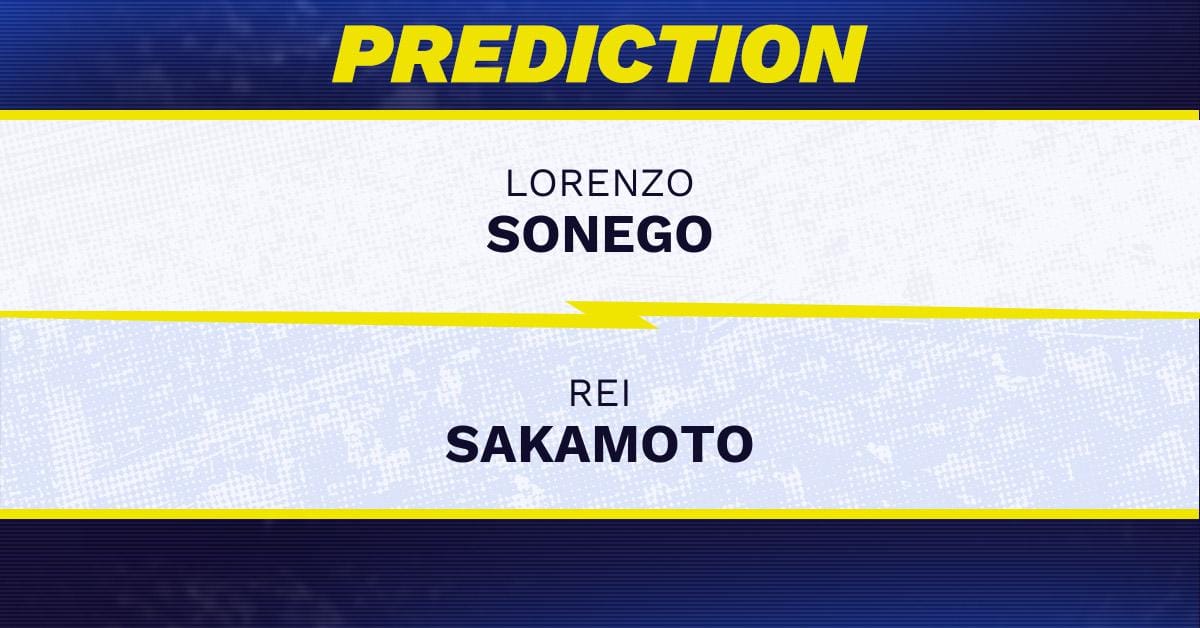
But look at this draw! We are staring down the barrel of the 2026 BANK OF CHINA HONG KONG TENNIS OPEN, and the narrative is already set: small points, small stakes, perfect for massaging egos before the real meat of the Australian Open slams down. And what do we get served up in the Round of 32? Lorenzo Sonego, ranked 39th in the world—a position that suggests competence, perhaps—facing Rei Sakamoto, a player languishing way down at 200th. This isn’t a competitive matchup; this is a pre-scripted exit for the underdog, padded in the guise of ‘exciting first-round matches.’
Why We Should Be Outraged by Such Mismatches
And why should anyone care? Because these early-season ATP 250 events are where the system’s rot becomes visible. The gap between the top 40 and the top 200 isn’t just skill; it’s economic survival. Sonego, if he does his job—and he absolutely should, unless he’s already checked out mentally for the year—banks the easy progression, some decent per diem, and crucial momentum.
Because let’s be blunt about Rei Sakamoto here. Coming in at 200, he’s either a local hopeful getting a courtesy wild card, or he barely squeaked through some grinding, dusty Challenger circuit qualifiers that left him absolutely cooked before he even touched the main draw surface in Hong Kong. The sheer physical toll required to climb from the lower rungs means that even if Sakamoto has the heart of a lion, his legs are probably running on fumes already, facing a disciplined Italian like Sonego.
Sonego: The Man Who Must Conform to Expectation
And what of Sonego? The pressure on the established player ranked inside the Top 40 at a non-Slam event is paradoxical. He must win, or it’s a crisis of confidence that tanks his entire first quarter. He can’t afford a slip-up against a 200th-ranked opponent; that’s not just losing a match, that’s losing the narrative. He needs those 250 points to stay comfortably inside the safety net before the mandatory seeding lottery of Indian Wells and Miami rolls around.
It’s a grind. A terrible grind.
Think about the optics. If Sakamoto somehow pulls off the upset—and yes, upsets happen, that’s why we watch, right?—it immediately triggers the financial review boards in Sonego’s camp. Questions about dedication, about coaching staff, about whether he’s been training in the Alps or down at some poorly equipped local club wasting time. It’s career suicide in slow motion for the higher-ranked player when they stumble this early against someone they should dispatch in straight sets without breaking a sweat.
The Historical Precedent of Early Season Blowouts
We have seen this movie a hundred times. Think back to the early 2010s when the ATP structure felt slightly less sclerotic. Even then, the Top 50 players treated these non-majors as mandatory hurdles, not opportunities for genuine competitive tests against players who actually earned their spot through consistent, grueling tour play. This isn’t about tennis purity; it’s about ATP logistics ensuring that the names that sell tickets in the second week of January are safely tucked away in the second round draw sheet.
And what about the betting angle? The odds for this contest will be obscene, favoring Sonego by a margin that makes betting on him feel like leaving your money in the bank. It screams of manipulation, or at least, blatant predictability, which kills any genuine viewership excitement beyond the hard-core tennis junkies tracking every minor ranking fluctuation.
The Deeper Malaise: Challenger Circuit Pain
Consider the reality for Sakamoto, the supposed ‘giant killer’ of this opening round. He likely had to play three brutal qualifying rounds just to get here, probably battling humidity, jetlag, and terrible hotel food for a chance to face a Top 40 guy in the main draw, where the prize money is marginally better but the expectation of winning is nonexistent. This system starves the grinders.
And for what? A single, almost guaranteed first-round exit reward, maybe netting him enough cash to pay for the flight home and a few weeks’ worth of decent coaching. It’s the treadmill of professional tennis hell. This is why players quit. They realize the statistical probability of breaking through the glass ceiling when the established order is this well-protected by scheduling and seeding rituals is infinitesimally small.
Dissecting the Surface and Conditions
Hong Kong, typically played on outdoor hard courts, demands precision and stamina. Sonego, coming from the European winter training blocks, might be slightly acclimated, but he’s still shaking off the Christmas cobwebs. Sakamoto, assuming he comes from the Asian circuit where these events are clustered, might have a slight regional advantage regarding the atmospheric pressure or the specific speed of the rebound.
But advantages against a 35-spot ranking gap? Negligible. Unless Sakamoto possesses a world-class serve that can simply hold game after game—a rarity for a player outside the Top 150—he will be broken. Sonego will probe, use his superior footwork that comes from consistent high-level training, and exploit Sakamoto’s inevitable tentative second serves.
It’s a tactical demolition waiting to happen. We are being sold a story of a potential upset when the reality is a formality.
The Australian Open Ripple Effect
The real issue looms beyond Tuesday. Melbourne is weeks away. Players like Sonego need matches that test them—matches against peers, guys ranked 25 to 50—to find their edge for the Majors. Wasting energy winning easily against a 200th-ranked player is almost as bad as losing; it doesn’t sharpen the blade.
If Sonego cruises in two quick sets, he’s bored. If he has to battle for three hours because Sakamoto miraculously finds his A-game for 90 minutes, Sonego’s legs might be compromised for the next round against someone truly dangerous, say, a Daniil Medvedev or a Casper Ruud warming up in the same draw. This seemingly minor first-round fixture is actually a complex calculation in resource management for the guys who actually matter in the bigger picture.
The Provocation: Is the ATP Actively Suppressing New Talent?
And I have to ask, are the organizers simply doing the players on the fringe a disservice by inviting them into matchups that guarantee exposure without guaranteeing a fair fight? Or is this an intentional mechanism? Keep the bottom tier hungry, playing for peanuts in miserable conditions, while ensuring the middle tier (30-100) stays occupied with ‘guaranteed wins’ that keep them motivated enough not to retire early?
It smells like cynical management. The ATP needs names to fill the early slots, yes, but staging a mismatch of this magnitude right before the Grand Slam calendar kicks off is insulting to the intelligence of anyone who follows the sport beyond a superficial glance at the highlight reels.
Because when you see predictions floating around favoring Sonego at astronomical odds, you realize the entire ecosystem is built on the assumption that the established order must prevail, regardless of whether the matchup is genuinely competitive or simply a convenient placeholder on a Tuesday afternoon schedule.
And that, my friends, is the tragedy of the tour when it’s played under the shadow of the looming Australian Open hype machine.
Prediction: The Cold, Hard Facts
We are not here for fairy tales. Sonego takes this. It won’t be a classic. Expect Sonego to drop the first three service games he plays slightly tentative, maybe even drop the first set out of sheer complacency, but once he locks in and realizes he needs to stop messing around, the 200th ranked player simply doesn’t have the tactical arsenal or the physical gas tank to keep pace for three full sets. It ends 6-4, 6-2, or something equally lopsided after an initial hiccup. It’s boring, but it’s strategically sound for Sonego’s long-term goals. The only real controversy will be how quickly the betting markets shift once the initial point is played, revealing just how certain the bookies are about this predetermined outcome. It is deeply unsatisfying tennis viewing.