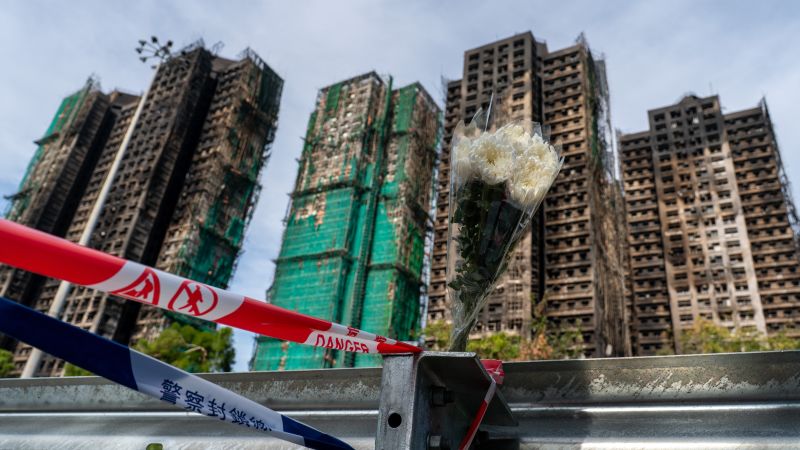
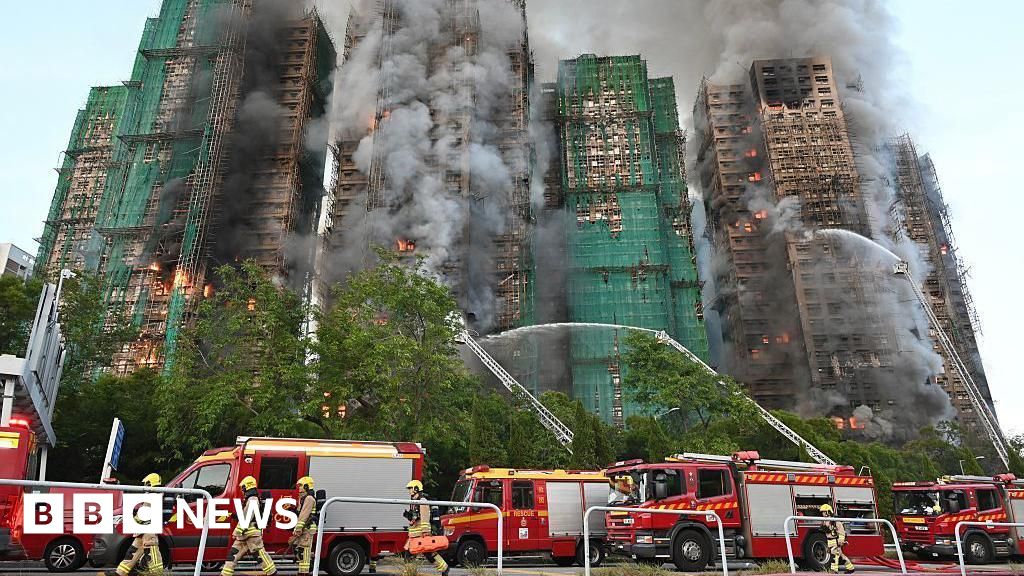
So, another distant tragedy? Just something to scroll past?
Is that what you think this is?
Wrong. Dead wrong. This isn’t just news. This is a siren. A shrieking, red-hot alarm bell ringing in the dead of night, and it’s ringing for all of us. You see the headlines: “Hong Kong apartment fire,” “death toll rises.” You feel a flicker of sadness and you move on to the next story about some celebrity or a stock market dip. But you cannot afford to look away from this. This inferno, this pillar of black smoke and human ash, is a monument to the rot that is eating our cities alive from the inside out. This wasn’t an accident. It wasn’t a freak occurrence. This was an appointment with destiny, scheduled a year in advance with formal complaints, ignored warnings, and the silent screams of the people nobody wanted to listen to. It was murder by bureaucracy.
The numbers… can they even be real?
128 dead? 200 missing? What does that even mean?
Let’s be brutally honest. What does “missing” mean when a 40-story building becomes a furnace? It doesn’t mean they’re on vacation. It doesn’t mean their phones are off. It means they were vaporized. It means they were turned into smoke and memory. It means their families will get a phone call about dental records and DNA swabs, if they’re lucky. The officials are carefully managing the numbers, releasing them in drips and drabs to avoid pure, unadulterated panic in the streets. But do the math. This isn’t 128 dead. This is 300+. A massacre. A quiet, vertical pogrom against the poor. These aren’t statistics. They were people. People who woke up, drank their coffee, worried about their bills, and then were cooked alive in their own homes because someone, somewhere, decided that fixing a faulty fire alarm was less important than a balanced budget sheet.
Do you get it yet? This is the abacus of modern urban life. The cost of a life versus the cost of a sprinkler system. And every single time, the balance sheet wins. Every. Single. Time.
They were warned? You’re telling me they KNEW?
A whole year of complaints? How is that possible?
Possible? It’s standard operating procedure. A feature, not a bug. For over a year, residents of that death trap were shouting into the void. They filed complaints about blocked fire escapes—hallways so cluttered with debris and illegally constructed walls that they were mazes designed by a sadist. They reported faulty wiring, sparks flying from outlets, the smell of ozone in the air. Clear, undeniable red flags. The writing wasn’t just on the wall; it was practically screaming in neon lights. And what was the response? Forms were filed. Reports were shelved. Memos were exchanged between departments, each one passing the buck to the next in a pathetic, circular firing squad of accountability. The system worked perfectly. It was designed to ignore these people. It was designed to let this happen.
Think about the sheer, mind-numbing arrogance. To receive a formal complaint that says “We are going to die in a fire if you do not act,” and to file it under “pending.” That isn’t just negligence. It’s a profound statement of contempt. It’s the system telling its most vulnerable citizens that their lives have absolutely no value. It is the cold, calculated decision that the risk of their fiery deaths is an acceptable rounding error in the city’s grand economic plan. How can anyone sleep at night knowing they held the paper that could have saved those lives, and used it as a coaster for their coffee?
What exactly were these buildings?
Public housing sounds fine. Was it?
Don’t let the sanitized term “public housing” fool you. That’s a PR spin for what these structures really are: vertical slums. Concrete coffins stacked one on top of the other, reaching for a sky they’ll never touch. Hong Kong is a playground for billionaires, a shimmering mirage of wealth, but beneath that veneer is a pressure cooker of human desperation. The people in that building were living in what are locally known as “subdivided units” or “coffin homes.” Imagine taking a small apartment, one meant for a family of three, and using plywood and sheet metal to chop it into ten or fifteen tiny, windowless cells. Each one just big enough for a bed. That’s not a home. That’s a human storage facility. The hallways, already narrow, become a labyrinth of jerry-rigged electrical wires and illegal gas canisters for cooking. It’s a tinderbox by design.
Why? Because that’s the only way a cleaner, a construction worker, or a waitress can afford to exist in a city built for oligarchs. They are packed into these fire traps, forced to live in constant, low-grade fear, just for the privilege of serving the city’s wealthy. This fire didn’t start with a spark. It started decades ago with city planning that prioritized luxury condos over human dignity. It started with a system that sees people not as citizens to be protected, but as resources to be warehoused as cheaply as possible. This was a class war played out with fire hoses and body bags.
This is a Hong Kong problem. Why should I care?
This can’t happen here, right?
Are you so sure? Are you really that naive? Open your eyes. Look around. The fire in Hong Kong is not an isolated incident; it’s a preview. It’s a dress rehearsal for what’s coming to every major city in the Western world. Remember the Grenfell Tower in London? Same story. Cheaper, flammable cladding was used to save a few bucks, and 72 people paid with their lives. Look at the crumbling public housing in New York City, the affordable housing crisis in Los Angeles, the forgotten, neglected suburbs of Paris. The ingredients are all the same. Aging infrastructure. A widening chasm between the super-rich and the working poor. A government that is increasingly paralyzed, incompetent, and beholden to corporate interests over public safety.
We are all living in that Hong Kong tower. Maybe your floor is a little higher up. Maybe your fire alarm works… for now. But the structural rot is spreading. The foundation is cracking. We are building our gleaming, unequal societies on a bedrock of deferred maintenance and human neglect, and someday the bill comes due. Hong Kong’s bill just arrived, and it was paid in blood and fire. Whose turn is it next? Is it your city? Your neighborhood? Your building? Don’t be so certain you’re safe. The silence from your own city officials should be the thing that terrifies you most.