The Lipstick & Lies Scandal: What’s Really Going On with Pentagon Pete?
Alright, folks, buckle up, because this one’s a real kick in the teeth for anyone who believes in actual, honest-to-goodness leadership. We’re talking about Pete Hegseth, the man who was supposed to be running the Pentagon, supposedly looking out for American interests and our allies (like Ukraine, believe it or not), and what’s the headline? He was apparently more concerned with his own mug than a major geopolitical crisis. No kidding. It’s enough to make you spit your coffee across the room, isn’t it?
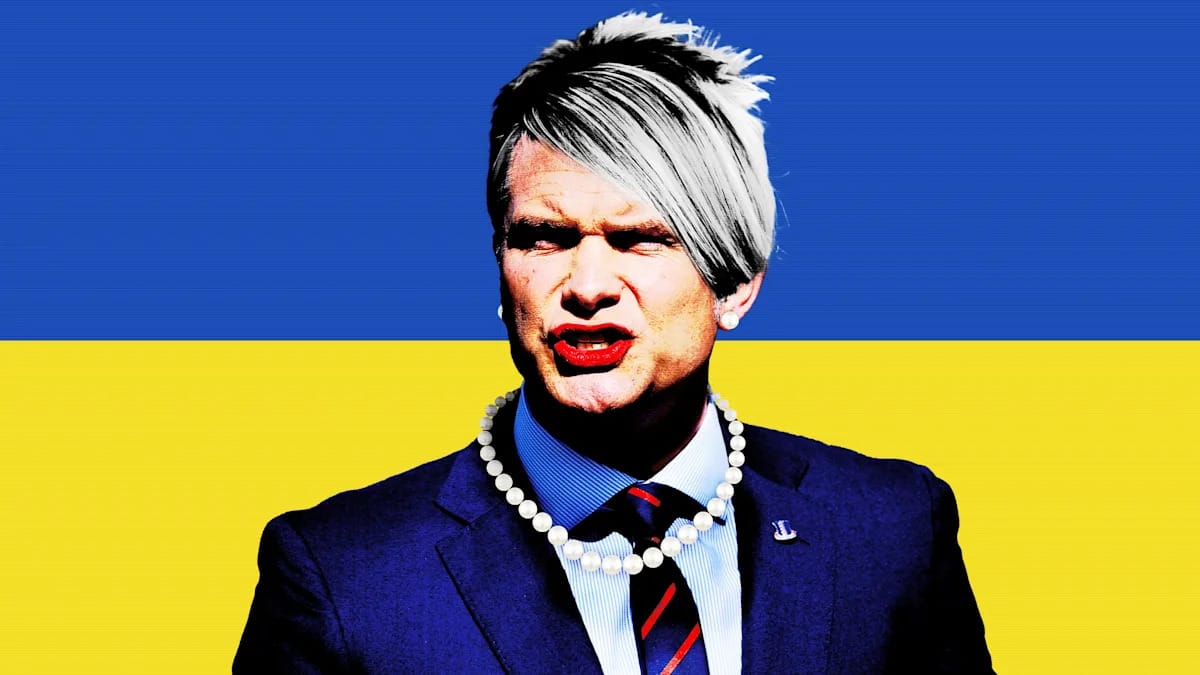
The New York Times, bless their deep-diving hearts, dropped a bombshell: our Secretary of Defense (yes, that Secretary of Defense) allegedly powdered his nose with his personal stash of makeup before meeting a world leader (a Ukrainian official, no less!), then proceeded to treat their desperate questions like background noise. I mean, c’mon. This isn’t some high school drama club audition; this is a meeting about, you know, survival. It’s an absolute outrage, a total slap in the face to anyone who believes in serious governance, and it just proves what we’ve been saying all along: these D.C. types are living in their own little bubble, far removed from the actual struggles of real people and real nations.
So, What’s the Big Deal with a Little Makeup, Anyway? (Plenty, if you ask me!)
Some folks might shrug this off, right? ‘Oh, a little makeup, who cares?’ But that’s missing the entire damn point, isn’t it? It’s not about the makeup itself, not really. It’s about what it represents: a leader (or someone pretending to be one) so consumed with superficial appearances, so utterly devoid of genuine concern for the grave matters at hand, that he’d rather ensure his complexion is photo-op ready than actually engage with a nation fighting for its very existence. Think about that for a second. The optics, the performance, the stagecraft, all trumping the actual, raw, desperate plea from an ally under siege. This isn’t just bad manners; it’s a dereliction of duty, a moral failure that sends shivers down your spine when you consider the kind of people we’re trusting with our national security.
It screams a priority list that’s completely out of whack, a value system that’s gone utterly sideways. While Ukrainian soldiers are facing down tanks and artillery, while their civilians are fleeing for their lives, their representatives come to Washington seeking help, seeking answers, seeking solidarity, and what do they get? A guy touching up his foundation and then apparently checking out. It’s a disgrace, pure and simple, and it makes you wonder what other critical issues these folks are tuning out while they’re busy perfecting their public image.
Who is Pete Hegseth, Really? (Beyond the Powder Puff and Punditry)
Now, for those who might not know Hegseth’s whole schtick, let’s peel back a layer or two. He’s not some career diplomat who spent decades in the trenches; he’s a media personality, a TV talking head, someone who built a brand on cable news. And suddenly, he’s Secretary of Defense. Does that sound like a meritocracy to you? Or does it sound like a case of someone being parachuted into a critical role because they’re good on camera, because they fit a certain narrative, rather than possessing the nuanced understanding and gravitas required for such an immense responsibility? (I think we all know the answer there, don’t we?) This isn’t to say people from outside traditional political circles can’t lead, far from it. But there’s a world of difference between fresh perspective and outright theatricality taking the reins.
His background, frankly, makes this whole makeup-and-ignore saga even more glaring. It feeds directly into the populist narrative that D.C. is run by a detached elite, more concerned with their celebrity status than the grit and grime of actual governance. It’s a tale as old as time, really, about the performance overshadowing the purpose. And when the purpose is the defense of nations and the stability of the free world? Well, then that performance becomes a dangerous farce, doesn’t it? It’s like watching a reality TV show contestant trying to run a Fortune 500 company – the disaster is practically guaranteed, just a matter of when it hits.
The Ukraine Angle: Ignored or Intentional Dismissal? (A Chilling Thought)
Let’s talk about Ukraine for a moment. This isn’t just some random country; it’s a sovereign nation under brutal attack, a vital partner in Eastern Europe, and a symbol of democratic resistance against authoritarian aggression. For their representative to fly all the way to Washington, D.C., and be met with what sounds like absolute disinterest from the Secretary of Defense? That’s not just a gaffe; that’s a geopolitical earthquake in miniature. Was it incompetence? Arrogance? Or, and this is the really chilling thought, was it a deliberate signal from the administration itself? A subtle (or not-so-subtle) way of saying, ‘We’re not really listening’? (Imagine the cold dread settling in if that were the case.)
Think about the message this sends to Kyiv. ‘Your desperate pleas? We’re busy with appearances.’ And what about to Moscow? ‘The U.S. defense chief is distracted by his mirror, not your aggression.’ It undermines American credibility faster than you can say ‘photo opportunity.’ Our allies need to know we’re engaged, that we’re serious, that their struggles are our struggles. When the head of our defense apparatus is allegedly checking his reflection while they’re pouring out their hearts, that trust erodes, and it erodes fast. This isn’t just some minor diplomatic kerfuffle; it’s a gaping wound in international relations, a clear sign that a key player might not be taking the game seriously, and that’s a dangerous path, my friends, a very dangerous path indeed.
History Rhymes: When Leaders Prioritize Image Over Substance (Always a Bad Idea)
If you think this is a new phenomenon, you haven’t been paying attention to history, have you? Leaders prioritizing vanity over leadership is a tale as old as power itself. We’ve seen it time and again, from Roman emperors obsessed with their statues to Bourbon monarchs who couldn’t be bothered with the plight of the common people (and we all know how that ended for them, right?). It’s the classic sign of an empire in decline, or at least a leadership class detached from reality. When the show becomes more important than the substance, when the polished exterior replaces genuine internal strength, that’s when cracks start to appear, and eventually, things crumble.
Remember Nero, supposedly fiddling while Rome burned? This Hegseth incident feels like a modern-day echo of that, doesn’t it? Not a fiddle, but a compact mirror. Not Rome, but the moral high ground and diplomatic trust of the United States. It’s a potent symbol of what happens when politics becomes pure theater, when the performance is all that matters, and the script (which should be about protecting our nation and allies) gets tossed aside for a better angle. This isn’t just one guy having a bad day; it’s symptomatic of a deeper rot, a culture where image is everything and integrity is, well, an afterthought. It’s a sad state of affairs, truly, and it should make every single one of us question who we’re allowing to hold the reins of power.
The Fallout: Short-Term Humiliation, Long-Term Erosion (And What It Means for YOU)
So, what’s the real damage here? In the short term, it’s a giant, humiliating black eye for American diplomacy and for the administration Hegseth served. Allies are left scratching their heads, wondering if Washington truly cares, while adversaries are probably having a good chuckle, seeing perceived weakness and unseriousness. It’s an open invitation for doubt and distrust, and in the cutthroat world of international relations, that’s a commodity you can’t afford to be giving away for free. It undermines the very foundation of alliances that have kept the peace (mostly) for decades. This isn’t just about a few embarrassing headlines; it’s about the fabric of global trust fraying a little more.
But the long-term implications are even more concerning. This kind of behavior erodes public trust, not just in specific individuals, but in the entire system. When citizens see their top officials acting like reality TV stars rather than dedicated public servants, they lose faith. And when faith in institutions crumbles, that’s when things get truly dangerous for democracy itself. It fuels the cynicism that says ‘they’re all the same,’ ‘they don’t care about us,’ ‘it’s all a show.’ And guess what? Sometimes, they give us plenty of evidence to back that up, don’t they? This story is a prime example of why so many people feel alienated from their own government, seeing a class of elites more concerned with their own reflection than the very real crises impacting everyone else. It directly impacts you, because a government that prioritizes theater over substance is a government that isn’t really working for its people, plain and simple.
What Can We Expect Next? (More Excuses, Less Accountability)
Don’t hold your breath for any meaningful accountability, folks. We’ll probably get some carefully worded statements, maybe a deflection or two, perhaps a ‘deep state’ conspiracy theory thrown in for good measure. The playbook is pretty standard at this point, isn’t it? The media will report it, some pundits will fume, and then, sadly, it’ll likely fade into the background as the next outrage cycle begins. That’s the way the D.C. machine works; a constant stream of distractions to keep us from focusing on the systemic issues.
But we, the people, have to do better. We have to demand more. We have to look past the superficial headlines and ask the hard questions: Are these the people we want making life-and-death decisions? Are we content with a political class that prioritizes image over integrity, and vanity over vital foreign policy? If we allow this kind of behavior to become normalized, then we’re truly lost. It’s a wake-up call, a blaring siren reminding us that when leaders forget their actual duties and become obsessed with their own celebrity, everyone else pays the price. So, let’s not forget this little incident. Let’s keep it in mind the next time someone tries to tell us that everything’s fine in Washington. Because clearly, it’s not. Not by a long shot.