The Unseen Blueprint Behind Hanoi’s Rural Gambit
And so it begins. The dispatches from Hanoi, written in the dry, bureaucratic language of official state media, speak of ‘developing tourism’ and ‘attracting international guests’ to the city’s periphery. They mention specific districts like Sóc Sơn and Thư Lâm, painting a quaint picture of cultural exploration and ecological harmony. But to read this as a simple tourism initiative is to miss the forest for the trees. It’s a profound miscalculation. Because what we are witnessing is not a tourism campaign; it is the deliberate execution of a grand strategy, a calculated maneuver in urban planning and economic warfare designed to secure Hanoi’s future dominance, not just as a travel destination, but as the undisputed cultural and economic nexus of Vietnam. This is not about hospitality. This is about control.
For decades, the engine of Hanoi’s tourism machine has been the Old Quarter, a dense, chaotic, and intoxicating labyrinth of 36 streets. It is the city’s heart, but it is a heart under severe strain, suffering from the arrhythmia of over-tourism. The infrastructure groans under the weight of millions of annual visitors, the local culture is increasingly diluted into a caricature for tourist consumption, and the very authenticity that drew travelers in the first place is being eroded by a tidal wave of souvenir shops and trendy cafes. The city’s planners, who are anything but sentimental, see this with cold clarity. They understand that a resource, when over-exploited, collapses. And the Old Quarter is perilously close to that breaking point.
A Strategy of Dispersal and Control
But rather than simply restricting access or attempting to patch the failing infrastructure, they have chosen a far more ambitious path. This is a strategy of dispersal. A strategic retreat from the core to conquer the periphery. By actively ‘hút’—sucking or pulling—tourists out to the suburban and rural districts, they are relieving the pressure on the city center. This is step one. Step two is far more consequential. Because in doing so, they are extending the economic and administrative reach of the capital into these formerly agrarian areas, transforming them from passive agricultural hinterlands into active components of the tourism-industrial complex. These villages are being annexed, not by soldiers, but by tour buses and development plans.
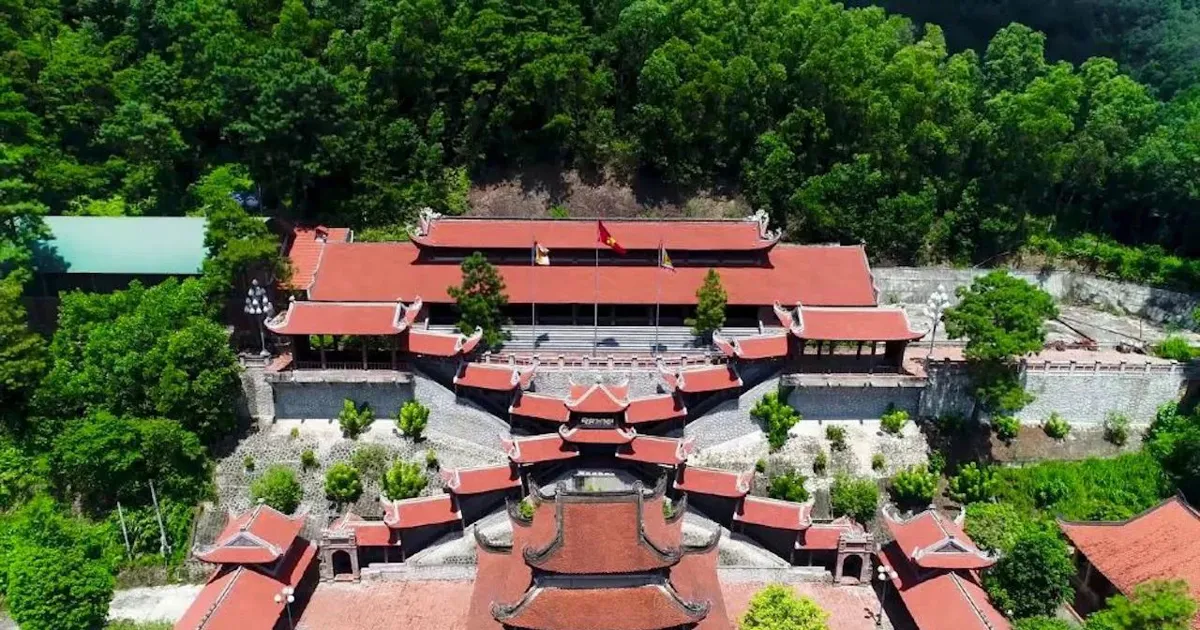
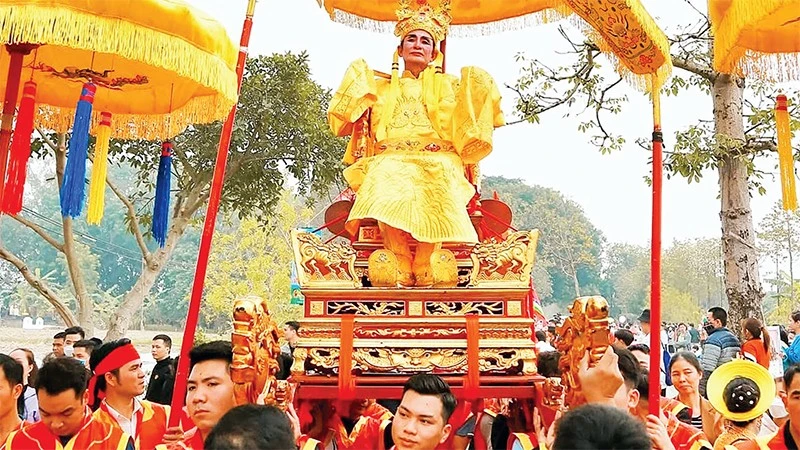
Consider the choice of Sóc Sơn. It is not random. It is a masterstroke of strategic selection. Situated to the north, it holds immense historical and mythological weight, deeply tied to the legend of Saint Gióng, a foundational myth of Vietnamese identity. It offers a powerful, pre-packaged narrative of ancient heroism and national pride. It also possesses the requisite ‘natural beauty’—mountains, forests, lakes—the perfect raw material for the eco-tourism product. And, most critically, it sits near Noi Bai International Airport. This is about logistics. International visitors can be funneled directly into this curated ‘authentic’ experience, a sanitized, controlled environment, perhaps even before they set foot in the chaotic core of Hanoi itself. It serves as a gateway and a filter, an initial point of contact that the state can meticulously manage. They are building a new front door to the city.
The Commodification of Authenticity
And then there is the language used. Words like ‘eco-tourism,’ ‘cultural preservation,’ and ‘sustainable development’ are deployed as a form of rhetorical camouflage. The reality is the planned and systematic commodification of authenticity. The ‘ngỡ ngàng’—the supposed astonishment—of a tourist discovering that Hanoi is more than just Tranh Khúc bánh chưng is not an organic experience; it is a manufactured moment, carefully designed and marketed. They are not preserving culture; they are productizing it. They are taking the complex, messy, and evolving reality of rural Vietnamese life and streamlining it into a consumable package for a Western audience that craves experiences but lacks the time or inclination for genuine immersion. A half-day trip to a handicraft village, a staged folk music performance, a meal of ‘local’ delicacies at a resort built with foreign capital. It’s a theme park of tradition.
Because the real question is never about the tourists; it is about the local population. Will the economic benefits truly trickle down to the farmers in Thư Lâm, or will they be captured by well-connected tour operators, hotel chains, and real estate developers from the city? The historical precedent is not encouraging. When capital flows into a ‘newly discovered’ area, it often leads to a form of internal colonialism. Land prices skyrocket, pushing out the original inhabitants. Traditional livelihoods, like farming, become economically unviable compared to serving the tourist economy. Young people abandon ancestral skills to work as hotel staff or tour guides. The social fabric, woven over centuries, is unraveled in a single generation. The village ceases to be a living community and becomes a museum, its residents the unpaid exhibits.
The Geopolitical Dimension
But the strategy extends even beyond national economics. Vietnam is in a fierce competition for the international tourism dollar. It is vying with Thailand, with Malaysia, with Indonesia. Each nation must differentiate its ‘product.’ Thailand has its beaches and nightlife. Cambodia has Angkor Wat. Vietnam, and specifically Hanoi, is positioning itself as the destination for cultural and historical depth. By expanding its tourism portfolio beyond the well-trodden paths of the Old Quarter and Ha Long Bay, it is building a more resilient and diverse offering. A ‘Northern Cultural Hub’ centered on Sóc Sơn is not just a local project; it is a statement of intent on the regional stage. It is a move to capture a specific market segment—the so-called ‘educated’ or ‘experiential’ traveler—and dominate it.
And this entire operation is a testament to the unique power of Vietnam’s centralized state. A project of this scale, requiring the coordination of multiple government departments (Sở Du lịch, UBND TP. Hà Nội) and local administrations, would be bogged down for decades by legal challenges, local opposition, and bureaucratic infighting in a Western democracy. Here, it can be conceived and executed with ruthless efficiency. The plan is the priority. The state’s will is paramount. This is the enduring legacy of a system that prioritizes collective goals, as defined by the Party, over individual objections. It is both its greatest strength and its most terrifying aspect.
So, as you read the news about these charming new destinations, look past the glossy photos of verdant landscapes and smiling artisans. See the blueprint underneath. See the strategic dispersal of tourist pressure. See the economic annexation of the periphery. See the calculated manufacturing of an ‘authentic’ product. See the geopolitical positioning. Hanoi is not inviting the world into its backyard. It is redesigning its entire estate to maximize profit and consolidate control, ensuring that for the next century, all roads—and all revenue streams—lead back to the capital. This isn’t a tour; it’s a conquest.