
The Anatomy of Manufactured Outrage: A Krampus Float and the Fragility of American Tradition
In the quiet, often self-congratulatory bubble of Northwest Arkansas, where progress and tradition perform a delicate, often strained, dance, Bo Counts decided to introduce a new character to the holiday pageant. Counts, a local bar owner, took on the persona of Krampus, the cloven-hoofed, whip-wielding figure from Alpine folklore who serves as the dark counterpart to Saint Nicholas. His chosen vehicle for this cultural disruption was the Lights of the Ozarks parade in Fayetteville. It was, perhaps, inevitable that this particular action—a seemingly innocuous entry in a holiday parade—would ignite a firestorm of performative indignation, revealing in stark detail the underlying anxieties and hypocrisies that define America’s modern relationship with its holidays.
The incident itself is almost laughably simple in its premise: a local business owner, known for catering to a slightly counter-cultural clientele at his bar Pinpoint, enters a seasonal parade with a figure historically associated with a different tradition. The initial data point is merely that a float depicting Krampus, a figure largely unknown to the general American public outside of horror movies and esoteric trivia, appeared in a celebration designed primarily around a sanitized, commercialized version of Santa Claus and nativity scenes. The reaction, however, was instantaneous and severe, precisely because it challenged a specific, narrow cultural narrative that holds a powerful grip on the American imagination. The outrage was not a spontaneous, organic reaction to perceived danger, but rather a predictable, almost scripted response from a population deeply invested in protecting a specific aesthetic of ‘tradition’ that has little to no grounding in historical reality.
Krampus: A Deconstruction of the Outrage Machine
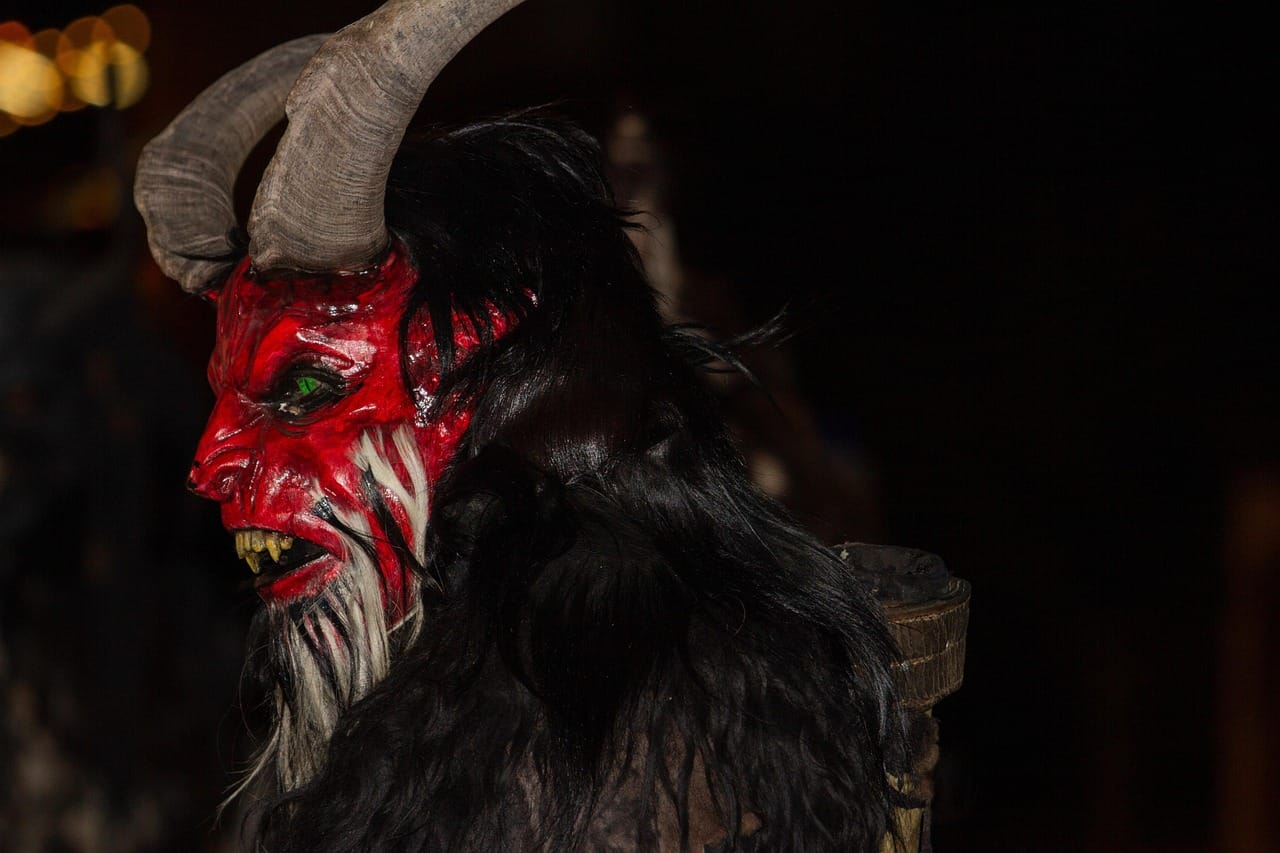
To understand the depth of the outrage, one must first deconstruct the figure causing it. Krampus is not, as many of the outraged citizens of Fayetteville seemed to believe, a modern invention or a figure of pure evil. He predates the Christianization of much of Europe, rooted in pre-Christian pagan traditions of the Alps. The figure, whose name derives from the Old High German word for claw (Krampen), functions as the foil to Saint Nicholas during Krampusnacht (Krampus Night), which takes place on December 5th. While Saint Nicholas rewards good children, Krampus punishes the naughty ones, often with switches or by carrying them away in a basket. It’s a binary system of accountability, far more direct and, frankly, logical than the modern American Santa Claus, who seemingly rewards every child indiscriminately regardless of a ‘naughty or nice list,’ which has been reduced to a mere formality. The outrage, therefore, stems from a fundamental misunderstanding of the figure’s function, conflating a cultural boogeyman with a deliberate act of blasphemy. The irony here is thick enough to choke on: in their efforts to defend a sanitized version of Christmas, they are essentially protesting a character whose purpose is to punish greed and bad behavior, exactly what many Christians claim to oppose in modern society.
Fayetteville, Arkansas, provides a particularly fertile ground for this cultural friction. The city is home to the University of Arkansas, an institution that draws a diverse, progressive student body and faculty, creating an island of liberal thought in a sea of rural conservatism known as the Ozarks. This dynamic has long manifested in a constant tension between traditional values and modern secularism, making every cultural expression, from local politics to holiday parades, a potential battleground. The Lights of the Ozarks parade itself represents a specific brand of American holiday celebration: family-friendly, heavily commercialized, and carefully curated to avoid offense. The inclusion of Krampus—a figure whose very essence rejects this sanitized, consumer-driven aesthetic—was less a deliberate provocation than an inevitable collision between two cultural spheres that exist in close proximity but rarely intersect peacefully. Bo Counts, the bar owner, knew exactly what he was doing by injecting this dose of European reality into the American fantasy, and he knew precisely the buttons he was pushing.
The Hypocrisy of Performative Piety
The core issue at hand isn’t about protecting children from scary figures. Let’s be brutally honest: American children are exposed to far worse imagery on a daily basis through media, video games, and news headlines. The concern over Krampus’s appearance in the parade is not about child welfare; it is about protecting a specific interpretation of a holiday that serves as a cornerstone of consumer culture. The outrage is less about Krampus himself and more about a perceived loss of cultural control. When a community screams bloody murder over a parade float, what they are really screaming about is the uncomfortable realization that their cultural norms are being challenged, and that the ‘traditional’ Christmas they hold so dear is itself a relatively modern and heavily manufactured construct. The outcry over a ‘pagan demon’ in a city where consumerism reigns supreme during the holidays is a prime example of performative piety; people would rather focus on an obscure folkloric figure than confront the very real issues of excess, debt, and societal pressure that define the modern American Christmas experience. The outrage is hollow. It’s nothing more than a desperate attempt to maintain control over a narrative that is slipping away.
Furthermore, the entire premise of the objection—that a parade float celebrating a specific tradition in December is somehow an affront—ignores the fact that America has fully embraced the commercialization of fear. Haunted houses, Halloween carnivals, and horror movie franchises are multi-billion dollar industries that actively encourage the celebration of monsters and ghouls. The fact that Krampus is only considered threatening when he appears in December, rather than in October, clearly demonstrates that the objection is not about the content, but about the context. The outrage in Fayetteville, therefore, is not a logical or coherent response; it is simply a visceral reaction to cultural dissonance. The moment Krampus crosses the line from ‘Halloween monster’ to ‘Christmas character,’ he becomes a threat to a specific economic and social order that relies heavily on a sanitized interpretation of the holiday season.
The Future of Faux Outrage
This incident is a perfect illustration of the current state of cultural affairs, where every single action, no matter how minor, is viewed through the polarized lens of identity politics. The Krampus float did not exist in a vacuum; it existed in a world where every minor transgression against perceived tradition becomes a national news story. The outrage in Fayetteville is not unique; it is simply another data point in a broader trend of escalating cultural sensitivity. The people who are truly angry about Krampus are not worried about the safety of children; they are worried about the loss of their cultural hegemony. They are worried that the America they grew up in—a place where Christmas was a homogenous, universally understood celebration—is disappearing. The fact that a single parade float could cause such a reaction demonstrates a profound sense of cultural insecurity. This insecurity, rather than any genuine threat from a mythical creature, is the true issue at hand. The ‘mixed reactions’ reported by the media are simply the predictable fallout when a small town attempts to grapple with a cultural shift that has already occurred in larger, more diverse communities. The bar owner, Bo Counts, achieved exactly what he set out to do: force a confrontation between the ideal and the reality. The outrage, in the end, serves only to highlight the fragility of the very traditions it purports to defend. The entire saga is less about a demon and more about the desperate need for some people to cling to a past that never really existed.
Cover photo by NickyPe on Pixabay.