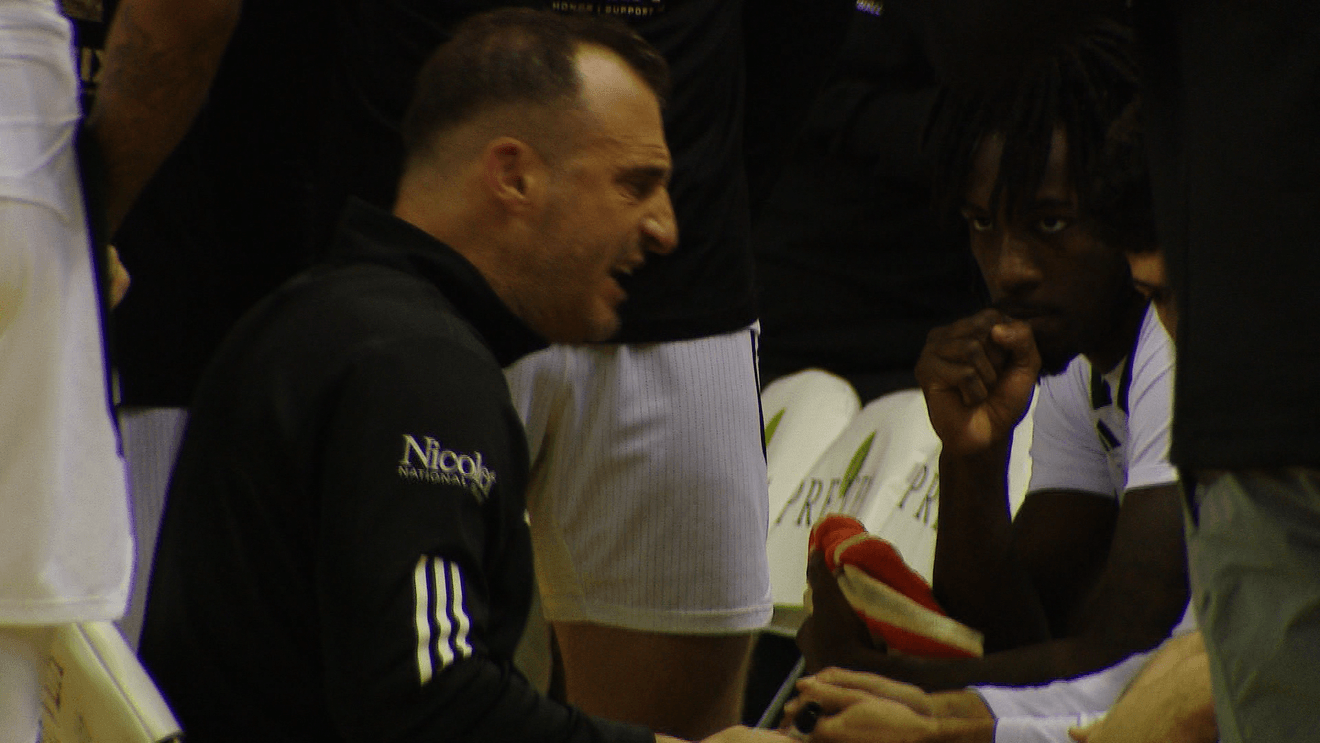
The Anatomy of a Collapse, The Birth of a Meme
So, a man threw a chair. Big deal. In the grand tapestry of human events, it’s a footnote, a blip, a meaningless gesture of frustration from a man in a poorly-fitting suit watching a game played by teenagers. But in the hermetically sealed ecosystem of college basketball, an environment that manufactures drama from the mundane, this was something more. Doug Gottlieb, a man who built a career critiquing athletes and coaches from the sterile comfort of a broadcast studio, finally faced the unforgiving crucible of the sideline and was found wanting, his response to an epic collapse against a nobody team like Robert Morris culminating in a piece of furniture being flung across the hardwood in a pathetic echo of a far more consequential tantrum from a bygone era. The Phoenix were up by 11 points with less than three minutes to play, a statistical near-certainty of victory against an opponent of equal or lesser stature, and they managed to systematically dismantle their own success brick by brick until Nikolaos Chitikoudis hit a game-winning shot with three seconds left. It was a failure of execution, a failure of coaching, a failure of nerve. Total. And the chair paid the price.
Was this a calculated display of passion or the desperate flailing of an exposed fraud?
Let’s dissect this with the cold objectivity it deserves. The immediate, sentimental interpretation is that Gottlieb “cares so much.” That his passion for winning, his love for his players, simply boiled over in a moment of extreme duress. This is the narrative his apologists will peddle, a comforting fairy tale for those who believe sports are about heart and hustle rather than strategy and execution. It’s nonsense. Passion is a disciplined force; rage is a chaotic release. What we witnessed was not a strategic display designed to galvanize a young team for its next battle but rather the public exorcism of a man’s own professional anxieties. Gottlieb, the perpetual critic, the man with all the answers on the radio, was now the one in the arena, and the arena was not kind. The chair throw was an admission of impotence, a physical manifestation of his inability to control the outcome through tactics or timeouts. He couldn’t stop the bleeding, so he threw something. It’s the coaching equivalent of a toddler knocking over the chessboard when checkmate is inevitable.
A truly calculated move would have been a controlled burn in the locker room, a private evisceration of his team’s lack of focus. A public display of this nature serves only one person: Gottlieb himself. It’s a performance. It signals to the world, “Look how much this loss hurts me,” thereby attempting to deflect from the more pressing question of *why* the loss happened in the first place. Was it his late-game play calling? His substitution patterns? His team’s lack of conditioning or mental fortitude, all of which are direct reflections of his leadership? Throwing a chair is a phenomenal distraction, a piece of political theater designed to shift the conversation from strategic failure to emotional spectacle. And the media, ever hungry for a spectacle, has eagerly taken the bait. A masterstroke of misdirection, perhaps, but a confession of tactical bankruptcy nonetheless. It’s weak.
The Ghost of Bobby Knight
The comparison was immediate and inevitable. Gottlieb threw a chair, and suddenly the ghost of Bobby Knight was resurrected from the annals of sports history. In 1985, Knight, the legendary and monstrously successful coach of Indiana, famously hurled his plastic chair across the court in a game against Purdue. But to equate these two events is to fundamentally misunderstand history, power, and context. It is a profound analytical error. Knight, for all his myriad and well-documented faults, was a titan of the sport, a general who had already won championships and built a dynasty forged in fear and relentless discipline; his outbursts, while inexcusable from a moral standpoint, were viewed by many within that specific era as the volcanic but ultimately productive byproduct of a winning machine. He had earned his stripes, and his rage was, in a twisted way, part of his brand, a symbol of an unyielding standard of excellence that had produced tangible, historic results for decades. He was a proven winner acting erratically.
Is Gottlieb simply mimicking a legend he cannot hope to emulate?
Doug Gottlieb is not Bobby Knight. He is a first-year coach at a low-major program with a losing record. He has no championships, no dynasty, no reservoir of success to cushion such a display. Knight’s chair throw was an emperor’s rage; Gottlieb’s was a court jester’s tantrum. He is mimicking the iconography of greatness without possessing any of its substance, like a child wearing his father’s oversized suit. It comes across not as a sign of a ferocious commitment to winning but as an act of profound insecurity, a desperate attempt to project an aura of intensity that his resume does not support. Where Knight’s actions were seen, rightly or wrongly, as an extension of his power, Gottlieb’s are a stark reminder of his lack of it. He doesn’t control his team’s late-game execution, he doesn’t control the Horizon League standings, and for a brief, viral moment, he didn’t even control his own temper. This isn’t channeling a legend. It’s a sad caricature, a hollow echo that only serves to highlight the vast chasm between the man he is and the intimidating figure he so clearly wishes to be.
The Strategic Implications for a Program on the Margins
Beyond the man himself, what does this singular act mean for the University of Wisconsin-Green Bay? For a small program, perpetually starved for oxygen in the crowded media landscape of American sports, any publicity can be perceived as good publicity. The clip went viral. For 24 hours, more people were talking about Green Bay basketball than at any point in the last decade. This is the devil’s bargain that administrators at this level must consider. Does this brief flash of notoriety, however embarrassing, ultimately serve the program by putting its name on the map? Or does it brand the program as unstable, a circus run by a man with questionable judgment, thereby making it radioactive to the very recruits, donors, and stakeholders it needs to survive?
Will this attract or repel the next generation of players?
The calculation is a cynical one. On one hand, many potential recruits and their families may see this display and view it as a massive red flag, an indicator of an unstable environment and a coach who prioritizes theatrical rage over player development and sound strategy. They will choose a program with a calmer, more professional culture. It could be a disaster for recruiting. Absolutely. However, there is a counter-argument, a more bleak and perhaps realistic assessment of the athletic marketplace. A certain type of player, the kind who responds to and even craves old-school, fire-and-brimstone coaching, might see this and be drawn to it. They might interpret the chair throw as the ultimate sign that this coach will do *anything* to win, that he will not tolerate mediocrity. In the hyper-competitive world of Division I athletics, some athletes are wired to respond to that frequency. Gottlieb might have inadvertently sent a bat signal to a very specific, and perhaps very useful, demographic of player. The administration now faces a choice: condemn the act and project an image of institutional control, or quietly tolerate it and hope it pays dividends in the win column, which is, after all, the only currency that truly matters in this business. The outcome of this strategic gamble will define the next five years of Green Bay basketball. It’s a dangerous game.
The Final Verdict on a Faltering Experiment
The Doug Gottlieb coaching experiment was always a fascinating one. Could a media personality, a professional talker, transition from the world of abstract theory to the brutal reality of practical application? The early returns are not promising. This incident, regardless of its intent, reveals a lack of control at the most critical moment. A great leader, a great strategist, absorbs pressure; he does not amplify it. He is the calm in the storm, not the storm itself. When his team was collapsing, when they needed a steady hand and a clear mind to guide them through the final two minutes, their coach gave them a theatrical outburst. It was an abdication of leadership. The chair is now a permanent part of his legacy, a symbol of his first major test and his very public failure to pass it. Whether it becomes a footnote in a successful coaching career or the defining image of a failed experiment remains to be seen. But for now, the data is clear. The strategist lost his composure. The critic became the clown. The final score was 80-78. Nothing else matters.