The Illusion of Predictability in Tennis: Why Betting on Dimitrov Isn’t Just a Gamble, It’s a Statement
What a load of hogwash these pre-match analyses are. Seriously. You look at the data dump—Dimitrov ranked 47th, Carreno Busta sitting at 92nd—and suddenly, everyone thinks they’ve cracked the Da Vinci Code of tennis scheduling. That’s surface-level garbage, the kind of shallow reading that gets casuals fleeced at the betting window. We’re talking about the Brisbane International, ATP 250 series, January 6th, Round of 32. Groundhog Day, again.
The Aura Versus the Algorithm
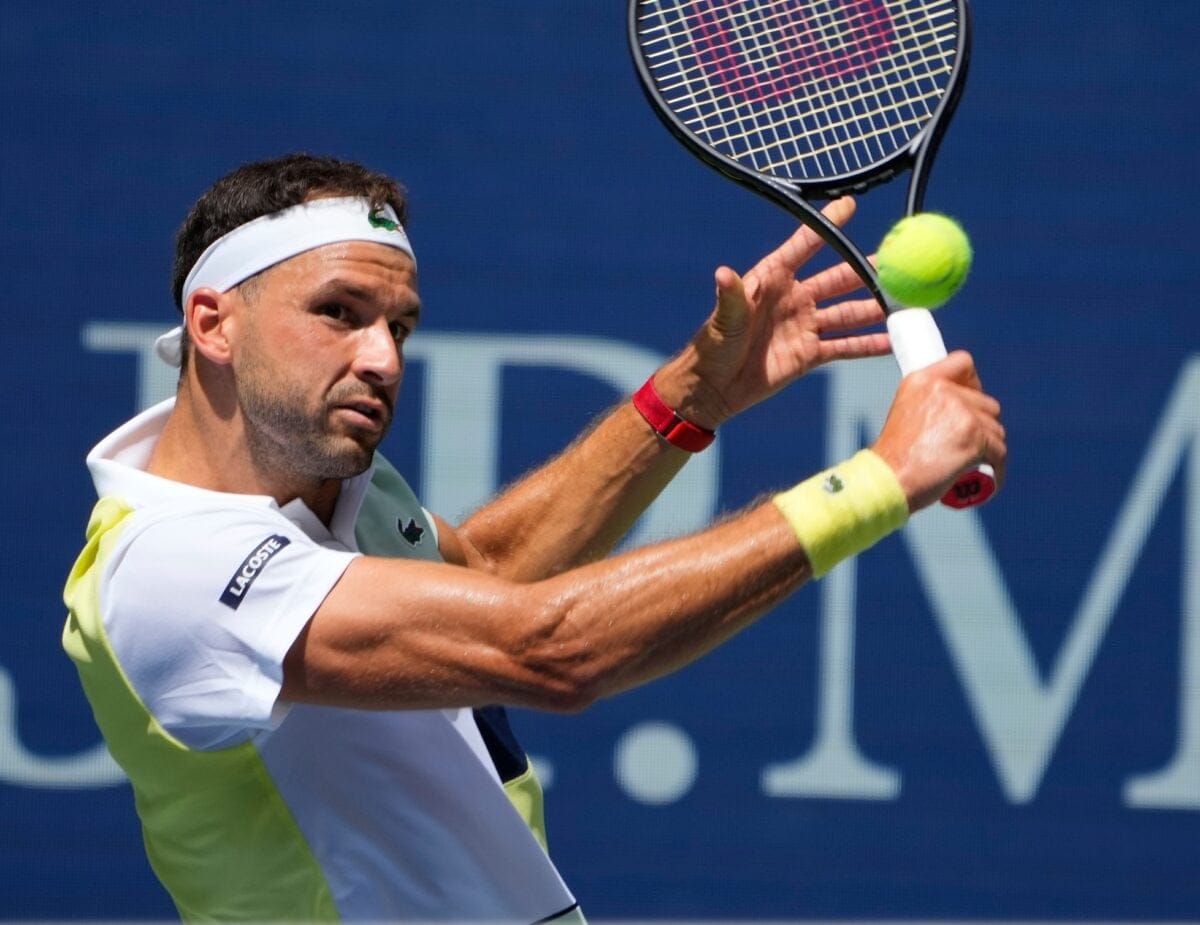
Grigor Dimitrov. The guy has always been appointment viewing, hasn’t he? The Baby Fed comparisons were suffocating back in the day, and while he hasn’t quite carved out that era-defining legacy, he can still turn it on like a cheap motel lightbulb when he feels like it. He’s got the flair, the trick shots, the sheer bloody audacity to try things nobody else would dare. When he’s on, he dismantles opponents; when he’s off, he looks like he’s auditioning for the local park league. That inconsistency is what fuels the betting lines, and frankly, it makes me sick. It rewards the lukewarm, the safe bet, the vanilla choice.
And then there’s Pablo Carreño Busta. A grinder. Solid. Reliable. Not exactly the guy who sets ticker tape parades, is he? His rank slipping to 92nd tells a story, perhaps of injuries, perhaps of just not putting in the consistent grind required at the very top. But don’t mistake grit for being easy pickings. This match isn’t just about who plays better tennis on Tuesday; it’s about two guys trying to reclaim some forgotten glory in the shadow of bigger names like Medvedev and Tiafoe getting the prime-time slot later that day (00:00 CEST, because of course they do).
The Medvedev Distraction: Why We Should Ignore the Headliners
Let’s talk about Medvedev versus Tiafoe for a second, just to dismiss it properly. Medvedev losing three of his last five? That’s the headline the mainstream feeds you. It screams vulnerability. But when Medvedev shows up at a smaller ATP 250 event early in the season, he’s not there to have a philosophical debate about drop shots; he’s there to shake off the rust and bank some easy coin before the big shows. His H2H against Tiafoe (5-2) suggests control. It’s a known quantity, boringly predictable. That’s why the focus *shouldn’t* be there. We need the chaos, the potential upset, the unpredictable spice that Dimitrov brings to the table. (The fact that Dimitrov’s match is buried while Medvedev gets the 00:00 CEST kickoff just confirms the establishment favors predictability over pizzazz, doesn’t it?)
Historical Context: When Pedigree Means Nada
Dimitrov vs. Carreño Busta. It’s not the rivalry that defines a generation. It’s the kind of matchup you see six times a year, where the record book means precisely zilch once they step on the court. Clay-court specialists often struggle to adapt quickly to the hard courts of Brisbane, but both of these guys have proven they can adapt, albeit painfully slowly sometimes. Carreño Busta, historically, has been solid on the return, capable of absorbing pace and waiting for the inevitable error. This is where Dimitrov frustrates himself—his own brilliance often outpaces his decision-making skills. He hits a line-kissing forehand winner, then immediately tries a ridiculous no-look volley two points later.
This is the crux of the problem for the bookies setting the odds: they price the *average* of the last six months. They don’t price the *potential* of a player who, even at 47th in the world, possesses the raw equipment to beat a top-10 player on any given Tuesday. And 92nd? That’s an invitation for Dimitrov to swagger in like he owns the place. If Dimitrov gets that first set under his belt, watch Carreño Busta start checking his watch, wondering if he should have stayed home and polished his trophy collection instead of battling Bulgarian flair.
The Brisbane Surface Whisper: What Does It Tell Us?
The Brisbane International court speed has historically been a great equalizer. Not blazing fast, not sluggish slow. It rewards clean ball-striking and intelligent point construction. This slightly slower hard court setup actually favors Carreño Busta’s ability to retrieve and extend rallies, forcing Dimitrov to generate *all* the power himself. That’s a dangerous proposition for Grigor. He cannot rely on the serve alone; he has to engage in the ugly work, the baseline slugfest, which is exactly what he hates doing when he’s not feeling 100% locked in.
But here’s the counterpunch nobody wants to admit: Confidence breeds power. If Dimitrov walks out feeling disrespected by the low odds (assuming he’s the slight favorite, which seems likely given the H2H if it favors him, or even if it doesn’t), he plays looser. He’s less worried about missing the spectacular shot because, hey, what’s the worst that can happen? He drops a rank point? Big deal. The higher the stakes feel for the lower-ranked player, the more likely they are to tighten up. Carreño Busta *needs* this run to climb back; Dimitrov just needs to stay healthy and remind people he still exists. That mental freedom is gold dust in January tennis.
The Scrape Failures and Hidden Data
Look at the input data! SCRAPE_FAILED on some critical details! That is the universe telling us that the true story isn’t in the easily digestible stats. The real insight comes from parsing the noise. If the automated systems can’t even pull the proper draw data or the immediate prior results cleanly, it means the narrative surrounding this match is thin, speculative, and ripe for exploitation. We are flying blind, relying on gut instinct, which, ironically, is what makes tennis analysis fun and worthwhile. Stop reading the press releases; start watching the warm-ups.
We’re projecting way out here, predicting matches that haven’t even happened yet, based on historical precedent that evaporates the second the toss happens. That’s the beautiful, infuriating reality of the sport. Forget the fact that Medvedev *might* have beaten Tiafoe; focus on the possibility that Dimitrov, having spent the offseason retooling his mental approach, decides this is the week he proves he’s still an elite threat when the schedule is light and the pressure is localized only to his own expectations. It’s mental warfare disguised as a Tuesday morning tennis match.
The Long Game: What Does Brisbane Mean for the Majors?
If Dimitrov cruises through this, he gains momentum, confidence, and perhaps most importantly, sponsor satisfaction. If Carreño Busta wins, he signals a proper return to form, making him a dark horse threat for the Australian Open if he can carry this early season sharpness. This isn’t just about a Round of 32 exit; it’s about setting psychological markers for February and March. Every win strips doubt away; every loss adds another layer of baggage to carry around until Indian Wells.
We are looking at two guys who have tasted the absolute pinnacle of the sport—major titles, Masters wins (in Busta’s case, significant ones, even if not Grand Slams outright). They know what it takes to win when the pressure is suffocating. That experience is the invisible currency here. When the score hits 5-5 in the third set tiebreak, the guy who has been there before—and both these veterans have been there countless times—holds the slight advantage. It’s almost physiological at that point; the body remembers the championship points won, not the blog predictions written weeks prior.
Speculation on Tactics: Who Blinks First?
Dimitrov will try to rush the net early. He needs quick points. He needs to avoid Busta setting up his cross-court backhand angles, which are venomous when he’s locked in. I foresee Dimitrov trying an excessive amount of slice early, trying to keep the ball low and force Busta to generate upward lift, potentially leading to unforced errors born of frustration. Busta, conversely, will look to absorb everything, aiming deep, wide, and heavy, specifically targeting Dimitrov’s presumed weaker side (which changes depending on which week you ask). If Busta can win 65% of the rallies over eight shots, he wins the match, period. It’s that simple, and yet, so hard to execute against a talent like Dimitrov.
(And let’s be honest, predicting tennis in January is like predicting the weather in a hurricane; you’re probably wrong, but you sound smart if you happen to be right.) This early season swing is chaos management. The player who manages the inevitable mid-match dip in focus the best wins. And Dimitrov, for all his flaws, is a master showman who can pull a stunning recovery out of his backside when everyone has already written his obituary for the set.
This match is a toss-up, and anyone claiming otherwise is selling snake oil. It’s a grudge match between two guys who know they are past their statistical peak but still have enough fire in the belly to ruin someone’s Tuesday schedule. It will be messy, beautiful, and ultimately, unpredictable. Ignore the rankings. Watch the body language. That’s the real metric we should be using here, the one the algorithms can’t quantify. Give me the flair, give me the volatility. It’s always more interesting than the steady climb of the reliable grinder, even if the grinder usually wins the weekly accumulator.