Deep South Braces for Rare Wintry Surprise as Arctic Blast Looms
In a region where winter typically means mild temperatures and a light jacket, the thought of snow often seems like something out of a movie script. Yet, across the Deep South, a palpable mix of anticipation and trepidation is building as forecasts point to the rare possibility of significant wintry precipitation.
This upcoming holiday weekend, often a time for travel and outdoor activities in the South, is set to be disrupted by a powerful arctic cold front. The front, which is expected to plunge southward, threatens to collide with Gulf moisture in a scenario that has historically produced some of the region’s most memorable, and often devastating, snow events.
The Meteorological Setup: Cold Front and Low Pressure
The core of the forecast hinges on the arrival of an arctic cold front, which models indicate will likely arrive on Saturday. An arctic front is defined by its extreme temperature contrast; it acts as a sharp boundary where frigid, dense air from the Arctic Circle pushes rapidly southward, displacing warmer, lighter air.
While cold air alone brings freezing temperatures, the ingredient for snow and ice lies in the subsequent development of a low-pressure area. Following the passage of the cold front, models are showing an area of low pressure developing just off the southern coast. This development is critical because low-pressure systems draw in moisture from the nearby Gulf of Mexico, providing the necessary precipitation to combine with the below-freezing temperatures delivered by the arctic blast.
The Role of Weather Models in Forecasting Uncertainty
Weather forecasting for the Deep South is notoriously challenging during these specific scenarios. The precise track of the developing low-pressure system and the timing of the transition from rain to snow are measured in very small margins, often a matter of miles and hours. A slight shift in either variable can mean the difference between a significant snowfall and a cold, damp rain.
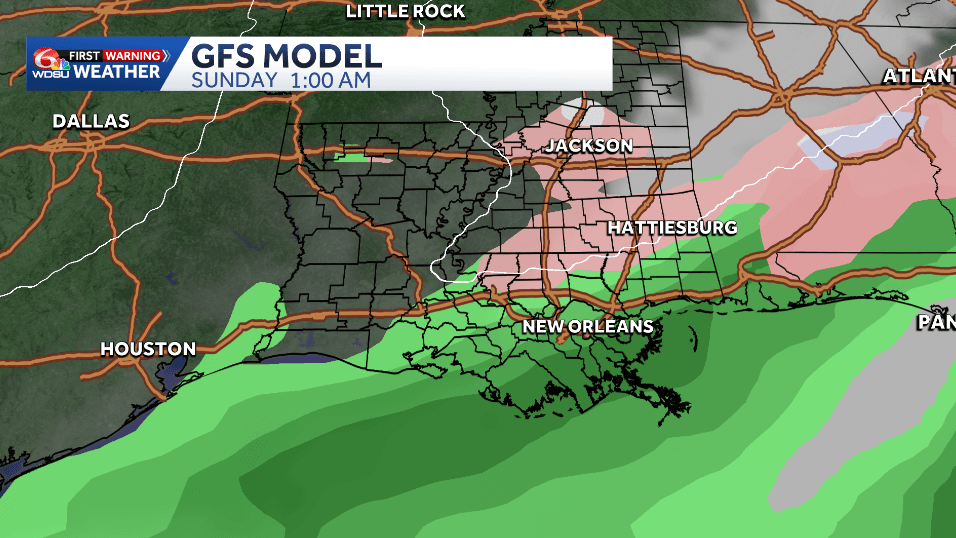
Model guidance this morning was particularly interesting, specifically from the GFS Model. The Global Forecast System (GFS) model, run by the U.S. National Oceanic and Atmospheric Administration (NOAA), showcased potential for wintry weather into the Deep South. However, meteorologists closely watch these models for consistency between different runs and compare them against other models, like the European ECMWF, which sometimes offers different solutions.
The current forecast uncertainty highlights why residents in areas like northern Florida, Georgia, Alabama, and South Carolina are urged to monitor updates closely. While the GFS model might show a high probability of snow, other models might suggest a different outcome, creating a scenario where a high-impact event is possible but not guaranteed.
A Southern Snowfall: More Than Just a Pretty Picture
For many residents of the Deep South, snow is a novelty—a chance for children to experience a rare, magical moment. However, when significant snow and ice hit this region, the consequences can be severe. Unlike regions further north, southern cities lack the extensive infrastructure to handle heavy snow. Salt trucks are few and far between, and road crews are unpracticed in snow removal. This leads to rapid deterioration of travel conditions, turning commutes into gridlock nightmares.
The unique geography of the region, specifically numerous overpasses and bridges, exacerbates the danger. Bridges freeze faster than standard roads because cold air circulates both above and below them. During previous snow events, these surfaces quickly became sheets of black ice, leading to multi-car accidents and bringing entire transportation networks to a standstill.
Historical Precedents: The Painful Memory of Southern Snow Events
When discussing significant southern snow, certain historical events immediately come to mind. The “Blizzard of 1993,” often referred to as the “Storm of the Century,” delivered historic amounts of snow deep into the Southeast, with parts of Alabama receiving nearly two feet of snow. The storm caused widespread power outages, stranded thousands of travelers, and resulted in over 300 deaths across the eastern United States.
More recently, the “Snowmageddon” event of January 2014 saw Atlanta paralyzed by just a couple of inches of snow. The storm hit during peak afternoon rush hour, catching many off guard. The ensuing chaos led to thousands of children spending the night at school and commuters abandoning vehicles on interstates, creating a massive logistical and human crisis.
These historical precedents underscore why a forecast mentioning potential wintry precipitation in the Deep South, especially during a holiday weekend, triggers significant concern among emergency management officials. The preparation, or lack thereof, can be the deciding factor between a manageable event and a full-scale emergency.
The Human Element: Bread, Milk, and Uncertainty
The announcement of potential snow often triggers a unique phenomenon in the South: the rush to grocery stores to stock up on bread, milk, and eggs. This cultural tradition, while sometimes mocked as an overreaction, reflects the genuine fear of being stranded in a region where travel during snow is treacherous.
For many, this upcoming forecast presents a dilemma. Do they trust the models and change holiday plans, or do they dismiss the threat as another overblown forecast that will simply result in cold rain? The uncertainty inherent in weather forecasting makes this decision difficult, but officials are urging caution and emphasizing the importance of having an emergency supply kit on hand.
As the potential for a southern wintry surprise increases, the region stands ready for whatever Saturday brings. Whether it’s a memorable blanket of white or just a cold, damp reminder of the season, the event serves as a stark reminder that even in the Deep South, nature holds the ultimate control.