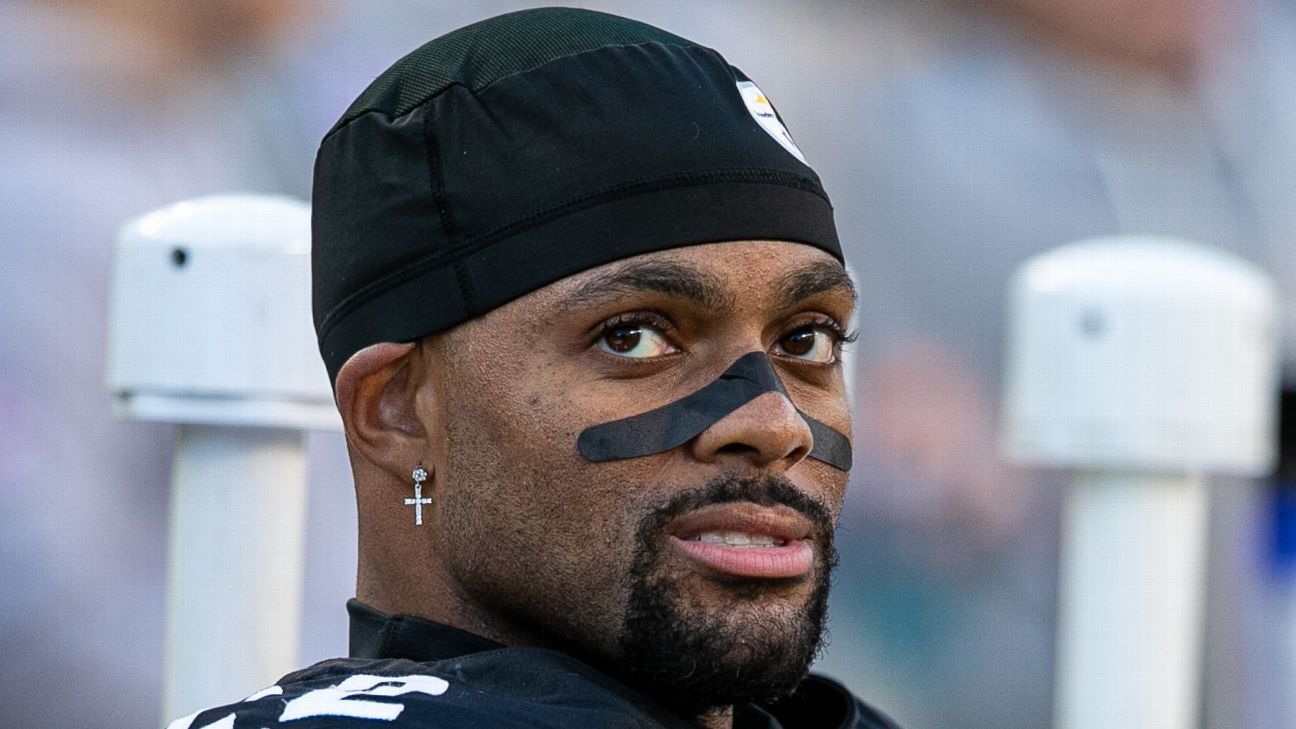
The Asset Has Refused the Transfer
Let’s get one thing straight. The headlines you’re reading about Darius Slay and the Buffalo Bills are missing the entire point. They’re framing this as a sports drama, a quirky footnote in a playoff push. They are wrong. This isn’t a story about a football player. This is a story about a piece of inventory that gained sentience, a data point that refused to be plotted on the graph. It’s a ghost in the machine whispering a terrifying truth about the future we’re all sleepwalking into.
The Buffalo Bills didn’t sign a person. Their analytics department, a sterile room filled with glowing screens and the low hum of servers, identified a market inefficiency. A 34-year-old cornerback, a Super Bowl champion no less, designated as ‘surplus’ by another corporate entity (the Philadelphia Eagles). For the low, low price of a waiver claim, this asset, ‘Slay, J.,’ could be acquired to plug a defensive variable, optimizing the team’s probability matrix for a deep postseason run. It was a clean, logical, data-driven transaction. A few clicks, a digital signature. Done. The asset was now theirs, and it was expected to report for processing and integration into the system. Simple as ordering a part from a warehouse.
But then, the unthinkable happened. The part didn’t arrive. The asset stayed put.
A System Error Reported as ‘Unfortunate’
Coach Sean McDermott, the human interface for the Bills’ operating system, stood at a podium and described the situation as “unfortunate.” What a perfect piece of corporate doublespeak. It’s not ‘unfortunate’ for Slay, who is exercising his own will (a messy, unpredictable human variable). It’s ‘unfortunate’ for the machine. It’s the kind of language you use when a software patch fails to install or a shipment is delayed. It’s the calm, detached acknowledgment of a logistical hiccup, a bug in the code. The system expected compliance. Input A (waiver claim) should have produced Output B (player in uniform). Instead, it got a null response. An error. And that is always, always ‘unfortunate’ for those who run the system.
The silence from Slay’s end was deafening, a vacuum in a world of constant noise, punditry, and mandated media availability. He wasn’t holding out for more money (a variable the system understands and can solve for). He was simply… thinking. Considering. Weighing options. He was being a human being, and in doing so, he threw a massive wrench into the gears of a league that increasingly sees its players not as people, but as depreciating assets. They are meat, measured and graded at the Combine like cattle, tracked with GPS chips in their pads during every practice, and ultimately, discarded when their performance metrics dip below a certain threshold. Their bodies are the hardware, their talent the software, and their contracts are just licensing agreements.
The Ghost in the Meat Grinder
Slay is 34 years old. In NFL years, that’s ancient. He’s seen it all. He has a ring. He has a family. He has a life outside the sterile lines of a football field. The algorithm that claimed him sees only his most recent performance data, his veteran minimum salary, and a positional need. It does not see the nineteen-hour days, the chronic pain, the mental toll, or the sheer exhaustion of uprooting your entire existence on a moment’s notice to move to a cold city in upstate New York because a spreadsheet told you to. It does not compute the dignity of a man who might simply want to choose where he lives and works, or if he even wants to continue subjecting his body to this brutal profession. (And let’s be honest, the whispers about one reason angering fans likely boils down to something profoundly human and simple: he just didn’t want to go to Buffalo. A choice. A preference. How dare he?)
He’s taking time to decide. Think about how radical that statement is in this context. The league’s entire structure, from the draft to free agency to the waiver wire, is built on the principle of removing choice from the laborer. You go where you are drafted. You play for the team that holds your contract. You report to the team that claims you off the discard pile. It’s the ultimate gig economy, a precursor to the world so many are already living in. You are not an employee; you are a contractor, a resource to be deployed. Your humanity is, at best, a secondary concern. At worst, it’s a liability.
What Darius Slay is doing is what every Amazon warehouse worker who is tracked down to the second, every Uber driver managed by a faceless app, and every white-collar drone being monitored by spyware wishes they could do. He’s logging off. He’s refusing the assignment. He is asserting that his life, his body, and his family are not just variables in someone else’s championship equation.
The NFL: Beta Test for Your Dystopia
Don’t you see? This isn’t about sports. The NFL has always been the vanguard, the bleeding-edge test kitchen for the technologies of control that inevitably filter down to the rest of society. The obsessive measurement of human bodies at the Combine, the reduction of a person to a 40-yard-dash time and a Wonderlic score… that’s just a primitive version of the AI-driven hiring processes that now scan your resume and social media, rejecting you before a human ever sees your name. The GPS trackers monitoring player load and movement on the field are the ancestors of the corporate surveillance software on your work laptop, ensuring you’re optimally engaged at all times.
The waiver wire is the most terrifying innovation of all. It’s the complete and total commodification of a human being. A person can be discarded by one multi-billion-dollar corporation and instantly acquired by another, and they are contractually obligated to pack their life into a suitcase and report to their new processing center. There is no negotiation. There is no refusal (or so the system thought). There is only compliance. Slay’s hesitation is a rebellion. A small, quiet one, but a rebellion nonetheless. He is questioning the entire premise of the system, the very idea that a man’s life can be transferred with the click of a mouse.
We cheer for the teams, for the logos, for the laundry. We get angry when a player doesn’t show up, screaming about loyalty and commitment. But we are cheering for the machine. We are demanding that the cogs perform as programmed. We get angry at the glitch, not at the oppressive nature of the system itself. The Bills fans who are angry are angry because a component they were promised for their machine is faulty. They don’t see a man; they see a cornerback-shaped hole in their Super Bowl ambitions.
This is the future being built for all of us. A world where algorithms decide if we get a loan, where we are offered a job, how much we are paid, and where we must live to do it. A world where personal preference, family, and dignity are inconvenient variables to be smoothed out of the data set. We are all on the waiver wire now, whether we know it or not, waiting to be claimed or discarded by forces we cannot see and do not control. Darius Slay just reminded us that we can, for a little while at least, refuse to report.