The Anatomy of a Catastrophe: Indianapolis Colts’ Quarterback Crisis
Let’s not mince words here: What’s unfolding in Indianapolis isn’t just bad luck; it’s a strategic failure of biblical proportions, a perfect storm that has completely capsized the Colts’ 2025 campaign before the calendar even flips to late November. A franchise that once defined stability under center—first with the iron-willed precision of Peyton Manning, then briefly with the generational talent of Andrew Luck—has descended into a state of quarterback purgatory so profound it defies easy description. The recent developments aren’t isolated incidents; they are the inevitable result of years of poor planning and a systemic inability to identify and secure reliable talent at the game’s most critical position. This isn’t just about injuries; it’s about a front office’s failure to recognize and mitigate risk.
The first domino fell, predictably, with Daniel Jones. The veteran quarterback, brought in with significant fanfare (and a hefty contract that now looks like an albatross around the franchise’s neck) to provide stability, succumbed to a season-ending Achilles tear on Sunday. An Achilles injury for a quarterback, especially one whose game relies on mobility and play-action fakes, is a devastating blow. The recovery timeline often stretches for a full calendar year, and even then, a return to pre-injury form is far from guaranteed. The 2025 season was immediately written off as soon as Jones hit the turf, a grim reality that forced the organization to accelerate its backup plan.
The Immediate Successor Fails: The Riley Leonard Debacle
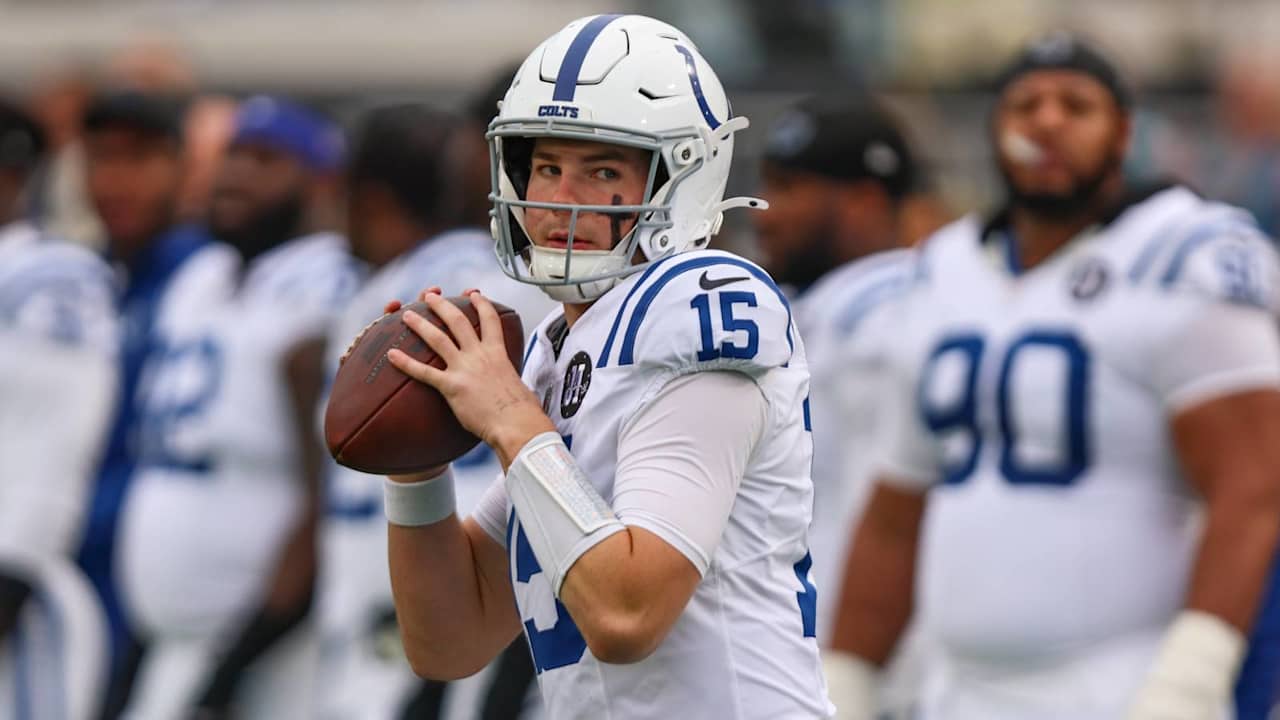
Enter Riley Leonard, the young gun meant to be the future, thrust prematurely into the spotlight. A rookie quarterback’s development curve is notoriously steep, and a sudden promotion from clipboard holder to starter—especially after a major injury to the primary signal-caller—often derails that development permanently. The Colts were forced to put all their eggs in the Leonard basket, hoping against hope that he could keep the ship afloat. But in a cruel twist of fate, Leonard lasted barely a single game before suffering his own injury: a PCL sprain. A PCL injury to a quarterback limits lateral movement and pivot ability, crucial mechanics for throwing accurately and avoiding sacks. For a rookie still learning the nuances of the position, this injury isn’t just physically debilitating; it’s a mental roadblock that could haunt him for years. The Colts are now left with exactly zero healthy quarterbacks from their original depth chart. It’s a disaster. It’s a situation that would make even the most seasoned strategic analyst shake their head in disbelief at the sheer bad fortune mixed with poor preparation.
The Historical Context: A Decade of Misery Post-Luck
To understand the depth of this crisis, one must look back at the historical arc of the Colts since Andrew Luck’s abrupt retirement in 2019. The franchise has been in a constant state of flux, cycling through a parade of stop-gap solutions: Philip Rivers, Carson Wentz, Matt Ryan, and now Daniel Jones. Each acquisition was a desperate attempt to regain relevance, and each one failed spectacularly. The front office consistently opted for high-risk, short-term fixes over developing long-term talent. They treated the quarterback position like a revolving door, hoping to find a miracle cure rather than investing in a sustainable strategy. This latest injury crisis isn’t an anomaly; it’s the culmination of a decade of strategic neglect. The decision to invest heavily in Jones, despite his previous injury history and inconsistent performance in New York, demonstrates a lack of foresight that is now haunting the organization in real-time. (The decision-making process here truly beggars belief; a simple look at Jones’s medical history should have sounded alarms for any risk-conscious strategist.)
The Strategic Implications for the Remainder of 2025
The immediate challenge for Coach Shane Steichen (a coach who, by all accounts, has done a commendable job with the resources given to him) is finding someone—anyone—who can take snaps. The free agent market for quarterbacks at this stage of the season is a barren wasteland. We’re not talking about starting-caliber players here; we’re talking about washed-up veterans, career backups, or practice squad castoffs. The Colts will have to scour the league for anyone who can throw a ball forward and understand basic play calls. The options are grim: perhaps a journeyman like Nick Foles or even a desperate call to a retired veteran who’s been out of the league for years. The goal shifts completely from winning games to simple damage control. The team will likely adopt a run-heavy, conservative offensive scheme to minimize risk, but this will put immense pressure on the defense and running back corps. The season is effectively over, and the focus must now shift to the 2026 NFL Draft.
This situation also creates a significant strategic issue for Riley Leonard’s future development. Being thrown into the fire and immediately getting hurt, followed by having to watch a carousel of backups, can severely affect a young player’s confidence. The PCL injury, while potentially less severe than an Achilles tear, demands careful management. If not properly rehabilitated, it can lead to chronic instability in the knee. The Colts must be extremely cautious with his recovery to avoid compounding this strategic error by rushing him back too soon. The organization needs to realize that the long-term health of their potential franchise QB is far more important than salvaging a lost season.
The Future Outlook: Rebuilding from the Ashes
The 2026 NFL Draft looms large as the next critical juncture for the Colts. Given the current situation, the team is likely headed for a top-ten pick. The front office will face intense scrutiny regarding its next move. Do they use that high pick on yet another quarterback? If so, they must ensure they get it right this time. The alternative is to bring in another high-priced veteran free agent—a strategy that has proven disastrous in the past. The definition of insanity, as they say, is repeating the same action and expecting different results. The Colts have been repeating this same cycle for a decade.
The strategic failure in Indianapolis extends beyond a single injury. It’s about a lack of vision and a consistent overestimation of immediate fixes. The team failed to build a proper support structure around their primary quarterback, and when that structure collapsed, they had no contingency plan whatsoever. This isn’t just about a team losing games; it’s about a franchise entering a downward spiral of strategic decay. The decisions made in the coming weeks and months will determine if they can pull themselves out of this self-inflicted crisis or if they are doomed to repeat this cycle indefinitely. The free agent options are limited, the internal options are nonexistent, and the long-term outlook for the franchise is bleak. (A truly high-stakes game of chicken with fate that the Colts have emphatically lost.)
For now, the Colts must focus on damage limitation. The goal is no longer to compete but to survive. They must carefully manage Leonard’s injury, identify a short-term solution (however uninspiring), and begin formulating a long-term strategy for 2026 that finally breaks the cycle of mediocrity. The front office must be held accountable for its role in this debacle, as simply blaming injuries ignores the deeper strategic failures that led to this predicament. The Colts are in a rough spot, and honestly, they brought it on themselves.