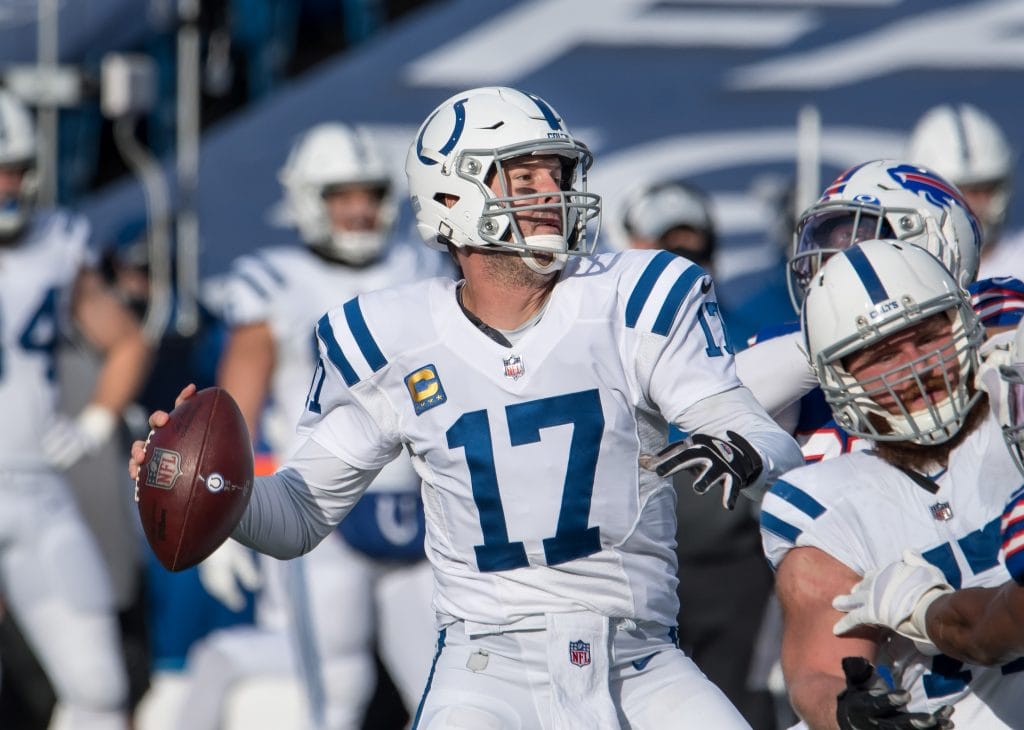
The Colts and Philip Rivers: The Return of the Desperate Ex-Lover
And so, here we are again, staring into the abyss of another Indianapolis Colts season teetering on the edge of utter collapse, a situation made all the more comical by their latest Hail Mary attempt to salvage things. Because let’s be honest, when the news broke that the Colts were considering bringing back Philip Rivers for a workout, it wasn’t exactly a sign of strength or strategic brilliance; it felt more like a franchise rummaging through the couch cushions for spare change, finding a dusty old relic, and hoping it still holds value. But hey, at least it makes for great entertainment for the rest of us watching the disaster unfold in real time, doesn’t it?
Because the moment you hear about a team bringing back a quarterback who’s been out of the league for two years—a quarterback whose career ended, quite frankly, with a whimper rather than a bang—you know that the situation is far more dire than anyone is letting on. The official narrative, of course, will be spun as a “veteran leadership addition” or a “familiar face providing stability,” but the reality is far more depressing. The Colts, a team once synonymous with elite quarterback play, have devolved into a revolving door of aging signal-callers, and the return of Rivers only solidifies their status as a franchise stuck in a never-ending purgatory of mediocrity.
Q: Why is Rivers’ Potential Return Such a Satirical Disaster for the Colts?
But let’s get straight to the point: This move, while perhaps necessary given the circumstances, highlights a fundamental strategic failure that has plagued the Colts since Andrew Luck retired. The organization seems incapable of developing or identifying long-term solutions, opting instead for a series of high-profile, short-term fixes that inevitably crash and burn. It’s like trying to put a Band-Aid on a sucking chest wound; it might look like you’re doing something, but everyone knows the patient is bleeding out. They brought in Rivers the first time as a stopgap, then they tried Carson Wentz, then they tried Matt Ryan, and now they are circling back to the original stopgap, which, if you think about it, is less of a strategy and more of a definition of insanity. But the most hilarious part of this whole charade? Rivers’ legacy is defined by his ability to lead high-powered offenses in the regular season only to fall short in the playoffs, often in spectacular fashion. The Colts are essentially signing up for a guarantee that they will play meaningful football in December only to collapse in January, a cruel and twisted form of hope that only a true sadist would inflict upon a fanbase.
And let’s not forget the emotional toll of this kind of move. Bringing back a beloved (or at least familiar) figure promises a “last dance” narrative, which is almost always a cinematic tragedy in real life. We saw it with Brett Favre, we saw it with Michael Jordan, and we’ll see it again here. The magic never comes back in the same way; the rust is real, the arm strength fades, and the player is left to tarnish their legacy in pursuit of one last paycheck. Rivers’ original run with the Colts was fine, but let’s be honest, it wasn’t magical. It was a solid, professional season that ended exactly as everyone predicted: with him throwing a crucial interception in a playoff game. This return, if it happens, promises more of the same, just with less athleticism and more visible fatigue.
Q: Does This Move Prove the Colts Are the NFL’s Most Dysfunctional Franchise?
But because this situation requires a deeper level of analysis, let’s look at the broader implications for the Colts organization. The decision to pursue Rivers again, rather than committing fully to developing their younger talent or making a major move for a long-term starter, confirms that the Colts’ front office is prioritizing immediate damage control over sustainable success. This isn’t a team planning for the future; it’s a team desperately trying to avoid a losing record in the present. And that, ladies and gentlemen, is the recipe for perpetual mediocrity. The Satirical Joker persona needs to call out this specific failure repeatedly. It’s like trying to fix a broken engine with chewing gum. The Colts are like that friend who keeps getting back together with the ex-partner who clearly isn’t good for them, and everyone else just watches with morbid fascination as the train wreck unfolds again. The irony of all this is that the Colts once had a quarterback so good that he made everyone else look competent, and now, they’re reduced to picking through the scrap heap of former greats, hoping to find a spark in a piece of coal.
And what does this say about the rest of the roster? When the team leadership looks at the current roster and decides the best course of action is to bring in a 40-year-old quarterback who hasn’t played in two years, it sends a clear message to the locker room: We don’t have faith in the players currently here to lead us to victory. The psychological impact of this kind of move can be devastating, undermining the confidence of young players who might otherwise have an opportunity to step up and prove themselves. But the Colts don’t want a long-term solution; they want a quick fix, and Rivers is exactly that: a temporary patch on a systemic problem. The problem isn’t just the quarterback; it’s the entire organizational philosophy post-Luck. The entire league is laughing, and we’re just here to provide the commentary.
Q: Is This More Than Just a Desperation Move? Is it a Symptom of a Larger Problem?
But let’s broaden the scope. This isn’t just about Philip Rivers. This is about a league culture where veteran quarterbacks are treated as saviors, even when their best days are clearly behind them. We see this cycle repeat constantly: a team falls apart, and instead of taking the hard road of rebuilding, they look for the easy way out by signing a known commodity. But the reality of professional sports is that time catches up to everyone, and while the nostalgia factor might sell a few jerseys in the short term, it rarely translates into long-term success. Rivers’ potential return is less about winning and more about selling a narrative of “one last hurrah” to a fanbase hungry for any semblance of hope. It’s a marketing strategy disguised as a football decision, and it’s a cynical move that preys on the loyalty of the fans. The ultimate joke here is that the Colts are going to end up exactly where they started, just with a slightly older quarterback and a more depleted roster.
And what about the other options? The Colts have younger players on the roster, but a move for Rivers suggests they’ve already given up on their potential. It’s a clear signal that the team management believes the current roster simply cannot function without a highly experienced veteran at the helm. This move isn’t just a commentary on Rivers or the Colts; it’s a commentary on the state of the NFL where teams are terrified of true rebuilding, opting instead for a carousel of aging, expensive quarterbacks who offer minimal long-term value. This is the definition of a “clutch and grab” mentality, where short-term results are prioritized over sustainable growth. The Colts are simply following a flawed blueprint, and Rivers is just the next victim of their flawed logic. The whole situation is a tragicomedy, and we should all be prepared for the inevitable crash landing.