The Great Unraveling of Preseason Myths
Let us begin by dispensing with the pleasantries and the manufactured narratives spoon-fed to the masses every August. The preseason AP Top 25 poll, that sacred document of summer speculation, is little more than a marketing pamphlet designed to establish storylines that will be systematically dismantled by the harsh realities of autumn. This season was a masterclass in that very deception. We were told of a landscape dominated by established powers, a continuation of the old guard. Three of the top four teams anointed by the media before a single meaningful snap was taken — Clemson, Ohio State, USC, take your pick of the usual suspects — stumbled out of the gate, their invincibility revealed as nothing more than paper-thin branding. Only one, Georgia (the true beneficiary of a schedule so soft it could be mistaken for an exhibition tour), managed to uphold the illusion, and even they have shown cracks in the facade against lesser competition.
This isn’t ‘chaos’; to call it that is to grant it a sense of randomness and unpredictability it simply does not possess. This is a culling. It is a meticulously, if unintentionally, choreographed process of elimination where the teams with the most institutional momentum, the most favorable media deals (ahem, ESPN and the SEC), and the deepest pockets are given the widest possible margin for error. The season didn’t need to ‘orient itself’; it needed to shed the dead weight of fraudulent contenders so the real power brokers could take center stage for the final act. We are now at that final act: conference championship weekend. This isn’t a celebration of a season’s worth of competition. It is the final boardroom meeting where the College Football Playoff’s four-team portfolio is finalized to maximize ROI for the television networks.
The Inevitability Engine vs. The Fading Dynasty
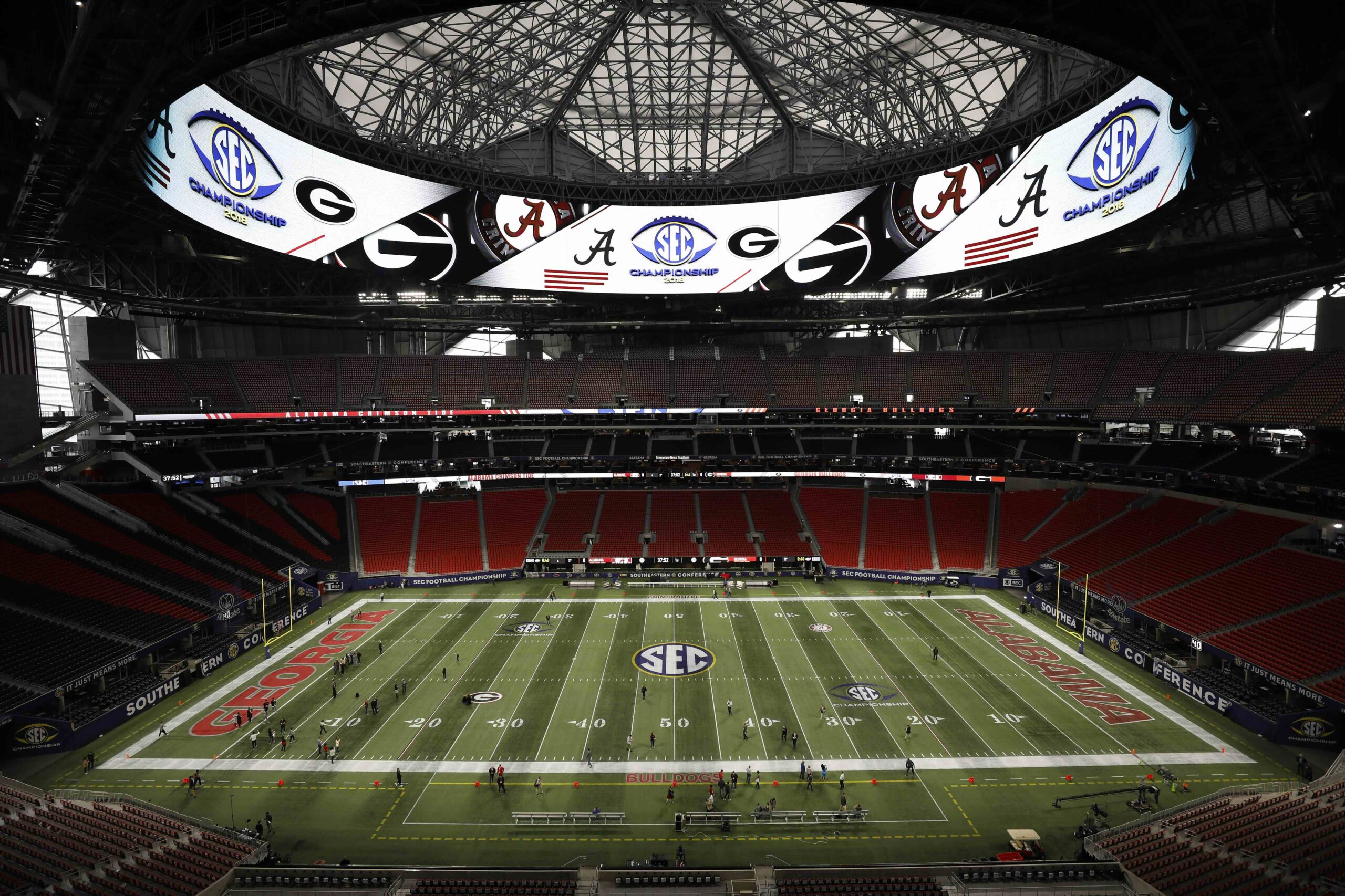
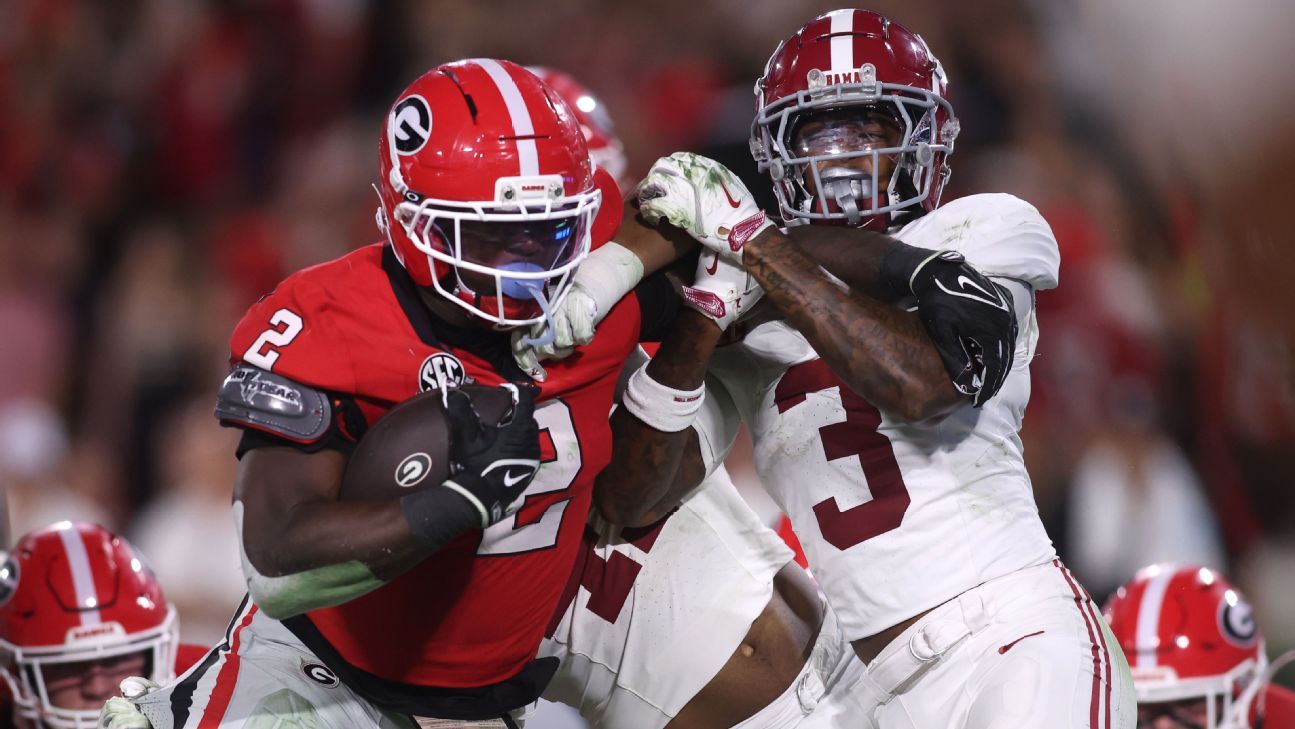
The centerpiece of this entire spectacle is, of course, the SEC Championship in Atlanta. Georgia versus Alabama. The two-time defending champion, a machine of seemingly unstoppable efficiency built by Kirby Smart, against the fading empire of his former mentor, Nick Saban. The narrative is almost too perfect, which should be your first red flag. Georgia has not been truly tested. Their journey to this point has been a procession through a conference whose middle and lower tiers have been hollowed out by years of talent consolidation at the top. They are a juggernaut, yes, but one that has been operating in a controlled environment. They have not faced a strategic mind like Saban’s or a team that, despite its flaws, still possesses the muscle memory of a champion.
Alabama, on the other hand, is a fascinating case study in dynastic decay. They are no longer the flawless Death Star of the 2010s. Their early-season loss to Texas exposed deep vulnerabilities, and their subsequent wins have often been gritty, ugly affairs, not the clinical demolitions of old. Quarterback Jalen Milroe is a paradox; a player of breathtaking athletic ability who can also make catastrophic decisions. And yet, here they are. They survived. They adapted. They are the wounded bear in the woods — perhaps more dangerous now, with their backs against the wall, than they were when they were fat and comfortable atop the mountain. This game is not about who is ‘better’ in a vacuum. It is about whether Georgia’s pristine, untested machine can withstand the desperate, chaotic fury of a dynasty refusing to die. Saban’s entire legacy is built on these moments (and let’s be honest, he has more of them than anyone else). He is a master of psychological warfare, of exploiting the single crack in an opponent’s armor. Georgia has not yet had to show if they even have armor.
The Feudal States and Their Vain Appeals to the Crown
While the titans clash in Atlanta, the rest of the country engages in what amounts to a series of feudal squabbles for the remaining scraps from the king’s table. Each conference championship is presented as a monumental, winner-take-all affair, but the cold reality is that most of them are simply auditions. The selection committee, a cabal of athletic directors and assorted insiders whose deliberations are as opaque as a Politburo meeting, will be watching not just for winners and losers, but for ‘style points’ and ‘narrative appeal’. It is a deeply subjective and political process masquerading as objective analysis.
Look at the landscape. In the Pac-12 (a conference cannibalizing itself into extinction, a tragic casualty of the television arms race), we have a glorious rematch between Washington and Oregon. A fantastic football game, to be sure, but one where the winner must not only win but win impressively enough to convince the committee they belong in the same breath as an SEC team. They are supplicants. In the Big 12, Texas, the conference’s departing hegemon, faces Oklahoma State. A win for Texas is their only path, a final stamp on their ticket to the SEC where they believe their true destiny lies. A loss would be a catastrophic failure, validation for those who see their brand as overhyped and their substance as lacking.
The Curious Case of the Mutilated Contender
Then there is the most revealing situation of all: Florida State in the ACC. Here we have the perfect test case for the committee’s true priorities. The Seminoles are undefeated. They have done everything asked of them, navigating their schedule without a single loss. By any sane, meritocratic standard, they have earned a place in the playoff. But their star quarterback, Jordan Travis, suffered a gruesome, season-ending injury. Suddenly, the conversation has shifted. It is no longer about their resume; it is about their ‘viability’. Can they ‘compete’ at the highest level without him? This is a breathtakingly cynical sleight of hand. The committee has given itself an out, a justification to exclude an undefeated champion from a Power Five conference in favor of, perhaps, a one-loss SEC team (like Alabama, should they lose a close game to Georgia) who they deem more ‘watchable’ or ‘competitive’.
This is the system laid bare. It is not about rewarding the most successful teams; it is about curating the most profitable television matchups. An undefeated FSU with a backup quarterback is a less appealing product than a one-loss Alabama with Nick Saban on the sideline. That is the cold, hard, commercial truth. The committee’s final rankings will be a business decision, wrapped in the language of sporting integrity. Do not be fooled.
The End of an Era, The Dawn of a New Conglomerate
Whatever happens this weekend, it is the end of something. The final gasp of the four-team playoff, a flawed and controversial system that nonetheless produced an intense, high-stakes regular season where every single loss could be fatal. We are on the precipice of the 12-team playoff, an expansion hailed as a victory for access and fairness. It is nothing of the sort. It is a dilution of the product, a concession designed to quell rebellion among the other conferences while ensuring the SEC and Big Ten can comfortably warehouse six to eight of the twelve available slots each year, further consolidating their power and financial dominance.
The new system will render much of the regular season meaningless. A two-loss team from the SEC will have a far clearer path to the playoff than an undefeated champion from a lesser conference. The tension will evaporate, replaced by a bloated, multi-week tournament that more closely resembles the NFL’s postseason — a model designed for television inventory, not for preserving the unique stakes of college football. It is the final victory of corporatization over collegiate identity. The chaos we see this weekend, the desperate scrambles and the so-called ‘win-and-in’ scenarios, will soon be a relic of a bygone era. It will be replaced by a more orderly, more stratified, and ultimately, less compelling system where the powerful are protected and the outcomes are more predictable.
A Final Reckoning
So as you watch the games this weekend, look past the cheerleaders and the marching bands. See it for what it is: the culmination of a nine-figure business cycle. The Alabama-Georgia game is a battle for market share. The Pac-12 title is a funeral for a once-proud brand. Florida State’s fate is a line item on a risk assessment report. The ‘picks’ and ‘locks of the week’ are merely content to drive engagement on gambling apps, another revenue stream in this vast enterprise. The players are assets, the coaches are CEOs, and the fans are the consumers whose emotional investment is the currency that powers the entire machine. The committee’s final decision will not be about who is best. It will be about what is best for business. And in college football, business is always booming.