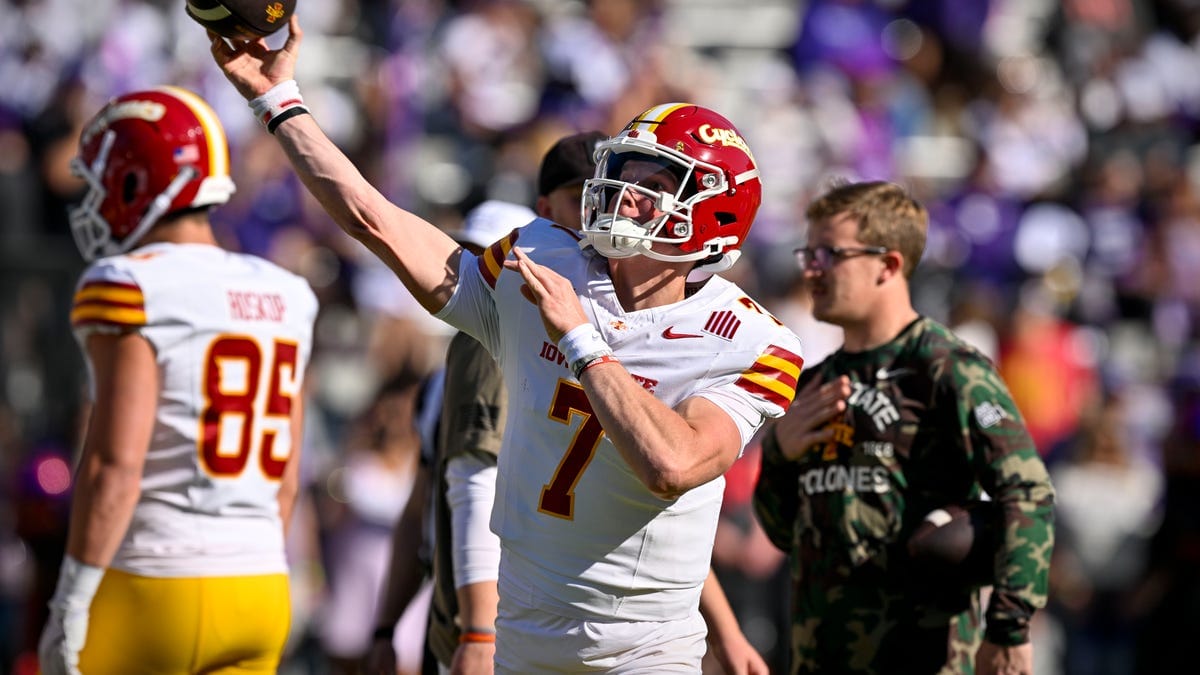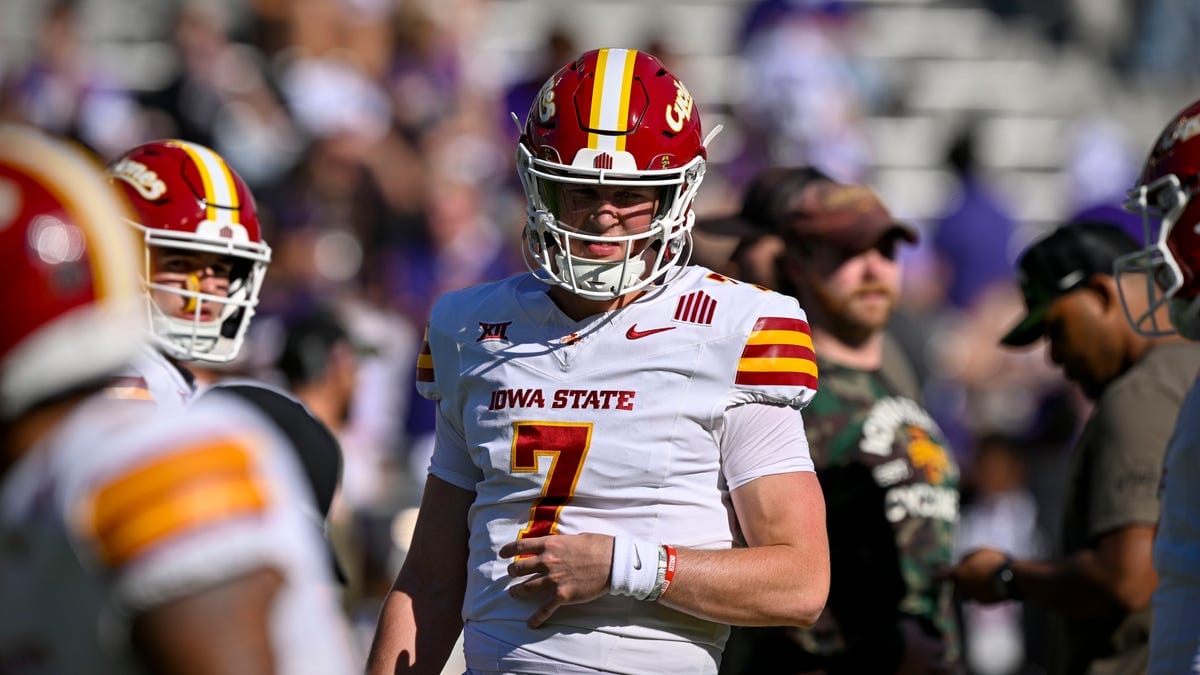
The Cold Calculus of the Portal: Why Alex Manske’s Transfer Is the New Normal
Q: So, let’s cut through the noise. We have Alex Manske, a former four-star target for Nebraska, now leaving Iowa State. We also have Penn State bringing in a new quarterback with a massive 64-TD resume. What does this reveal about the current state of college football? Is this just routine player movement or something deeper?
Because the cold strategist sees this not as routine, but as a perfect microcosm of everything that has fundamentally broken the NCAA system. And it’s not a minor fissure; it’s a full-on collapse of the old structure. When you have a player like Manske, who was highly recruited and considered a key piece of the future at a program like Iowa State, deciding to pull up stakes, it’s a direct response to a changed environment. But this isn’t about loyalty; it’s about opportunity cost and calculation. Manske’s decision isn’t emotional; it’s logical. He’s looking at the depth chart, assessing his path to becoming a starter, and concluding that staying put isn’t his optimal strategy for maximizing his NFL potential. So, he enters the portal. It’s pure business. The old idea of staying for four years to build a program with your teammates? That concept is obsolete, replaced by a cutthroat market where players are free agents and programs are constantly shuffling the deck. And while Iowa State loses a talent, a program like Penn State simply buys one, demonstrating the massive divide that is growing between the haves and have-nots in this era of free movement.
Q: Let’s focus on the Nebraska connection first. Manske was a highly coveted target for the Huskers before choosing Iowa State. Now he’s back on the market. Does this signal anything specific about Matt Rhule’s program, or is it just a random data point?
Because every single move in recruiting, especially for a program like Nebraska, is heavily scrutinized, and this isn’t just a random data point; it’s a reflection of the competition’s strategy. When Manske originally chose Iowa State, it highlighted the challenges Nebraska faced in landing top talent. Now that he’s back in the portal, the question for Nebraska’s coaches isn’t just whether they *should* go after him again, but whether they *can* close the deal this time. The cold strategist views this situation as a clear indication that a program’s recruiting struggles don’t just happen once; they create a long-term perception issue. If Nebraska is still perceived as a difficult place to find playing time or lacks the NIL resources to compete with other top programs for a player like Manske, then they’ll face the same issues repeatedly, regardless of who is coaching. And let’s be blunt: a player like Manske, having seen the options available in the portal once, is likely looking for a situation where he is the clear path-to-starter, not just another piece in a crowded QB room.
The Strategic Imperative: Why Penn State’s Move is the Blueprint
Q: Now, let’s look at the other side of the equation: Penn State landing a high-profile QB with 64 career touchdowns. This shows the exact opposite strategy from developing a Manske-type player. What’s the calculation here for the blue bloods?
And this is where the cold strategist sees the true nature of modern college football: a two-tiered system where the elite programs operate in a different market altogether. Because Penn State isn’t looking for potential; they’re looking for production. A player with 64 touchdowns isn’t a developmental project; they’re an asset ready for immediate deployment. The calculation for Penn State is simple: we have a championship window open, and we need the best available parts to maximize our chances *right now*. They are essentially buying a proven commodity. This high-level acquisition strategy completely disregards the long-term development of their internal backups. It signals to those internal players that if a better option becomes available, they will be replaced, regardless of their effort or progress in practice. But this isn’t a sign of callousness from Penn State’s perspective; it’s a strategic necessity to compete with the likes of Ohio State and Michigan. If they don’t buy the best talent in the portal, they fall behind. It’s a zero-sum game.
Q: The transfer portal has been open for a while now. Are we just seeing a natural evolution, or has something fundamentally changed that makes these moves more frequent and more impactful?
But this isn’t just evolution; it’s acceleration. The transfer portal, combined with Name, Image, and Likeness (NIL) legislation, has created a perfect storm for player movement. Because NIL allows a player like Manske to monetize his value, he is no longer just a student-athlete; he is an entrepreneur calculating the best return on investment for his talent. The incentive to stay at one place for four years, building loyalty to a program, has been diluted by the incentive to play immediately and earn money. The cold strategist sees this as a shift in power dynamics. The player, not the coach or institution, holds the leverage. And while some argue this is good for player empowerment, it creates instability for mid-level programs. They develop a player to a certain level, only to have them poached by a larger school just when they become ready to contribute significantly. It’s a feeder system in reverse.
The Systemic Fallout: A Sinking Ship for Mid-Majors
Q: What are the long-term implications for programs like Iowa State, which rely heavily on developing multi-year players? Is this a sustainable model for them, or are they destined to become little more than farm teams for the bigger conferences?
And this is perhaps the most critical question in modern college football. Because the cold, hard reality is that programs like Iowa State are now in an impossible position. They cannot compete with the NIL budgets of the big-ten heavyweights, and they cannot guarantee playing time over a highly rated transfer. Their primary function, from a strategic standpoint, is rapidly becoming a developmental program for the top-tier schools. They take high school recruits, develop them, and if those players show promise but get blocked by a more established player on the depth chart, they simply transfer up to a bigger program. This creates a vicious cycle. Iowa State loses a player like Manske, and then has to scramble to replace him with another developmental project from high school or a potentially lower-quality player from the portal. The cold strategist predicts this will widen the gap between the haves and have-nots, leading to less parity in college football. The current system rewards immediate gratification and punishes long-term development strategies.
Q: What about the coaching angle, specifically for someone like Matt Campbell at Iowa State? How does this constant turnover change his job description?
Because Matt Campbell, along with every other coach not at an elite program, is essentially facing a new reality where he has to constantly recruit his own roster. He can no longer rely on building a culture of long-term loyalty; he must constantly sell his current players on why staying is better than leaving. And this puts immense pressure on a coach. Every time a high-profile player transfers out, it sends a negative message to potential high school recruits, creating further recruiting challenges. The cold strategist understands that a coach’s job has evolved from developing talent to managing expectations in a volatile market. It’s not about building a team; it’s about managing a revolving door of assets and liabilities. The pressure to win immediately, combined with the ease of player movement, means that coaches are now managing short-term contracts with players, regardless of how long the players are technically on the roster. It’s exhausting, inefficient, and requires a complete psychological shift from the coaching mentality of just a decade ago.
The Future of Recruiting and Player Psychology
Q: How does this dynamic affect high school recruiting? Does a high school player now think differently about committing to a program? Do they immediately look at the portal as an escape route if things don’t go exactly as planned?
But of course they do. Because the transfer portal has fundamentally altered the mindset of the modern high school recruit. They no longer see a commitment to a school as a binding agreement for four years; they see it as a two-year trial period. The cold strategist knows that a high school player’s primary concern isn’t program loyalty; it’s personal brand and potential earning power. If they go to a school, don’t play as much as they’d like in the first year, or see a new recruit come in who blocks their path, they know they have a safety valve. The portal offers immediate gratification and a second chance. This mentality reduces the value of long-term development programs and puts immense pressure on coaches to play their recruits immediately. If a player sits for two years, they’re likely to leave. This accelerates the churn and ensures that a player like Manske will always have options.
Q: Finally, what’s the prediction for Manske’s next move? Where does he go, and what’s the broader trend for transfers like him?
And the cold strategist predicts Manske will go somewhere where he can start immediately. He won’t make the mistake of going to another Power Five program with an entrenched starter. He’ll look for a G5 program or a P5 school that just lost its starter and has a clear need for a veteran quarterback. The broader trend for players like Manske is clear: they will use the transfer portal to optimize their opportunities. They will use it to move up to a higher-profile program (like Penn State’s new QB) or move down to a program where they can finally play (like Manske’s probable move). The portal is no longer just for disgruntled players looking for a fresh start; it’s a strategic tool for career advancement. The era of loyalty is dead, replaced by the era of calculated self-interest, and the Manske transfer is just another data point confirming that reality.