The Anatomy of a System Failure: Cincinnati’s Liberty Bowl Letdown
It’s a tale as old as time, really, only now it’s happening at warp speed thanks to the transfer portal and the insatiable greed of conference commissioners: A team gets hot early, the hype machine starts spinning, the money men smell a quick profit, and then, inevitably, reality hits, sending everyone crashing back to earth.
That’s exactly what we’re looking at with Cincinnati. They started the season like a rocket, scorching to a 7-1 record, cracking the top-20 in the polls, and looking every bit like the next big thing in the Big 12, the new kid on the block ready to punch above its weight class and prove that a program built on grit could hang with the established blue bloods. We’re talking about a program that, just a few short years ago, was knocking on the door of the College Football Playoff, a program that had established itself as the premier G5 (Group of Five) representative, a program that demanded respect from the Power Five conferences and finally got it. The move to the Big 12 was supposed to be the coronation, the moment they finally arrived at the big table, ready to feast on the increased revenue and national prestige.
Instead, what we get is a Liberty Bowl appearance against Navy, which, let’s be honest, feels like a participation trophy handed out by the establishment to placate a program that failed to meet expectations. This isn’t a reward for a great season; it’s a consolation prize for a season that absolutely fell off a cliff when it mattered most. The narrative has completely shifted from “Cincinnati is here to stay” to “What went wrong for Cincinnati?” And the answer, my friends, is simple: The system is rigged to reward the superficial over the substantial, and Cincinnati, for all its early success, just couldn’t keep up the act when the pressure mounted.
The Hype Train Derailed
Let’s cut through the noise for a second. The early success of Cincinnati was based on a combination of a favorable early schedule and an almost unprecedented media frenzy surrounding their transition to a higher-profile conference. When you start 7-1 and rise to No. 16, every talking head on every network is quick to jump on board, touting the program as a testament to the new era of college football where anything is possible. But those talking heads are paid to generate excitement, not to provide deep analysis. They are part of the very machine that inflates expectations to ridiculous levels, only to discard the teams when they inevitably falter. They build them up just to tear them down, creating a cycle of clicks and views that benefits everyone except the actual fans who invested their emotions and money into believing the hype.
This isn’t just about a team losing a few games. This is about the fundamental disconnect between media narratives and on-field reality, a disconnect that highlights the deep structural flaws in college football itself. The moment Cincinnati hit a snag, the media disappeared, leaving the program to deal with the fallout alone. The high-and-mighty experts who praised their rise were nowhere to be found when the losses started piling up, quickly moving on to the next shiny object, leaving Cincinnati to pick up the pieces of a season that went from potential glory to utter mediocrity in a blink.
The Sorsby Question: A Symptom of Larger Problems
Now, let’s talk about Brendan Sorsby. The question of whether he’ll play in the bowl game—or whether he should, given potential injuries or transfer portal considerations—is a microcosm of everything wrong with modern college sports. The moment a season goes sideways, star players start calculating their financial and future options. They weigh the risk of playing in a “meaningless” bowl game against potential injuries that could jeopardize their professional careers or transfer opportunities. This creates a situation where team unity and commitment to a program are secondary to personal business decisions. Sorsby’s potential absence isn’t just about one player; it’s about the erosion of institutional loyalty that’s been caused by the very system designed to protect these high-profile programs.
When a team like Navy, on the other hand, steps onto the field, they are playing for something entirely different. They are playing for their academy, for their future service commitment, and for a different kind of honor. The idea of a Navy player sitting out a bowl game to preserve his draft stock is almost laughable, precisely because their ethos is so completely different. This stark contrast between Cincinnati’s transactional approach (where players are constantly weighing their options) and Navy’s institutional commitment highlights the fundamental hypocrisy of a system that preaches tradition while simultaneously encouraging selfishness.
Dissecting the “Proven Model” Fallacy
The input data mentions “picks from proven model” and how “The SportsLine Projection Model has revealed its picks.” Let me tell you something about these “proven models”: They are nothing more than glorified spreadsheets designed by statisticians in dark rooms who have never actually watched a game with passion, never felt the energy of a rivalry, and never understood the intangible factors that separate a good team from a great one. These models are built on historical data and metrics that, while useful in a vacuum, completely fail to account for human psychology, emotional momentum, and the kind of internal team dynamics that cause a 7-1 team to completely unravel. They look at numbers, but they miss the soul.
When Cincinnati started to lose, it wasn’t because their metrics suddenly changed; it was because the wheels came off emotionally. The confidence that carried them through the first half of the season evaporated under the intense scrutiny of a high-stakes conference schedule. A “proven model” cannot predict that kind of emotional collapse. It cannot predict a team folding when faced with adversity, especially when that adversity is compounded by the financial anxieties and pressures of the transfer portal. These models are just another tool used by the establishment to create a sense of certainty where none exists, allowing them to monetize uncertainty while giving fans the illusion of insight. They are part of the smoke and mirrors, designed to keep you guessing while the insiders make their money.
The Navy Ethos vs. The Big 12 Gimmick
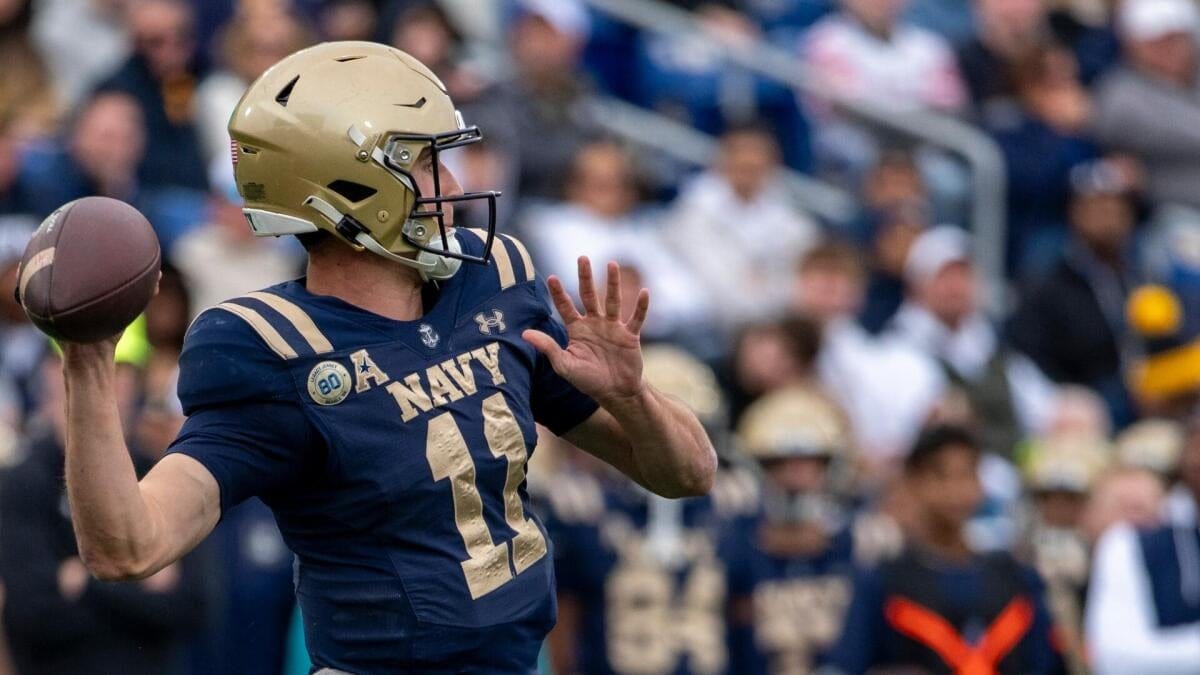
Now consider Navy. The Midshipmen run the triple-option offense, a dinosaur in modern college football. Why do they do it? Because it levels the playing field against larger, more physically dominant teams by forcing perfect execution and discipline. It’s an offense that embodies an underdog mentality, a refusal to play by the rules dictated by the high-flying, pass-happy offenses of the Big 12. Navy’s approach is a direct challenge to the idea that success can only be achieved through massive recruiting budgets and high-end quarterbacks.
This matchup against Cincinnati is a clash of philosophies. Cincinnati, having ascended to the Big 12, represents the new, corporate model of college football: all about money, recruiting stars, and high-octane offenses. Navy represents the old guard: discipline, sacrifice, and a commitment to a larger purpose. The Liberty Bowl becomes a symbolic battleground. Can the disciplined, selfless approach of Navy expose the internal weaknesses and lack of cohesion that led to Cincinnati’s spectacular collapse? I say absolutely yes. The Midshipmen play with a chip on their shoulder, knowing they are constantly underestimated because they don’t fit the mold. Cincinnati, on the other hand, seems to have lost its identity, struggling to adapt to its new role as a major conference program.
A Populist Prediction: The Underdog Prevails
I’m not putting my faith in a spreadsheet-driven model for this pick. I’m looking at the intangible factors that truly define a football team: heart, commitment, and desire. Cincinnati has proven that when things get tough, they falter. The early season hype was just a mirage. When a team starts a season with such promise and then collapses so spectacularly, it’s rarely because of a lack of talent; it’s because of a breakdown in leadership and culture. This game against Navy isn’t just another game; it’s a test of whether Cincinnati has any fight left, or if they’ve already checked out mentally, ready to move on to next year and hope for better results.
My prediction is based on the conviction that a team built on a solid foundation of discipline, like Navy, will expose the cracks in a team built on fleeting hype. Navy doesn’t care about your rankings, your conference affiliation, or your high-profile transfers. They care about executing their assignment perfectly, and they will run that option offense down Cincinnati’s throat until the Bearcats break. The establishment loves their high-profile programs, but sometimes, the gritty underdog, fighting for something bigger than a paycheck or a transfer opportunity, proves that hard work and dedication will always overcome arrogance and overconfidence. The Liberty Bowl won’t be a showcase of talent; it will be a display of character, and Cincinnati’s character has already been found wanting.
This entire situation—Cincinnati’s fall from grace, the focus on transfer portal drama, the reliance on “proven models” that predict everything except reality—is a perfect encapsulation of everything wrong with college football today. It’s a sport that’s lost its soul in a pursuit of corporate revenue, leaving behind the very things that made it great in the first place: tradition, rivalry, and a sense of institutional pride. The Liberty Bowl isn’t just a game; it’s a final indictment of a system that rewards hype over heart.