The Mirage of Cincinnati’s 7-1 Start: A Cautionary Tale for Hype Merchants
Let’s talk about Cincinnati, because we have to. They started the season like a rocket taking off, soaring to a scorching 7-1 record and even sniffing around the edges of a real New Year’s Six bowl conversation for about five minutes, which is just long enough to get everyone hyped up and believing in the dream again, only to see it completely and absolutely crash into a fiery pile of rubble, which is exactly where they ended up when the season went south and they had to accept the dreaded Liberty Bowl invite against Navy.
A 7-1 start, a No. 16 ranking in the US LBM Coaches Poll—all of it just felt like a cruel joke, especially in hindsight, because everyone bought into the narrative that Cincinnati was back, that they were a Big 12 program finally finding their footing and demonstrating that they belonged among the big boys of college football, even though anyone with half a brain could see that the schedule was heavily front-loaded with cupcakes and teams still figuring out how to tie their shoelaces, setting up a fall from grace that was as predictable as the sun rising in the east.
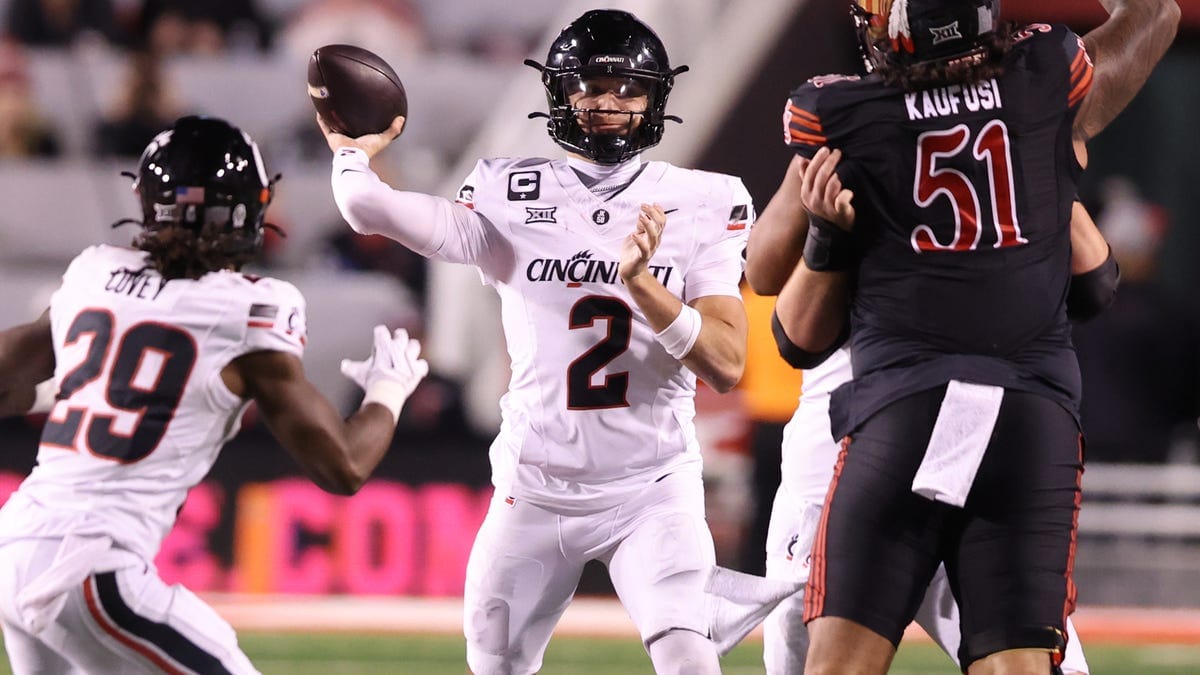
The Brendan Sorsby Question: A Case Study in Transfer Portalitis
Now we get to the real drama, the kind of juicy gossip that makes bowl games actually interesting, which is whether Brendan Sorsby will even bother lacing up his cleats for this spectacle (or whether he will be allowed to, depending on which rumor mill you listen to). The question of ‘Is Brendan Sorsby playing in the bowl game?’ is not just about a quarterback’s availability; it’s about the very soul of a program that peaked too early and is now facing an existential crisis, wondering if its top talent is already looking for greener pastures in the transfer portal.
It’s always a bad sign when a team’s star quarterback, especially a high-profile one like Sorsby who had a decent run during those initial wins (before things went completely off the rails for everyone involved), becomes a question mark for a postseason game that, let’s face it, is essentially a participation trophy for a team that completely and utterly failed its primary objective for the back half of the season.
This isn’t just about an injury (although that’s always the convenient excuse), this is about ‘Transfer Portalitis,’ a newly discovered disease in modern college football where players suddenly realize that a bowl game on national TV against a service academy might not be worth risking an injury when they could be negotiating a bigger NIL deal with a different school, making this entire situation a test case for whether players care more about their current team’s legacy or their future personal bank account.
The “Proven Model” Scam and Why Algorithms Hate Navy
Let’s talk about the so-called “proven model” that SportsLine and others trot out every year to make their predictions, because I find it absolutely hilarious that anyone puts stock in a computer algorithm when it comes to predicting a game involving Navy (or Army, or Air Force, for that matter), since these teams operate outside the normal parameters of human logic and data analysis.
The models, which are programmed to look at traditional metrics like passing efficiency, third-down conversions, and red zone success rates, completely fail when confronted with the triple-option offense, which is basically football played in an alternate dimension where none of the traditional rules apply; a dimension where a team can complete zero passes and still absolutely dominate a game by running the ball 70 times for 400 yards, leaving the data scientists scratching their heads because their algorithm didn’t know how to factor in ‘sheer physical brutality and an unwavering commitment to a centuries-old philosophy.’
The models likely looked at Cincinnati’s initial wins (where they looked great against teams that tried to play traditional football) and Navy’s losses (where they looked weak against teams that were built to stop the run) and spat out a prediction that probably favors Cincinnati, but the human element—the fact that Navy’s team is built on discipline and commitment, and Cincinnati’s team is built on individual talent and possibly a bit of arrogance—is something a computer simply cannot calculate.
The Psychological Warfare of the Service Academy Triple Option
Let’s be real, a game against Navy is a psychological battle, not just a physical one. When Cincinnati plays a team like Navy, their highly recruited athletes (who are probably already thinking about the NFL or the next level) have to spend three hours getting absolutely hammered by smaller, tougher, more disciplined players who are motivated by something entirely different—not a big contract, but a sense of duty, a concept that is completely foreign to most modern college football programs.
Cincinnati’s defense, which probably started the season dreaming of sacking a pro-style quarterback and getting highlight reels for social media, now has to prepare for an offense where the ball-carrier isn’t always obvious and where the defenders are constantly being cut blocked at the ankles; this is not fun football, and for a team that has already given up on its season goals, it’s a recipe for disaster and a guaranteed ‘choke job’ in progress.
The Liberty Bowl: A Retirement Home for Hopes
The Liberty Bowl itself is the perfect setting for this showdown between a team that peaked too early and a team that peaked too late (or never really peaked at all, depending on how you look at Navy’s schedule). It’s a bowl game for teams that had high aspirations but ultimately failed to live up to them, a place where teams go to reflect on what could have been and to try and salvage some pride before everyone goes home for the holidays.
The fact that Cincinnati is playing here after starting 7-1 is a testament to how fast things fall apart in college football when the schedule stiffens and the pressure mounts; it’s a perfect encapsulation of the ‘participation trophy’ culture that permeates the sport, where everyone gets a bowl game even if they completely fell apart in November, making the game itself feel less like a reward and more like a punishment for a season gone wrong.
The Prediction: A Coin Flip or a Catastrophe
When you look at the ‘proven model’ and all the data points, you’d probably pick Cincinnati to win, because on paper, they have more talent, higher recruiting rankings, and better athletes across the board (and maybe Sorsby plays, maybe he doesn’t, who knows). But when you factor in the psychological element, the fact that Cincinnati has already shown they have quit on their season, and Navy’s ability to grind down opponents with a relentless ground game, the data becomes meaningless and the ‘proven model’ goes right out the window.
I predict that Navy will win, not because they are better on paper, but because they are tougher mentally, and they will exploit Cincinnati’s obvious lack of motivation. The final score won’t be high, and it certainly won’t be pretty, but Navy will grind out a victory that will leave the ‘proven model’ scratching its head and force Cincinnati to reevaluate everything about their program heading into the next season.