The Deceptive Nostalgia of Dysfunction
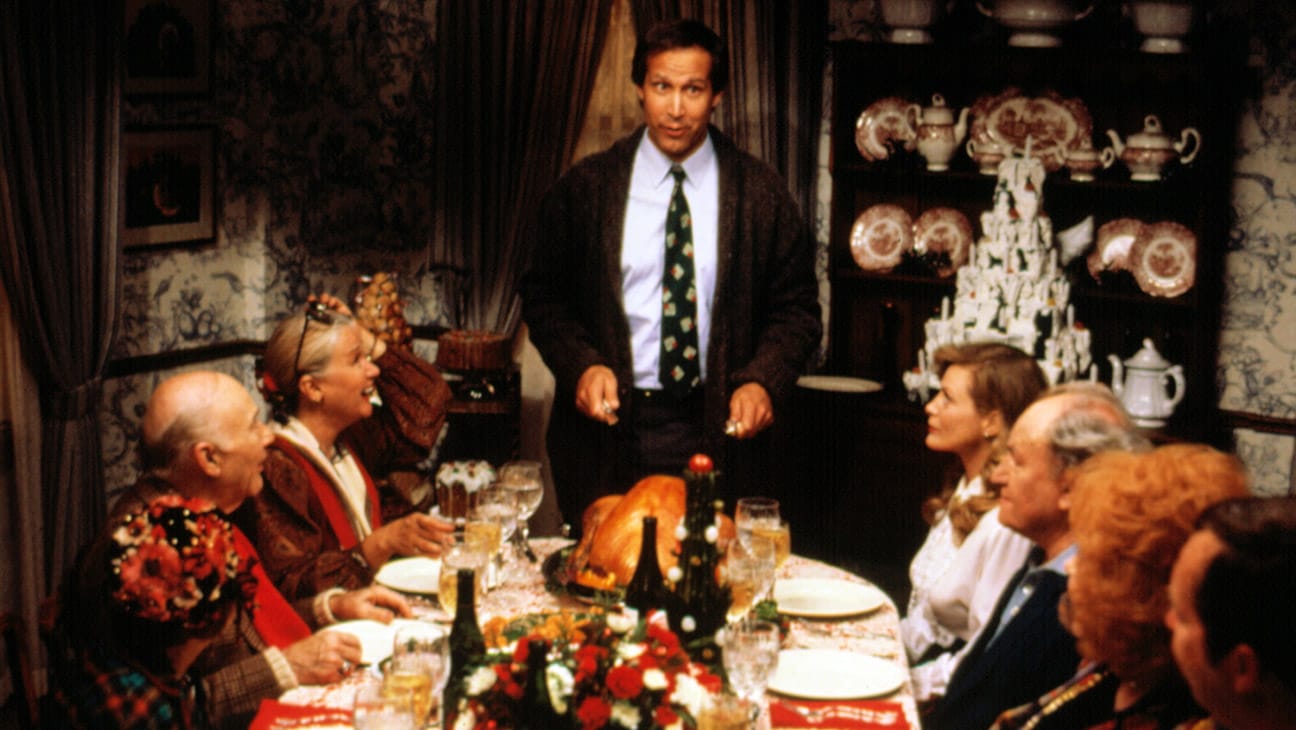
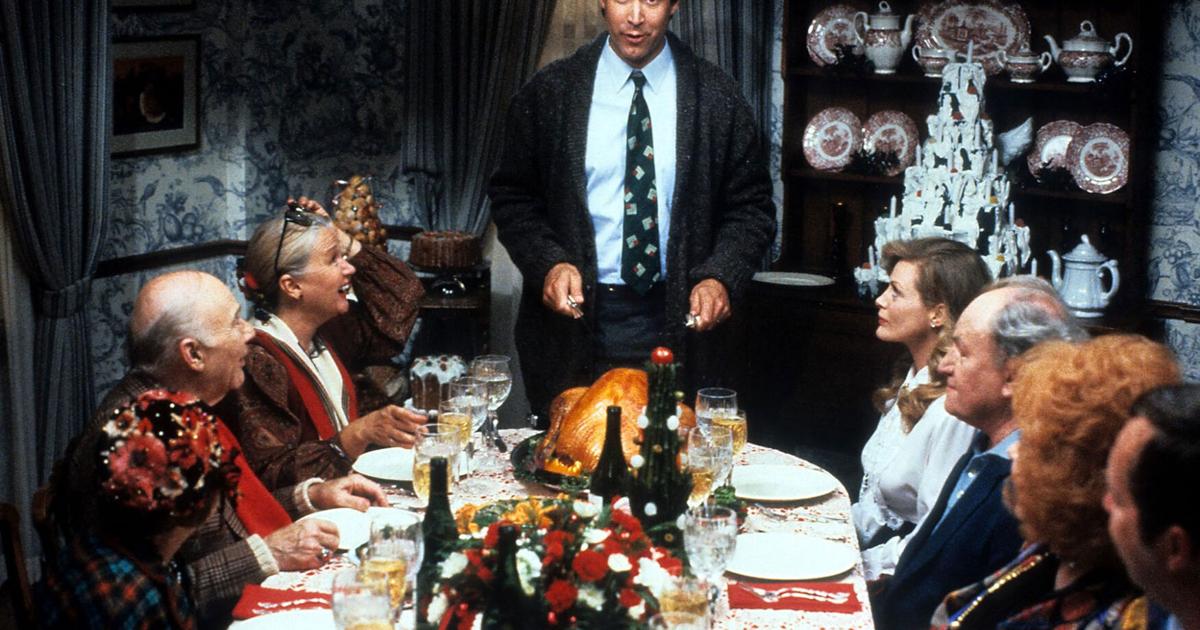
Let’s get something straight right now: you people watching National Lampoon’s Christmas Vacation every single year, laughing at the sheer, unadulterated chaos, you’re missing the point entirely. You think it’s a comedy? You’re wrong. It’s a horror film, or at best, a terrifying social commentary about the complete, utter, and irreversible decay of the American family unit and the suffocating pressure of consumerism, which we somehow manage to confuse with ‘holiday spirit’ every December. The film isn’t a lighthearted romp through a wacky holiday; it’s a chilling prophecy that has become more accurate with every passing year, illustrating precisely why modern society is spiraling into a collective anxiety attack right around the time we’re supposed to be celebrating peace on Earth. It’s a hot mess.
The central character, Clark W. Griswold, is not just a bumbling dad; he is the embodiment of a generation built on a crumbling foundation of debt-fueled optimism and unrealistic expectations. He represents the final gasp of the post-war ideal, the guy who genuinely believes that if he just tries hard enough—if he just buys enough lights, finds the perfect tree, and hosts a sufficiently elaborate family gathering—he can somehow conjure genuine, wholesome happiness out of thin air. He is the last man standing against the encroaching tide of cynicism and materialism, and the movie delights in watching him fail spectacularly. It’s not funny; it’s tragic.
The Financial Breakdown Hidden in Plain Sight
Let’s talk about the real source of tension in the film, the one that everyone laughs off as part of the plot but which, in reality, is the engine of societal collapse: the Christmas bonus. The entire financial security of the Griswold family—their ability to pay for the pool, their long-term stability—is completely dependent on an arbitrary payout from an indifferent corporation. This is the ultimate, terrifying truth of late-stage capitalism: your entire future hinges not on hard work or merit, but on the capricious whim of a CEO who views you as a line item on a spreadsheet. Clark’s complete inability to control his financial destiny forces him into a state of panic, which manifests as his obsessive pursuit of the ‘perfect’ Christmas. He’s trying to buy happiness because he’s terrified that his hard work is meaningless, and he’s not entirely wrong. He is trying to create a facade of stability to protect himself from the existential dread of economic precarity. When he finally snaps, it’s not just about the lights not working; it’s about realizing that everything he’s worked for—the white picket fence dream—is fundamentally a lie, a house of cards ready to collapse at the slightest gust of wind.
The film essentially argues that the holidays are just a high-stakes, high-stress social ritual designed to extract maximum resources from an already struggling middle class, forcing families into a cycle of spending, stress, and eventual breakdown. It’s why we see so much financial anxiety during November and December; we feel compelled to perform this ritual of consumption, even when we can’t afford it, because we’ve been conditioned to believe that this performance equals love and success. Clark Griswold, in his ridiculous quest for 25,000 twinkle lights, perfectly illustrates this desperate attempt to outspend reality. It’s consumerism at its most grotesque and, frankly, disturbing level.
The Parasite Class and Societal Decadence
And then there’s Eddie. Oh, Eddie. The true panic alarmist understands that Eddie isn’t just a quirky relative; he is the representation of the social decay that preys upon the good intentions of the few remaining functional members of society. Eddie, with his RV and his complete lack of self-awareness regarding his own personal hygiene, is a parasite. He arrives uninvited, consumes resources without contributing, and brings with him a level of dysfunction that actively undermines any semblance of order. He’s the embodiment of the societal underbelly that leeches off the system and expects to be taken care of, a perfect counterpoint to Clark’s desperate attempts at control. This dynamic is a microcosm of the current political climate, where a small, highly vocal, and self-serving minority demands resources and attention while contributing nothing to the collective good. It’s a terrifying snapshot of societal collapse, where the responsible individual (Clark) is burdened by the irresponsible collective (Eddie and his family) until he reaches his breaking point. We see this play out in real time, every day, in every political debate, where personal responsibility is discarded in favor of a sense of entitlement that borders on the truly surreal. The movie, therefore, becomes a commentary on the unsustainable nature of unchecked familial and societal obligations. It’s pure chaos theory applied to a suburban household.
The Breakdown of Family and the Loss of Meaning
But the true horror of Christmas Vacation isn’t just the financial stress; it’s the breakdown of the family itself, the central unit of society. The Griswold children, Audrey and Rusty, are constantly ignored, overlooked, and subjected to the whim of their parents. They are a passive audience to the spectacle of their father’s unraveling, and their only role is to react with a mixture of confusion and apathy. This is the new normal. We’ve become so obsessed with the performance of family—the perfect pictures, the matching outfits, the choreographed holidays—that we forget to actually engage in meaningful connection. The Griswold children are a warning sign: children raised in this high-stress, performative environment will become apathetic, disconnected, and ultimately unable to form genuine bonds. The film’s genius is in showing us that the more Clark tries to create the perfect family memory, the more distant and alienated his family becomes.
This applies equally to the relationship between Clark and Ellen, his long-suffering wife. Ellen is essentially a prop, a passive participant in Clark’s delusion who occasionally attempts to interject a voice of reason. She is the anchor trying to hold onto reality while Clark floats away into a fantasy fueled by commercialism. Their relationship, while presented as loving, is actually a fragile truce held together by Ellen’s relentless patience. The moment that patience fails, the whole enterprise collapses. The movie shows us that beneath the surface, the American family is a powder keg of unresolved resentment, repressed desires, and financial anxiety, just waiting for the right spark—like a non-existent Christmas bonus—to ignite. The fact that we still find this funny is a testament to how normalized this level of dysfunction has become in our own lives.
The Nostalgia Trap and Future Collapse
The final, most provocative point, and the one that truly sets off the panic alarm, is how we consume this film now. We watch it with nostalgia, yearning for a simpler time, a time when a Christmas bonus could truly save the day, and a time when a single individual (Clark) could still attempt to control the chaos. But we’re actually yearning for a fantasy that never existed, a fantasy that the film itself thoroughly deconstructs. We are trapped in a cycle of nostalgic consumption that prevents us from addressing the very real problems that the film highlights. We watch Clark fail, we laugh, and then we go out and repeat his mistakes, buying things we can’t afford and stressing over expectations that are impossible to meet.
So, when you sit down this year to watch National Lampoon’s Christmas Vacation, don’t just laugh at the squirrel in the Christmas tree or the electrocution of the cat. Look deeper. See the underlying panic, the financial desperation, the breakdown of communication, and the complete collapse of societal norms. It’s not a comedy; it’s a documentary of the American dream’s final, dying gasp, and it predicts a future where we are all just a collection of dysfunctional relatives waiting for the next catastrophe to strike. The holiday season is a lie, and Clark Griswold, in his tragic quest for perfection, proves it.