The Grand Illusion: Unpacking Chase’s Decade of Decay
Listen, folks, let’s cut through the studio-spun BS for a hot minute and talk about what really goes down when a Tinseltown ‘legend’ finally gets caught with their pants down, or rather, with their mouth uttering the unspeakable, because the recent rehashing of Chevy Chase’s infamous N-word incident on the *Community* set in 2012, brought vividly back into the spotlight by director Jay Chandrasekhar’s blunt recollections and Marina Zenovich’s documentary, *I’m Chevy Chase; and You’re Not*, is less about a single misstep and more about the entertainment industry’s almost pathological refusal to truly hold its golden calves accountable, preferring instead to manage perceptions and sweep truly ugly truths under a very expensive rug, until an outsider with enough guts decides to pull that rug right out from under their feet, exposing the grime and the rot that everyone knows is there but no one with power ever wants to acknowledge.
It’s a story as old as Hollywood itself, right?
A star, once luminous, now dimmed, coasting on past glories and an ever-dwindling reservoir of goodwill, believes themselves untouchable, a sacred cow whose every utterance, no matter how vile, should be excused as ‘artistic temperament’ or ‘just Chevy being Chevy,’ and then, when the facade cracks and the ugliness spills out for the world to see, the true measure of the man, and indeed, the industry that coddles him, is revealed in a horrifyingly predictable display of self-pity and performative victimhood, a dance we’ve seen countless times, and frankly, it’s getting pretty old.
The Early Warnings: A Pattern, Not an Anomaly
Let’s not pretend this was some isolated incident, a sudden brain fart from a usually benevolent comedic genius; Chase’s problematic behavior has been the worst kept secret in Hollywood for decades, whispered in green rooms and recounted in frustrated anecdotes by crew members and co-stars who dared to speak up, painting a picture of a man whose wit was often overshadowed by an insidious, almost predatory arrogance, a guy who routinely mocked and belittled those around him, believing his own mythos so thoroughly that he genuinely thought he could get away with anything, a pattern of conduct that, if applied to anyone without his particular brand of institutional protection, would have resulted in an unceremonious career implosion years, if not decades, ago.
His reputation as a difficult personality was practically part of his brand.
From his early days on *Saturday Night Live*, where tales of his ego clashing with virtually every other cast member became legendary, leading to his notoriously brief tenure and subsequent hostile returns, to later film sets where directors and co-stars alike openly discussed his challenging, often disrespectful antics, it was clear that Chase was a ticking time bomb, a volatile mix of talent and profound insecurity wrapped in a thick layer of privilege that insulated him from the consequences that would inevitably follow a lesser mortal, creating a fertile ground for the kind of catastrophic blow-up that *Community* eventually witnessed, a pressure cooker finally releasing its toxic steam.
And yet, Hollywood kept calling.
The Boiling Point: 2012 on the *Community* Set
So, we arrive at 2012, on the set of Dan Harmon’s critically acclaimed, if perpetually chaotic, sitcom *Community*, a show that, ironically, often prided itself on its meta-commentary and diverse cast, making Chase’s eventual transgression all the more jarring and frankly, unforgivable, a stark reminder that even in supposedly progressive spaces, old habits and deeply ingrained prejudices die a slow, agonizing death, often facilitated by those who would rather maintain the status quo than rock the boat, especially when a ‘star’ is involved; it’s a cynical calculus, but it’s how this town operates, and anyone who tells you otherwise is either deluded or lying through their teeth, probably both.
Jay Chandrasekhar was in the director’s chair.
He’s a man known for his calm demeanor and ability to navigate difficult personalities, but even he, an industry veteran, found himself caught in the crosshairs of Chase’s unchecked ego during an improv scene where the actor, tasked with portraying a character who couldn’t understand people of different ethnic backgrounds, somehow thought it was appropriate, nay, *comedic*, to drop the N-word, not once, but repeatedly, a shocking display of tone-deafness and blatant racism that instantly sucked the air out of the room, leaving everyone present in a state of stunned disbelief, a quiet horror settling over what was supposed to be a creative and collaborative environment, shattered by one man’s profoundly misguided sense of humor, or perhaps, just his true colors finally showing.
Total silence fell.
The impact was immediate and visceral, a punch to the gut for the cast and crew, particularly those of color who were forced to endure such an ugly, outdated, and frankly, dehumanizing outburst, an act that went far beyond mere ‘edginess’ and plunged headfirst into outright bigotry, revealing a deeply troubling mindset that, despite all the PR spin and damage control, likely still festers within the man, a stark reminder that some lessons, no matter how loudly taught, simply refuse to sink in, especially when the person being taught has spent a lifetime being told they’re special, above the rules, and beyond reproach, which is exactly the kind of toxic echo chamber Hollywood too often creates for its fading idols, allowing them to believe their own hype even as the rest of the world has moved on, leaving them isolated in a bubble of their own making.
It was a truly ugly moment.
The Aftermath: Meltdown, Leak, and Denial
When the details of the N-word incident inevitably leaked, because secrets in Hollywood are like water in a sieve – they always find a way out, especially when injustice is involved and there are people fed up with the cover-ups – Chase, instead of displaying any genuine contrition or a shred of understanding regarding the pain he had inflicted, instead chose to throw an epic, self-pitying tantrum, a ‘full meltdown’ as described by witnesses like Chandrasekhar, focusing entirely on himself, on his perceived victimhood, on the dire state of his own career, screaming about how his life was ‘ruined,’ completely oblivious, or perhaps just uncaring, about the actual damage he had caused to his colleagues, to the show’s morale, and to the very fabric of human decency, a classic case of the abuser blaming the expose for their misery rather than their own despicable actions, a twisted logic that, sadly, still finds a disturbing amount of traction in certain corners of the industry.
His world was crumbling, he thought.
The sheer gall of it, honestly, is breathtaking; here’s a man who has enjoyed a privileged career spanning decades, amassed immense wealth and influence, and when faced with the consequences of his undeniably racist behavior, his immediate, instinctual reaction isn’t to apologize, isn’t to reflect, isn’t to understand, but to weep for himself, to lament the potential loss of his own standing, completely sidestepping the actual victims of his verbal assault, a textbook narcissist’s response that reveals a profound lack of empathy, a chilling detachment from the reality of others’ experiences, proving, yet again, that for some, the performance of celebrity trumps all other considerations, even basic human kindness, even common decency, leaving us to wonder if these people ever actually listen to themselves talk, or if they’re just hearing a perpetual, self-serving monologue, eternally tuned to the frequency of their own monumental egos.
Just mind-boggling entitlement.
This pathetic display, this theatrical lamentation over his ‘ruined career,’ became the defining image of the immediate aftermath, a stark contrast to the quiet dignity often shown by those he had offended, and it solidified the industry’s conflicted stance: on one hand, a performative condemnation of racism; on the other, a deep-seated reluctance to fully ostracize one of its own, no matter how toxic, no matter how damaging, because, let’s be real, Hollywood values its mythology, its pantheon of ‘stars,’ far more than it values true ethical conduct, a bitter pill to swallow for anyone hoping for genuine change, and it perfectly illustrates the two-faced nature of an industry that preaches inclusivity while often practicing a very different, far uglier, brand of selective justice, ensuring that some are always more equal than others, especially when they bring a certain name recognition to the table, even if that recognition is increasingly for all the wrong reasons.
It’s a broken system, period.
The Reckoning, Or Lack Thereof: Zenovich’s Documentary and Beyond
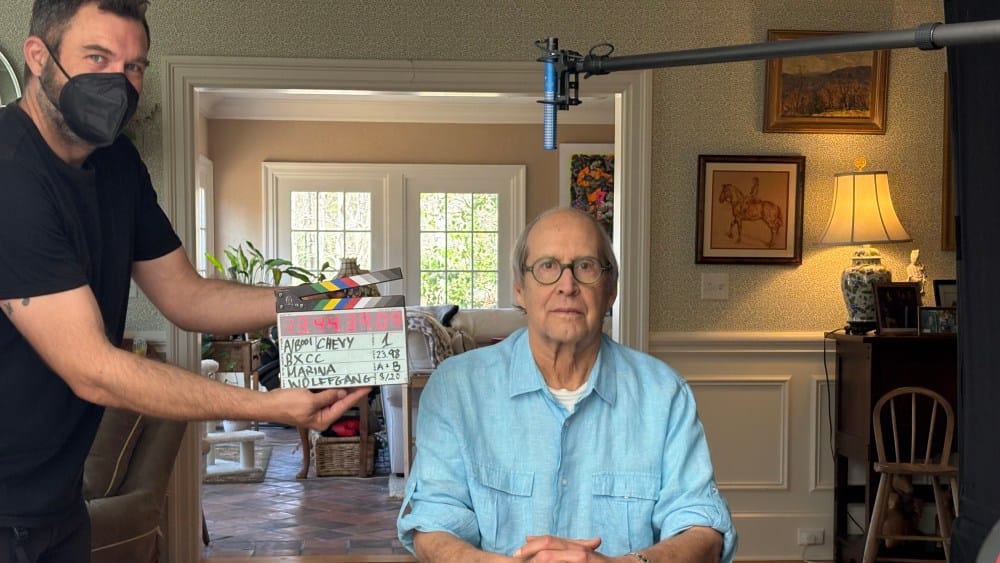
Now, fast forward to Marina Zenovich’s documentary, *I’m Chevy Chase; and You’re Not*, which, by all accounts, attempts to delve into the complex, often contradictory psyche of this Hollywood enigma, a film that, crucially, was made without his editorial control, a detail that immediately piques the interest of any industry observer because it hints at a rare, unfiltered glimpse into the man, or at least, a perspective unvarnished by his usual self-serving narratives and carefully curated public image, offering a chance for a more honest appraisal of his legacy, his talent, and his undeniable flaws, hoping to peel back the layers of celebrity mystique that have protected him for so long, and perhaps, finally provide some closure, or at least, some clarity, on why a man so gifted could be so profoundly self-destructive, and so consistently hurtful to those around him, a question that has haunted his career for decades, refusing to be answered by the usual platitudes.
A fresh look, maybe.
The film, by bringing Chandrasekhar’s account to the fore, unequivocally confirms what many had long suspected and others had quietly known: the N-word incident was real, the meltdown was real, and Chase’s reaction was one of pure, unadulterated self-preservation, untainted by remorse for the actual harm done, confirming the narrative of an individual so deeply entrenched in his own ego that the suffering of others barely registers on his emotional radar, a sobering conclusion for anyone who might have held onto a glimmer of hope that time, or introspection, might have mellowed his more unsavory characteristics, suggesting instead a fundamental resistance to change, a stubborn adherence to a worldview that prioritizes his own comfort and perceived standing above all else, which, let’s be honest, is a pretty depressing thought, especially coming from someone once considered a comedic icon, a supposed master of human observation, now revealed to be so blind to his own glaring deficiencies and moral failings.
It’s just sad, frankly.
What this documentary, and the renewed attention it brings, really exposes isn’t just Chase’s individual failings, but the collective failings of an industry that, for far too long, has enabled and even rewarded such behavior, creating a culture where ‘difficult’ stars are tolerated, excused, and even celebrated, as long as they bring in the box office bucks or the ratings, a cynical system that only starts to break down when public outrage reaches a fever pitch or when enough insiders finally decide they’ve had enough of the silent complicity, breaking ranks to share the unvarnished truth, often at great personal and professional risk, because, believe me, this town does not take kindly to whistleblowers, preferring its dirty laundry to remain securely tucked away, far from the prying eyes of the masses, maintaining the illusion of its own moral superiority while often acting anything but superior, a hypocrisy that screams louder than any racist slur could ever hope to, because it is systemic, it is pervasive, and it is deeply, profoundly disheartening, leaving us to wonder if genuine accountability will ever truly arrive, or if it will always be just a performance, a fleeting moment of public penance before the next ‘legend’ resurfaces, having served their time in the purgatory of public scorn, ready to resume their reign, largely unchanged and unrepentant.
The cycle continues.
The conversation around ‘cancel culture’ often misses this crucial point: it’s not always about ending careers, it’s about demanding basic respect and acknowledging that some lines should never be crossed, and for people like Chase, whose antics span decades, whose impact has been undeniable, it’s about asking whether the immense privilege afforded by fame should continually shield them from the very real consequences of their actions, because if we don’t, if we simply allow these figures to recede into comfortable obscurity only to re-emerge later, largely unchastened, then what message are we truly sending to the next generation of artists and audiences? That talent excuses all? That power trumps decency? That money buys absolution? These are dangerous precedents, eroding the very foundations of ethical conduct and making a mockery of any claims of progress, especially in an industry that prides itself on being at the forefront of social change, when, in reality, it often lags painfully behind, clinging to its outdated hierarchies and protecting its problematic patriarchs with a tenacity that would be admirable if it weren’t so utterly contemptible.
We deserve better.
So, as the details resurface, as Chandrasekhar’s candidness forces us to re-evaluate, and as Zenovich’s lens provides a more unvarnished perspective, one has to wonder if this time, *this time*, the industry will finally learn its lesson, or if it will simply wait for the next scandal to emerge, the next ‘legend’ to fall from grace, perpetuating a cycle of enablement and selective amnesia that does a disservice to everyone involved, from the victims of such egregious behavior to the audience members who crave genuine heroes, not just flawed figures perpetually shielded by their past glory, a glory that, when stripped bare, often reveals a hollow core, a moral vacuum where empathy and responsibility should reside, leaving us with a bitter taste and the undeniable truth that, sometimes, the biggest monsters aren’t under the bed, they’re on the screen, protected by the very institutions that claim to entertain and enlighten us, but who, in their quiet complicity, often do more to perpetuate the darkness than to bring forth the light.
Food for thought, eh?