
The Panic Alarmist’s Guide to Creative Collapse
Chad Powers: The Final Symptom of Hollywood’s Sickness
Let’s not mince words here. This isn’t a cause for celebration. Hulu renewing Chad Powers for a second season, extending the life of what started as a genuinely funny, spontaneous viral gag from Glen Powell, is nothing less than a blaring siren signifying the total creative bankruptcy of the streaming industry. The good news for Hulu is that they found a cheap, low-risk way to fill their content schedule; the bad news for anyone who values original storytelling is that this move solidifies a new, terrifying precedent where fleeting internet virality is immediately strip-mined for every possible cent, leaving nothing but a hollow shell of content that serves no purpose other than generating subscriber retention through pure, algorithmic nostalgia.
It’s a symptom, folks, a high-fever warning that the creative engines in Hollywood have seized up completely. They are out of gas. They are out of ideas. The entire entertainment complex has devolved into a state of panicked recycling, where every decision is driven by data scientists and risk-averse executives rather than genuine artistic visionaries. The result? A content landscape that is increasingly homogenous, predictable, and ultimately, soul-crushingly boring. We are now living in a world where a five-minute bit on ESPN, where an actor in disguise tries out for a college football team, is considered enough of a cultural touchstone to build an entire multi-season series around it. This isn’t a creative endeavor; it’s a calculated act of intellectual property farming, and we are paying the price.
The Timeline of Desperation: From Viral Hit to Algorithmic Failure
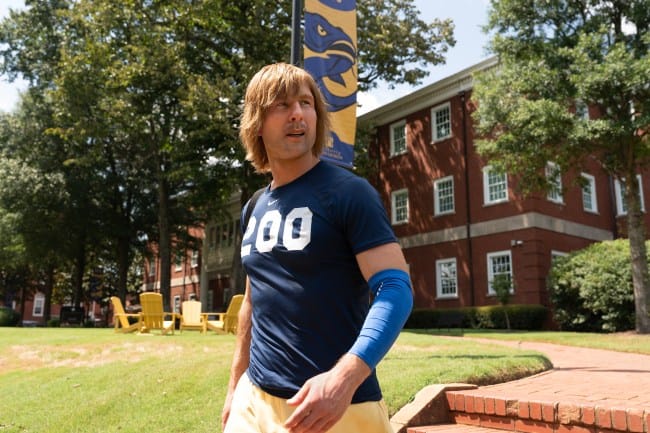
Let’s trace the rapid decline. It all started with that single viral video. The segment, a part of Eli Manning’s show, caught fire because it was unexpected, charming, and just ridiculous enough to be memorable. Glen Powell, leveraging his natural charisma, created a character that was immediately identifiable and funny. The internet loved it. That was the high point. The moment it became clear that Hulu and Glen Powell were developing this into a full series, the alarm bells should have gone off immediately. This is the classic Hollywood play: identify something that worked once, then try to replicate the lightning in a bottle by force, inevitably destroying whatever magic made the original special.
The first season was predictable. It was greenlit in an environment of unprecedented anxiety within the entertainment industry. The Writers Guild of America and SAG-AFTRA strikes were looming. Studios needed “strike-proof” content, and what’s more strike-proof than adapting a character already beloved by an audience with a major, bankable star attached? The show was a safe bet. It was low-hanging fruit. It was exactly what you would expect from a system operating on pure panic. The show’s premise, a college football comedy, perfectly fits the mold of a “comfort watch” that requires minimal intellectual investment. It’s designed to keep a certain demographic subscribed, not to challenge or inspire.
And now, the renewal for season two. This isn’t based on overwhelming critical acclaim. It’s based on a metric that defines success in the streaming era: retention. Did enough people watch Season 1 to prevent them from hitting the cancel button on their Hulu subscriptions? That’s the entire business model now. It’s a game of minimizing churn. The decision to renew Chad Powers for a second go-around signals that the show performed its primary function: it successfully maintained the status quo. The fact that the show’s star, Glen Powell, is now one of Hollywood’s most sought-after actors, fresh off a massive box office hit like Twisters and the rom-com success of Anyone But You, only amplifies the industry’s desperate reliance on star power to carry mediocre content.
The Implications: The Death of Originality and the Rise of IP Farming
The implications of this renewal are staggering. This isn’t just about one show; it’s about the entire future of content creation. We are entering an era where the concept of original intellectual property is effectively dead. Why bother investing millions in an untested screenplay, a fresh idea from an unknown writer, when you can just take something that already exists, something with a built-in audience, and slap a fresh coat of paint on it? This mindset, which has dominated Hollywood for a decade in the form of endless sequels, reboots, and cinematic universes, is now fully taking root in the streaming world.
The streaming wars, once promised as a new golden age of television, have completely failed. Instead of fostering diversity in ideas, they have created a bloated market where every streamer is trying to be all things to all people. The result is a race to the bottom in terms of quality, where the primary goal is simply to produce enough hours of content to justify the monthly subscription fee. The Chad Powers renewal is just further proof that the algorithms are winning. The machines have determined that recycling pre-existing, low-risk IP is more profitable than taking a chance on something new. It’s a spiral of creative suffocation that will eventually lead to audience burnout. People will eventually realize they are paying for a slightly different version of the same thing over and over again, and the bubble will burst, spectacularly.
The panic in the industry is palpable. They see the writing on the wall. They know that subscriber growth has peaked. They know that consumers are increasingly aware that they are being oversold and under-delivered. So, what do they do? They double down on the safest possible bets. They keep churning out content like Chad Powers, content that requires minimal thought from the viewer and minimal risk for the studio. It’s a vicious cycle that prioritizes comfort and familiarity over excitement and innovation. We are becoming a culture of content consumers who are content to consume the same meal every day, just slightly re-flavored. The anxiety around originality is so high that they would rather throw good money after bad than try something truly new.
The Star Power Conundrum: Glen Powell’s Faustian Bargain
Let’s talk about Glen Powell. He’s the new golden boy of Hollywood. He has charisma and genuine talent. But his decision to anchor a series based on a viral bit feels like a faustian bargain. Is this really the best use of his talent? Is this the legacy he wants to build? Or is he, like so many others, simply playing the game, cashing in on a high-demand moment while he can? The industry loves to latch onto a new star and immediately put them into a project designed to maximize their current popularity, regardless of the artistic merit. It’s a cynical move that often leads to short-term gains but long-term creative stagnation for the actor.
The industry is essentially holding a gun to the head of creative talent. If you have a moment of viral fame, they demand that you immediately convert that fame into a full-length series or feature film. The pressure is immense. The fear of missing out on a trend is so severe that they are willing to greenlight projects at a fever pitch. Frankie A. Rodriguez, one of the co-stars, even admitted to being “very anxious” about the renewal and the future of the show. That anxiety isn’t just about a normal second season; it’s about the pressure cooker environment where every piece of content must perform to algorithmically determined expectations or face immediate cancellation. It’s a high-stress, high-volume operation designed to eliminate creative risk at all costs.
The timeline of development for this show, from viral moment to full series renewal, is alarmingly short. This speed indicates a lack of thorough planning and a focus on immediacy over quality. They are rushing these ideas to market before the public forgets about the original viral clip. It’s the ultimate low-effort, high-reward strategy for a studio that is desperately trying to stay afloat in a sea of competition. The renewal of Chad Powers isn’t just news; it’s a terrifying look into the future of entertainment, where every idea must be pre-tested, pre-approved, and pre-packaged for maximum efficiency. We are rapidly approaching a content ecosystem where everything feels like a focus group presentation rather than a work of art. The end is near.
