The Illusion of Predictability: Why These Analytics are Already Dust
We sit here, an hour from kickoff in Atlanta, staring down the barrel of yet another College Football Playoff semi-final, and the noise—oh, the noise—is deafening, isn’t it? ESPN Analytics spits out 67.5% for Indiana and a paltry 32.5% for Oregon, and what does the typical armchair pundit do? They parrot it like scripture. They soak it up because it allows them to outsource their actual thinking to an algorithm built by some kid in Silicon Valley who probably hasn’t felt real grass under his cleats since high school. It’s frankly insulting to the grit required to even reach this stage, especially for the Hoosiers, who everyone—and I mean *everyone*—had written off before Thanksgiving. That 67.5% prediction? It’s just a digital security blanket for the weak-willed who can’t stomach the chaos inherent in true competition. It’s digital opium.
Dante Moore: The False Prophet of Draft Stock
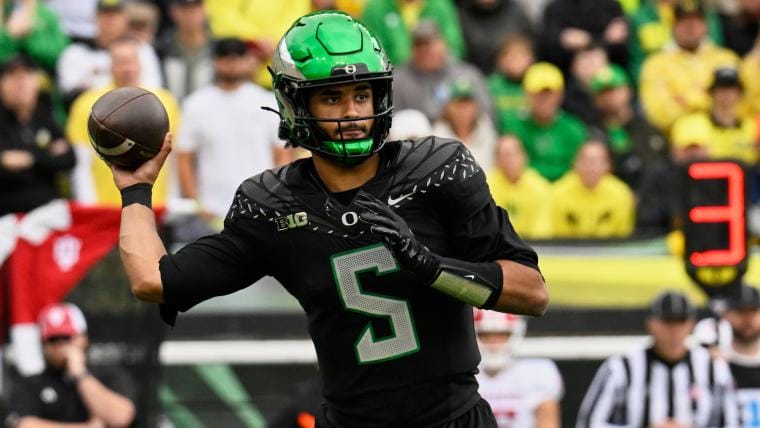
And then we have this ridiculous fixation on the NFL Draft before the college season is even finished. Dante Moore being pegged to unseat Fernando Mendoza as the No. 1 overall pick is the kind of manufactured drama designed solely to sell jerseys and generate hot takes for Tuesday morning segments. Football isn’t math; it’s mayhem executed under pressure, and right now, the pressure cooker is set to explode directly onto Oregon’s delicate little egos. Moore’s supposed ascension means nothing if his offensive line folds like a cheap lawn chair when faced with a ferocious Indiana defensive front that has been starving for this spotlight moment their entire tenure in Bloomington. This isn’t about arm talent in a controlled environment; this is about surviving the trenches when the stadium lights feel like interrogation lamps.
It’s utterly predictable how these narratives solidify early: the established powerhouse, Oregon, the perennial contender draped in Nike glory, automatically gets the benefit of the doubt, even when the numbers suggest otherwise. But numbers lie when they fail to account for sheer, unadulterated hunger. I remember watching the early season predictions, the cynical laughter directed at anyone who dared suggest Indiana had the mettle to navigate the B1G gauntlet, let alone challenge a Pac-12 giant supposedly built in a laboratory for success.
What happens when Oregon’s meticulously planned offense—the one optimized by spreadsheets and simulated practices—hits an unforeseen snag? What happens when Mendoza, hyped as the guaranteed future of the league, throws that first soul-crushing interception into the seats? The algorithms don’t account for the sudden, palpable shift in momentum; they can’t model the collective groan of a fanbase suddenly realizing they backed the wrong horse. It’s fascinating. It’s truly fascinating to watch the collective sports establishment hedge its bets against genuine underdog spirit, preferring the safety of the established brand name, the comfortable narrative. We are not here to watch a guaranteed outcome; we are here for the gut-wrenching possibility of failure, and right now, Oregon looks ready to deliver that gut punch to its own supporters.
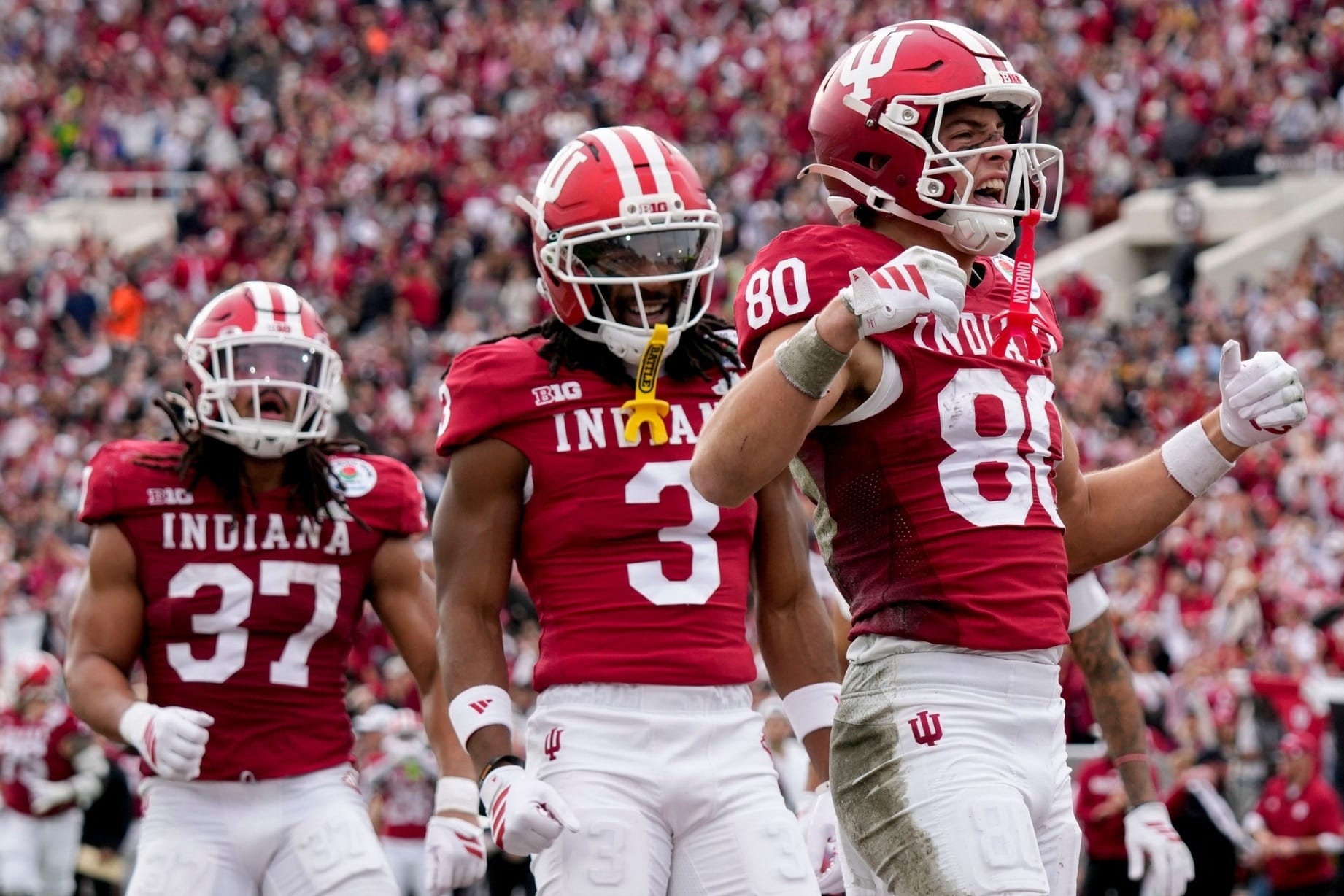
Indiana, conversely, has nothing to lose, which is the most dangerous asset in all of sports. They are playing with house money, riding a wave of momentum that started somewhere deep in the heartland, far away from the neon glow of brand-name boosterism that coats Oregon’s entire operation. Think about the sheer weight of expectation hovering over the Ducks; that isn’t motivation, that’s cement shoes in the fourth quarter when things get ugly and the noise gets loud and the calls stop going their way. This is why I distrust these percentage games. They measure *potential* based on past performance, not *resolve* in the heat of the moment.
The Inevitability of Technological Complacency
This whole affair, the pre-game analysis, the data crunching—it’s all symptomatic of a larger disease plaguing modern sports fandom. We want assurance. We crave the certainty that our chosen team is objectively better, validated by lines of code rather than by watching two halves of brutal, messy football. We’ve substituted instinct for input, wisdom for WiFi. It’s lazy.
Oregon, despite its perceived superiority, is a victim of its own pedigree. They expect victory to be delivered to them on a silver platter embroidered with the Jumpman logo. Indiana? They have to scratch and claw for every inch of turf, every shred of respect, and that desperation fuels a kind of fire the favored team simply cannot replicate unless they actively invite crisis into their own locker room. That’s a tough ask.
We need to talk about the historical context here, too, because these matchups are never just about the 60 minutes in front of us. They are about institutional pride meeting an upstart narrative. Indiana hasn’t been handed this opportunity; they’ve earned the right to be in Atlanta, kicking the door down, and they aren’t going to just politely ask for a playoff spot to be vacated. They are here to seize it, which means the Ducks must be prepared for a physical confrontation that their scouting reports probably downplayed as ‘manageable attrition.’ Manageable? Nothing about a CFP semifinal is manageable.
If Oregon loses, and the probability is disturbingly high given the psychological edge IU carries, the autopsy will be brutal. It won’t be just about missed tackles or blown coverages; it will be about the entire infrastructure—the recruitment model, the emphasis on marketable stars over gritty linemen, the reliance on the promise of future NFL contracts over the immediate need for cohesion against a motivated opponent. They will blame coaching, naturally, but the root cause will be their own hubris, nurtured by those very same optimistic percentages they were so keen to promote last week.
The Unquantifiable Grit Factor
This is where the human element, the messy, glorious imperfection of sport, kicks the sterile digital readout right in the teeth. The Chick-fil-A Peach Bowl is known for upsets, for games that defy logic and mathematical modeling. It demands improvisation. Who buckles first? Who finds that hidden gear when the fatigue sets in around the third quarter and the only thing left running is sheer spite? I’d wager my last dollar on the team that hasn’t been told they’re supposed to win by 70% confidence margin. That’s an anchor, not a boost, for the team carrying the weight of guaranteed success.
Look at the historical precedent across sports: when the metrics overwhelmingly favor one side, the underdog finds a way to make the impossible look inevitable for themselves. It’s the primal scream of competition against the calculated drone of modern sports administration. Indiana is playing with house money, fueled by validation they never received from pollsters or projection models. Oregon is playing under the assumption that their talent accrual rate guarantees victory. Those are two very different mindsets when the score is tied in the fourth quarter and the fate of the national championship picture hangs precariously in the balance. It’s going to be a bloodbath, and frankly, I hope the analytics get proven spectacularly, embarrassingly wrong.
Their game planning must be laser-focused on disrupting the rhythm of the perceived favorite, forcing Oregon into situations where their high-end skill players have to win one-on-one battles repeatedly, rather than flowing within the comfort of the established system. That’s Indiana’s only path, and it’s a path paved with aggressive, slightly reckless play calls designed to introduce chaos where Oregon demands order. This whole setup stinks of a massive paradigm shift.
It really is shocking how quickly people forget that football is played by humans, not by simulations running on supercomputers. The emotional investment of the underdog, the sheer necessity of pulling off the impossible, creates an energy field that no predictive model can chart or account for in any meaningful way before the whistle blows. The underdogs—the 32.5% margin—are always the ones who are hungrier when it matters most. They have to be. This isn’t a game of comfort; it’s a trial by fire, and Oregon’s uniform might be flashier, but Indiana’s foundation looks a whole lot sturdier when the heat gets turned up. We’re about to witness the beautiful, ugly breakdown of statistical certainty. Good.
It feels like everyone is just waiting for the other shoe to drop, anticipating the Oregon coronation, which is precisely why the upset will happen. They aren’t prepared for the reality that their dominance is a perception, not a guarantee etched in stone. They need to earn every single yard, and Indiana is going to make them pay dearly for the receipt. The algorithms have failed us again, haven’t they? The human spirit, that glorious, unpredictable mess, is about to take over the narrative, and it’s going to be glorious to watch the talking heads scramble for explanations when the clock hits zero and the scoreboard reads differently than their carefully curated projections suggested. This is sport, not spreadsheets. Always remember that. The game clock starts now, and the metrics are already obsolete. It is over before it even began for Oregon. They already lost in the minds of the true believers who understand that momentum is more potent than Moore’s draft projection. The sheer audacity of the underdogs is often the only variable that truly matters when the margin is this tight and the stakes are this high. Prepare for a shockwave. I certainly am.
It’s going to be a long, cold night for the data scientists who dared to quantify this rivalry so decisively. That 67.5%? That’s the bullseye they just painted on their own backs. The true measure of a program isn’t how well it performs when the odds are stacked in its favor, but how it responds when the entire world, even the supposed digital oracle, suggests failure is the most likely outcome. Indiana thrives in that environment; Oregon wilts under that scrutiny. It’s a fundamental difference in program DNA, one that no analyst can code away. The history books are waiting to be rewritten by grit, not by projections, and IU is holding the pen right now, ready to sign their names across the face of perceived inevitability.