The Illusion of Meritocracy: How the CFP Betrays True Competition
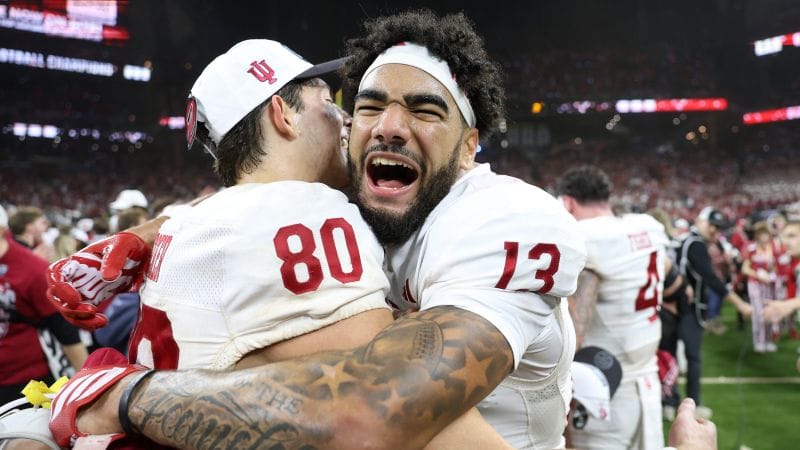
So, the College Football Playoff field is set, and let’s just rip the band-aid off right now: it’s a sham. A complete, unadulterated farce designed to keep the cash cows mooing and the established powers in their gilded cages. Indiana getting in? Over Notre Dame? This isn’t just a bad decision; it’s a blatant disregard for actual on-field performance, a slap in the face to every team that bled for their record only to be overlooked for some manufactured narrative or, dare I say, backroom deal. Alabama and Miami squeaking in as at-large teams? Sure, they’re ‘big names,’ but at what point does reputation outweigh reality? The ‘Crimson Tide’ and ‘Hurricanes’ might be able to ‘breathe a sigh of relief,’ as the reports so delicately put it, but the rest of the college football world should be gasping for air, choking on the blatant favoritism on display. This isn’t about who’s the best; it’s about who’s the most marketable, who brings in the most eyeballs, and who the committee members secretly (or not so secretly) have on their fantasy league rosters.
The sheer audacity of seeding Indiana above a team like Notre Dame, who, let’s be honest, has a pedigree that screams playoff contender year after year, is a testament to how little the committee actually cares about the integrity of the game. It’s a signal flare to the established conference champions and top-tier programs: your hard work *might* matter, but your name recognition matters more. This year’s selections are not a celebration of excellence; they are a coronation of convenience. The ‘first-round byes’ for teams like Ohio State, Georgia, and – wait for it – Texas Tech? This isn’t some strategic advantage; it’s a reward for fitting the committee’s preconceived notions of who *should* be in the conversation. Texas Tech? Seriously? Have we all collectively forgotten the entire history of college football, where grit and genuine achievement used to mean something? Now it’s about who the suits want to see advance, who fills the TV slots, and who generates the most clicks. It’s sickening.
A History of Corruption? The Echoes of Past Injustices
This isn’t some new phenomenon. We’ve seen this playbook before, haven’t we? The whispers have always been there, the undercurrent of suspicion that the CFP isn’t truly selecting the best teams, but the teams that serve the interests of the television networks, the bowls, and the conferences with the deepest pockets. Remember the years when teams were inexplicably ranked ahead of others with better wins, fewer losses, or more dominant performances? It was always chalked up to ‘strength of schedule’ or ‘eye test,’ but those were just convenient excuses to justify the predetermined outcomes. The committee, shrouded in secrecy, operates like a shadowy cabal, doling out favors and punishments based on criteria that are as clear as mud. They present their rankings and brackets with an air of authority, as if divinely inspired, but beneath the veneer of objectivity lies a system ripe for manipulation. The very notion of a ‘selection committee’ is inherently flawed. Humans are susceptible to bias, to groupthink, to external pressures. When you put a handful of individuals in a room, away from public scrutiny, and task them with making decisions that impact millions of dollars and the dreams of thousands of young athletes, you’re inviting corruption. It’s not a matter of if, but when.
The ‘Indiana tops CFP field’ headline isn’t just a headline; it’s a siren call, a warning that the foundations of college football are crumbling under the weight of its own commercialization. We’re moving further and further away from the spirit of competition and deeper into the realm of entertainment spectacle. The ‘Irish out’ narrative is particularly galling. Notre Dame, a perennial contender, a team that consistently schedules top competition, finds itself on the outside looking in, while teams with lesser résumés, teams that perhaps didn’t play as tough a schedule, or teams that simply have a more appealing marketing angle, get the nod. This isn’t just about one team being left out; it’s about the message it sends to every program striving for legitimacy. It says that loyalty, consistent performance, and genuine athletic achievement are secondary to brand recognition and potential revenue streams. It’s a betrayal of the athletes who pour their hearts and souls into the game.
The ‘Power Five’ Privilege: A Self-Perpetuating Elite
Let’s talk about the elephant in the room: the ‘Power Five’ conferences. While the CFP structure theoretically opens the door to a wider field, the reality is that the deck is stacked. The inherent advantages of playing in a Power Five conference – better facilities, more resources, a national spotlight – create a self-perpetuating cycle of success. Teams from these conferences are consistently ranked higher, receive more media attention, and, consequently, get the benefit of the doubt from the selection committee. A loss for a Power Five team is often seen as an anomaly, a blip on the radar, while a loss for a team outside this elite group can be a death sentence for their playoff hopes. This year, with a 12-team field, the argument for inclusivity is stronger, but we’re already seeing the cracks. The fact that top seeds are earning ‘first-round byes’ isn’t just about rewarding excellence; it’s about cementing the status of the established elite. It’s a way of ensuring that, even in an expanded playoff, the familiar faces are the ones who are most likely to reach the final stages. It’s a carefully crafted illusion of fairness that masks a deeply ingrained system of privilege.
The inclusion of teams like Indiana and Texas Tech, while perhaps statistically justifiable in some convoluted metric the committee uses, feels more like a token gesture than a genuine embrace of meritocracy. It’s designed to placate the masses, to give the illusion that the system is open, while ensuring that the real power players – the Ohio States, the Georgias, the Alabamas of the world – remain at the forefront. The ‘Canes in’ headline is another symptom of this disease. Miami, a program with a storied past but a more recent history of inconsistency, gets a lifeline. Is it because they truly earned it over other deserving teams, or is it because their brand value is too high to leave out? The committee’s logic is as opaque as a politician’s promise. They talk about ‘strength of schedule’ and ‘head-to-head matchups,’ but these are often used selectively, cherry-picked to support a predetermined conclusion. The entire process is an exercise in rationalization, a desperate attempt to imbue a fundamentally biased system with an aura of legitimacy. It’s time we stopped pretending that this is about pure competition and acknowledged it for what it is: a business decision masquerading as a sporting one.
The Future of College Football: A Descent into Predictability
What does this mean for the future? It means more of the same, a slow, inexorable descent into a predictable, corporate-driven spectacle. The beauty of college football has always been its chaos, its unpredictability, the Cinderella stories that emerge from obscurity. But the CFP, with its emphasis on established brands and its opaque selection process, is actively working against that. We’ll see more teams getting in based on reputation rather than results. We’ll see more controversies, more accusations of bias, and more disillusionment among the fanbase. The athletes, the ones who are truly making this game, will continue to be the pawns in this high-stakes chess match, their achievements often secondary to the agendas of those who control the narrative. The entire structure is designed to protect the status quo, to ensure that the same few conferences and teams dominate the conversation, year after year. It’s a system that stifles innovation, discourages risk-taking, and ultimately, robs the sport of its soul.
The hope, however faint, is that the sheer absurdity of these selections will eventually ignite a firestorm. Perhaps the constant outcry, the undeniable evidence of preferential treatment, will force a reckoning. Maybe one day, the selection process will be transparent, data-driven, and truly meritocratic. But don’t hold your breath. The forces that benefit from the current system are too powerful, too entrenched. They will continue to manipulate the narrative, to justify the indefensible, and to ensure that the College Football Playoff remains a reflection of their own interests, not the genuine spirit of athletic competition. This isn’t just about football; it’s a microcosm of how power and influence operate in the modern world. The rich get richer, the powerful stay powerful, and the rest of us are left to pick through the crumbs, questioning the integrity of it all. The ‘full 2025 College Football Playoff field announced’ might sound like news, but it’s really just the latest chapter in a long-running saga of controlled narratives and manufactured drama. Wake up, people. The game is rigged.