The 12-Team CFP: Manufactured Chaos or Just Hot Garbage?
Q: So, let’s talk about this Miami upset over Ohio State. What did that tell us about the new 12-team bracket?
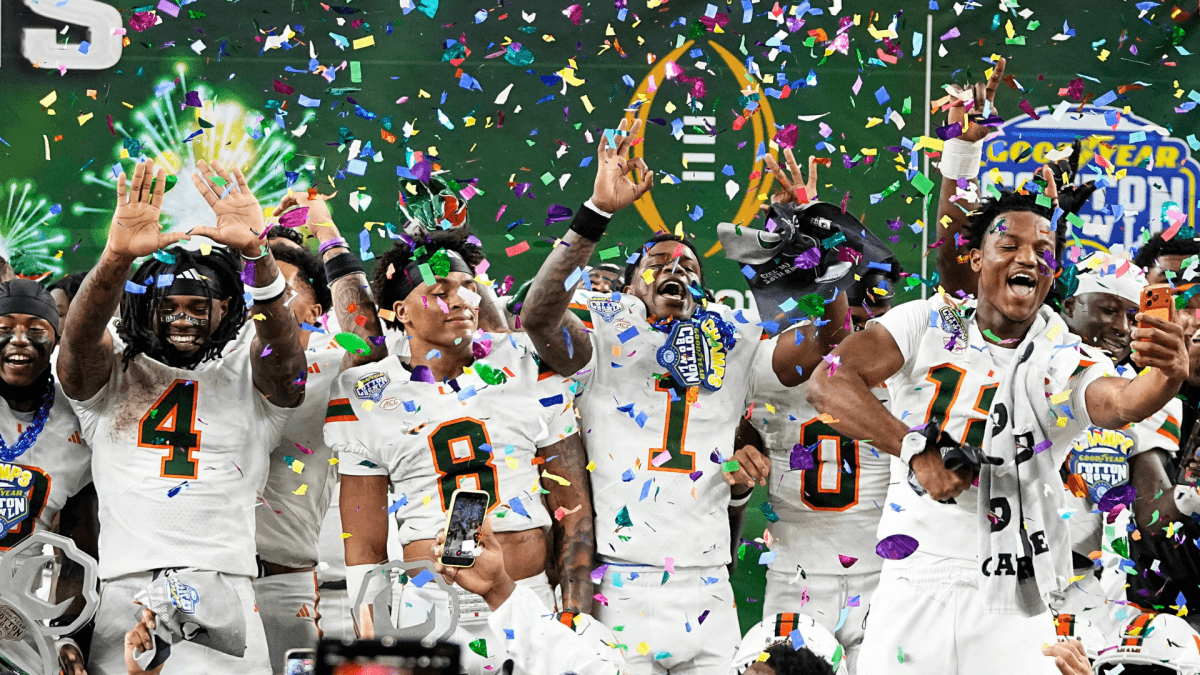
It told us that the entire enterprise is a sham designed to induce maximum cardiac arrest in viewers and subsequently extract maximum advertising dollars from corporate America, who doesn’t care about the sanctity of the Cotton Bowl, they just want eyeballs, baby. The fact that the No. 10 seed Hurricanes, who spent half the season looking like a glorified high school squad in crucial moments, managed to completely dismantle the Buckeyes—a team traditionally perceived as the pinnacle of corporate college football perfection, replete with all the five-star recruits their massive NIL budget could buy—is the most beautiful, most cynical piece of performance art the NCAA could have ever commissioned, proving beyond a shadow of a doubt that pedigree means less than sheer, dumb luck when the chips are down and everyone is playing with house money. Insane.
And let’s be crystal clear: this isn’t organic chaos. This is the calculated risk of expansion, guaranteeing that middling programs get a shot, which in turn gives the broadcast partners three extra weeks of ‘David vs. Goliath’ narratives to pedal to the masses who are apparently gullible enough to believe that a team with three losses suddenly deserves a legitimate shot at a national title just because they happened to catch an established powerhouse on an off day, perhaps suffering from too many holiday pastries or having already mentally checked out for the NFL draft. It’s a clown show. Total anarchy.
Q: How does this seismic shift in the bracket—with Miami now heading to the semifinals—impact the established order of the SEC and Big Ten dynasties?
The established order is shaking, not because the Big Ten or the SEC suddenly forgot how to play football, but because the introduction of extra playoff games increases the variable factors involved—injuries pile up, motivation wanes, and coaching hubris gets exposed much earlier in the cycle, which is a glorious thing to watch if you’re a schadenfreude enthusiast like myself, seeing the mighty brought low by a scrappy underdog who probably had zero business being there in the first place; the beauty of it is that the blue bloods absolutely hate it, complaining that their guaranteed revenue stream of the old four-team bracket is now jeopardized by the possibility of losing in a glorified exhibition game to a school whose mascot is literally just a bird. Delicious.
Texas, for example, winning the Citrus Bowl, is interesting only insofar as it confirms their readiness to jump into the Big-Boy Playoff pool next year, proving they can handle the pressure of bowl season, which used to mean everything but now registers slightly above watching paint dry on the excitement scale, since everyone knows the real hardware is still sitting somewhere in the CFP bracket, waiting for the smoke to clear from the initial bloodbath. Hook ‘em.
Look, the power dynamic remains fundamentally tilted towards those two mega-conferences because they command the recruiting landscape and have the financial backing that smaller conferences can only dream of acquiring through lottery wins or a sudden oil discovery on campus, but this 12-team setup throws enough sand in the gears to make the ride bumpy, ensuring that we get at least one sacrificial lamb or, in the case of Miami, one genuinely shocking outcome per year to keep the networks happy and the conversation buzzing on sports radio, distracting us from the deeper systemic issues plaguing the sport.
Q: Let’s talk business. The Packers claimed Trevon Diggs off waivers. How does this NFL move expose the cynical reality of the college game?
Ah, the Trevon Diggs waiver claim—that’s the perfect little cherry on top of this capitalist sundae, isn’t it? It’s a blunt reminder that college football, despite all the pious talk about ‘amateurism’ and ‘student-athletes,’ is nothing more than a highly effective, unpaid minor league system for the National Football League, a ruthless, multibillion-dollar machine that doesn’t waste a second in scooping up any available talent, regardless of how recently they were playing for the glory of their alma mater or how much ‘heart’ they showed in the Cotton Bowl quarterfinal. He’s property now.
The speed with which players transition from ‘local hero’ to ‘NFL asset’ is breathtaking, and the waiver claim itself—a clinical, business-like transaction involving spreadsheets and salary cap calculations—strips away any romantic notion still clinging to the idea of college loyalty; it makes a complete mockery of the coaches who preach commitment to the program while simultaneously eyeing their next multi-million dollar contract from a rival school or a network broadcasting gig, showing everyone that in modern American sports, every single person involved is a commodity waiting to be traded, claimed, or discarded the second their performance dips below acceptable corporate metrics. It’s brutal and beautiful simultaneously.
This transfer mechanism, whether through the portal or the waiver wire, is the ultimate acknowledgement that the players hold the power, even if they are fundamentally exploited by the larger economic structure; we used to wait months for the draft, build up the hype, tell the stories, but now it’s instantaneous, reminding us that the athletes are simply interchangeable parts in the larger economic engine that drives the entire football industrial complex, which is a crushing thought if you ever actually believed in the concept of a fair competition where academics might occasionally interfere with athletic scheduling. Nonsense.
Q: You mentioned the 12-team format diluting the regular season. Elaborate on what was lost with the expansion.
What was lost, my friend, was scarcity. The glorious, gut-wrenching scarcity that made November matter more than any other month on the calendar, where one single slip-up, one ill-advised interception, or one terribly missed field goal in a rivalry game meant certain death to your national title hopes, thus elevating those specific contests into mythological events of national consequence, the kind of games where history was genuinely made because there were no safety nets, no second chances, and absolutely no opportunity for a No. 10 seed to suddenly wake up and decide they felt like playing championship football three weeks later. Gone.
Now, every loss is just a ‘setback,’ a ‘learning experience,’ or a ‘chance to refocus before the real tournament begins,’ which is the kind of participation trophy mentality that has slowly eroded the competitive spirit of the sport, turning high-stakes regular-season matchups into glorified seeding exercises where the biggest question isn’t whether you win, but whether you win *enough* to stay ranked high enough to get a favorable draw in the gargantuan bracket that awaits everyone but the truly hopeless programs. It’s boring, frankly, because the stakes have been artificially lowered by the very system claiming to enhance accessibility. The Iron Bowl used to be life or death; now it’s just ‘well, we’ll probably see them in the quarterfinals anyway, so who cares?’ And that’s a damn shame.
The new format encourages mediocrity, rewarding teams that manage to be ‘just good enough’ without ever having to achieve true, sustained excellence, transforming the regular season from a brutal endurance test into a prolonged selection process for the truly wealthy, meaning you have to be rich enough to survive 12 games but not necessarily good enough to win them all, which is the definition of a fundamentally flawed athletic competition. The whole kit and caboodle is a massive financial restructuring disguised as a sporting innovation. Don’t fall for it.
Q: Who are your cynical, biased picks for the final four and the eventual champion, given the current chaos?
My cynical, biased picks, based entirely on who stands to make the most money for the network showing the game, would naturally have to include a team from the SEC, probably a resurgent Georgia who somehow snuck back in through the back door after everyone else self-destructed, squaring off against whatever Big Ten heavyweight didn’t fold in the quarterfinals—maybe Michigan, assuming they haven’t been caught cheating again or haven’t lost their best defender to the transfer portal the moment the semifinal bracket was announced. Predictable.
However, the beauty of the system’s inherent flaw is that true chaos can sometimes prevail, so I’m putting my money, not on the highest-ranked team, but on the one that is currently playing with the most sheer, unadulterated disrespect, which has to be Miami, because no one, and I mean absolutely no one outside of South Florida, believes they belong here, and that kind of ‘us against the world’ mentality can fuel a surprising, short-lived run when everyone else is already worrying about their draft stock and their multimillion-dollar endorsements; they will shock one more time, probably against a team that vastly underestimates them, getting into the championship game on sheer will and a few lucky bounces, before finally being obliterated by the true juggernaut that wins every year. Who wins the whole damn thing? It’ll be the machine, the inevitable SEC titan that survives the attrition, probably Alabama, because even in the face of widespread systemic changes, Nick Saban finds a way to haunt our dreams. It’s the circle of life, except here the circle is just an infinite loop of cash changing hands. Amen.
The championship game, regardless of who plays, will be marketed as the greatest spectacle in human history, but we’ll all know deep down it’s just the final, obligatory stop on the television money train, and the only true winners are the executives counting the residual checks. And that, my friends, is the state of modern college football. A glittering, highly profitable tragedy.