The Official Lie: The Illusion of Fair Selection
They want you to believe in the drama of the selection show, in the heated debates and the agonizing decisions. The CFP committee, in its infinite wisdom, must wrestle with the fates of powerful programs like Alabama, Notre Dame, and Miami. They present it as a noble exercise in meritocracy, a group of human beings weighing intangibles and strength of schedule, ultimately making a “tough decision” for the good of the sport. This is the official story, the one presented by the networks that pay billions for the privilege of broadcasting this manufactured spectacle.
The recent expansion to a 12-team playoff, framed as a move toward greater inclusiveness and fairness for teams like Notre Dame or others in the ‘Group of Five,’ is nothing more than a carefully orchestrated theatrical event designed to maximize data extraction from an already compliant audience. We are told this move is about giving more teams a chance, about expanding the reach of the sport, about finally correcting the historical wrongs of a four-team system that locked out potential contenders. It’s all hot garbage. The committee’s job is not to find the most deserving team; it’s to confirm the pre-determined outcome of an algorithm designed to maximize ad revenue and viewership. The “absurd farce” that critics point to when a team like Notre Dame or Miami gets preferential treatment isn’t a bug in the system; it’s a feature. It’s a calculated move to keep brands in the conversation, regardless of their on-field performance, thereby ensuring maximum engagement and, more importantly, maximum profitability for the corporate overlords funding the operation.
The Algorithmic Truth: The Control Matrix
Forget the myth of human judgment. The College Football Playoff selection process is not a sports debate; it is an algorithmic optimization model masquerading as sports. In a world increasingly dominated by predictive analytics, where every choice, from what we buy to who we vote for, is guided by data, do we honestly believe that a multi-billion dollar enterprise like college football would leave its most critical decision to a group of aging coaches and athletic directors? The committee members are just the high priests reading the tea leaves, delivering the oracle’s verdict from the server farm. They act as the public face for a system that has already calculated every potential bracket configuration and determined which one offers the highest potential for market capitalization, ad revenue, and media rights value for a specific outcome—often prioritizing the narrative and brand recognition of teams like Alabama over the pure statistical record of another team.
The expansion to 12 teams is not about creating more opportunities for athletes; it’s about extending the data capture window. The new format ensures that more games matter, keeping more fan bases engaged for longer, thereby increasing the opportunity for data harvesting through streaming services, ticket sales, and merchandise tracking. Every single click, every purchase, every minute watched on a secondary screen during a game that now matters in December rather than November, feeds directly back into the corporate-media complex. The system isn’t just about winning or losing; it’s about creating a perpetual motion machine of consumption, where the sport itself becomes secondary to the spectacle of optimization. The selection process has become a mechanism to justify the pre-determined inclusion of teams that generate the most revenue, creating a feedback loop where financial value dictates sports outcomes. It’s a dystopian future where the game is no longer played by humans for sport, but rather by corporations for profit, and the athletes are simply disposable variables in a complex equation. The human element, the spontaneous chaos and genuine emotion, is being carefully curated and minimized, leaving us with a sterile, optimized product that feels less like sport and more like a simulation.
The Panopticon of Spectatorship
The tech skeptic views this expansion not as progress, but as a deeper entrenchment of control. The CFP expansion creates a panopticon of college football viewership, where every game, every ranking, every “absurd farce” is designed to keep us under constant observation. The controversies that arise—like the debate over a team’s inclusion despite a weaker record—are not errors; they are part of the system’s design to keep the conversation going, to generate clicks, and to sell more ads during the selection show itself. The human committee’s role is to add a layer of plausible deniability, a theatrical pretense that this complex system is still run by individuals making subjective judgments. The reality is that the decision to include or exclude a specific team, based on complex algorithms that prioritize market size and past viewership data, is made long before the committee ever meets. The committee simply provides the human-sounding reasoning for a data-driven choice that ensures maximum profitability. We are no longer spectators; we are just data points being tracked and analyzed for behavioral patterns that help optimize the next iteration of the control system. The expansion isn’t about giving more teams a chance; it’s about extending the reach of the surveillance network.
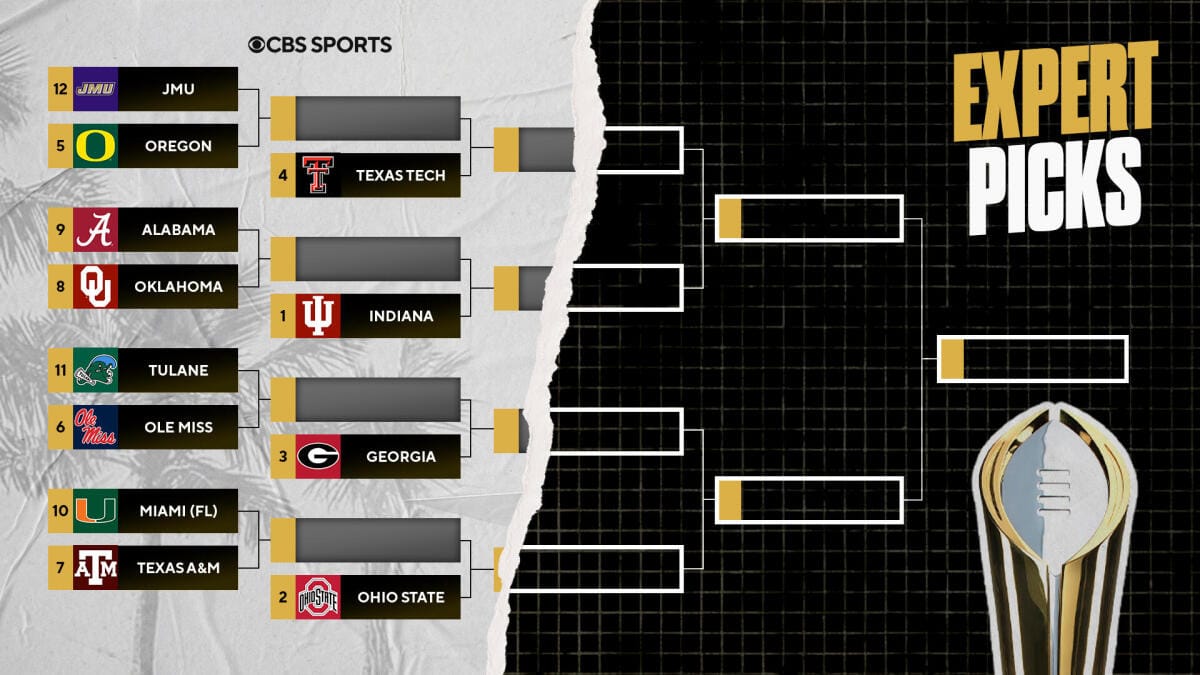
This is a chilling realization for anyone who believes in the integrity of sports. The very concept of “merit” has been redefined to mean “market value.” A team like Notre Dame, with its massive national following and existing media deal with NBC, holds significantly higher algorithmic value than a potentially more deserving but smaller market team. This preference for brand recognition over on-field performance is a clear sign that the system has sacrificed competitive integrity for financial efficiency. The “expert predictions” that flood the media, projecting brackets for the 2025-26 national champion, are essentially just reading the pre-programmed script. These predictions, far from being independent analyses, are often derived from the same data models that inform the committee’s decisions. They create a self-fulfilling prophecy, priming the audience to expect certain matchups and outcomes, thereby making the final result feel inevitable and less like a genuine competition. The entire ecosystem operates as a closed loop, where data feeds predictions, predictions influence committee decisions, and decisions reinforce the profitability model, leaving no room for true underdogs or genuine surprises.
The Diminishing Human Element: From Athlete to Data Stream
The shift to a 12-team playoff highlights a disturbing trend toward treating athletes as commodities rather than individuals. The expansion demands more games, a longer season, and increased physical and mental strain on student-athletes. This sacrifice is justified in the name of “opportunity,” but the reality is that they are being asked to provide more labor for a system that increasingly views them as interchangeable parts. Their injuries, their academic struggles, and their personal lives are all secondary to the data stream they represent on game day. The committee’s decisions, based on maximizing profit, often disregard the human cost of these choices. The debate over whether a team truly “deserves” to be in the playoff system ignores the fact that the entire system is designed to exploit their efforts for maximum corporate gain.
In this high-stakes environment, the integrity of the selection process is a crucial factor. When the selection process itself is compromised by financial optimization models, the trust between the audience and the sport erodes significantly. The “absurd farce” mentioned in the input data is the perfect description for what happens when a team is selected not because of what they achieved on the field, but because of the market value of their logo. This creates a deeply cynical atmosphere, where fans begin to question every outcome, every call, and every ranking. The expansion, instead of creating more excitement, actually risks accelerating this cynicism, transforming the sport into a purely theatrical performance where the outcomes are predictable based on corporate interests rather than athletic competition.
The tech skeptic knows that this isn’t about football. It’s about a cold, calculated control system. It’s about data and monetization. The expansion to 12 teams is simply another step towards total optimization, where the human element is slowly phased out. We are witnessing the slow death of genuine competition, replaced by a meticulously crafted spectacle designed to maximize profit. The true meaning of college football, once rooted in rivalries and school pride, is being diluted by the relentless pursuit of corporate efficiency. The new playoff system is a simulation of competition, a simulacrum where the game’s outcome is less about the athletes on the field and more about the financial algorithms running in the background. The human committee, with its public debates and manufactured drama, simply serves as the necessary illusion to keep the audience invested in a pre-programmed reality that is already optimized for maximum corporate gain. We should view the expansion not as a benefit to the sport, but as a warning about the future of all human endeavors under algorithmic control.