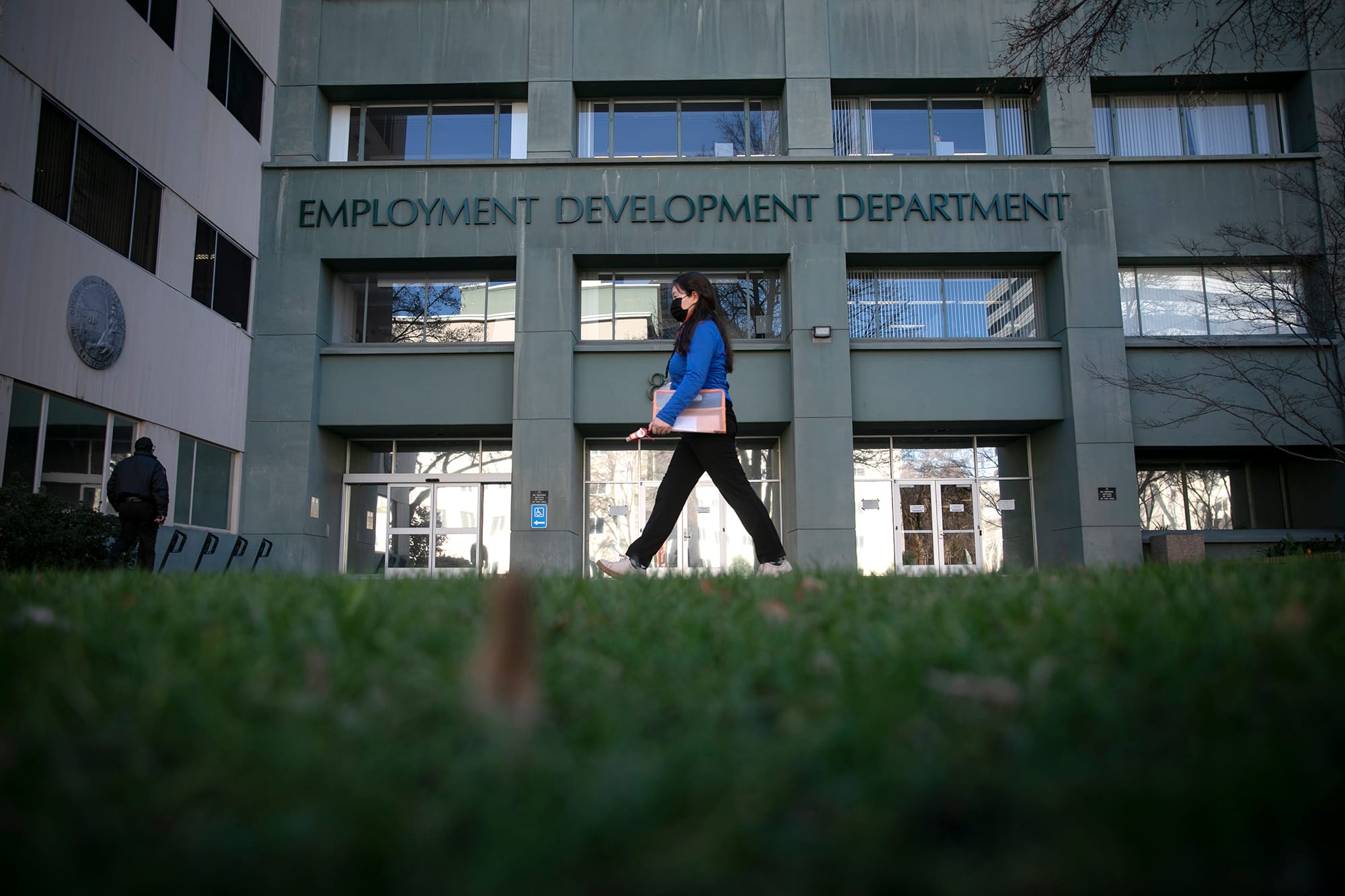
Panic Alarm: The EDD Train Wreck Continues
Is this truly incompetence, or something worse?
Let’s not mince words here. We’re talking about the California Employment Development Department, the same agency that turned processing unemployment claims during the pandemic into a national joke, a veritable case study in bureaucratic paralysis, and a bottomless pit for fraud. Now, we find out they spent more than $4.6 million in taxpayer money on thousands of cellphones that their employees never actually used. Thousands. Of. Unused. Devices.
It’s not just a rounding error, folks; it’s a symptom of a much deeper, more insidious disease infecting the core functions of government. We’re talking about an agency so fundamentally incapable of managing basic logistics that they literally forgot about thousands of pieces of expensive equipment, continuing to pay for service lines long after the initial crisis subsided. This isn’t just forgetfulness; this is institutional decay on a scale that should genuinely terrify every citizen who pays taxes and relies on these services.
The numbers are staggering when you really dig into what this represents. An audit from 2025 highlights that the EDD, in its rush to transition to remote work, bought more devices than it possibly needed, then simply let them collect dust in storage while continuing to shell out cash for monthly service plans. We’re talking about a level of mismanagement where the left hand clearly doesn’t know the right hand exists, and neither hand has bothered to check the balance sheet since 2020. The audit found thousands of mobile devices—thousands!—in storage, still active, still drawing funds from state coffers, funds that could have gone to actual services, to people in need, or perhaps, just maybe, to fixing the antiquated computer systems that caused so much pain in the first place.
Are we truly surprised? The EDD has a long history of high-profile failures, a history so checkered that it almost seems deliberate. This agency was a known weak point long before COVID-19 hit, but the pandemic acted as an accelerant, exposing the structural flaws that were previously just festering beneath the surface. Remember the billions lost to identity theft and fraudulent claims? Remember the agonizing wait times, the jammed phone lines, the desperate pleas from people who lost their jobs and couldn’t get a single dollar of benefits for months on end? This cellphone scandal is not an isolated incident; it’s just the latest piece of evidence in a long, ongoing saga of government incompetence.
The Cellphone Metaphor: A Symbol of State Failure
How does this specific failure reflect the larger breakdown?
Consider the cellphone as a metaphor. In 2020, every government agency, including the EDD, was screaming about digital transformation and the necessity of remote work. The narrative was simple: we must modernize, we must adapt, we must use technology to deliver services more efficiently. The cellphones were supposed to be tools of efficiency, symbols of a modernized workforce prepared to tackle a new reality.
Instead, they became symbols of waste and negligence. They represent a government that buys high-tech equipment without any plan for deployment, inventory management, or basic accountability. The fact that thousands of these devices sat unused for years while a significant portion of the population was suffering financially indicates a profound disconnect between the high-level decision-makers and the actual reality on the ground. It suggests that the money wasn’t spent with a clear purpose or strategic vision, but rather in a haphazard, panic-driven spree that lacked any subsequent oversight.
The audit’s findings are chillingly specific: thousands of devices simply vanished into a bureaucratic black hole. This isn’t just about a few misplaced phones; this is about an entire system that cannot track its own assets, cannot reconcile its spending with its needs, and cannot even manage a simple inventory. If an agency cannot manage cellphones, how can we possibly trust it to manage the complex, high-stakes process of distributing billions in social safety nets? The answer, clearly, is we can’t.
The EDD’s failure to prevent fraud during the pandemic was directly linked to its outdated systems and poor controls. This new revelation about the cellphones demonstrates that those internal control issues haven’t been resolved; they have simply shifted focus. Instead of fraudsters exploiting the system from the outside, we now see massive waste occurring from internal mismanagement. The core issue remains: a government entity that operates without accountability, without proper checks and balances, and seemingly without basic common sense.
The Human Cost of Incompetence
Beyond the dollars, who truly pays the price for this kind of negligence?
When we talk about $4.6 million in waste, the immediate reaction for some might be to shrug it off as a drop in the ocean of state budgets. But that perspective misses the point entirely. Every single dollar wasted by the EDD is a dollar that could have alleviated suffering during a time of unprecedented hardship. Every wasted dollar contributes to the overall burden on taxpayers, and every failure like this chips away at public trust. It generates cynicism, making people less likely to comply with regulations or support public services because they rightly perceive the government as being fundamentally broken.
The real cost of this incompetence isn’t measured in just the lost funds; it’s measured in the apathetic response of government officials who face no real consequences. It’s measured in the frustration of the citizens who see these scandals repeat endlessly without any real change. The cycle is always the same: crisis hits, government panics, money is thrown at the problem without proper planning, waste occurs, an audit eventually reveals the failure, and then… nothing changes. The same people remain in power, the same structural flaws persist, and the stage is set for the next, inevitable disaster.
This kind of mismanagement leads to a feedback loop where resources are constantly misallocated. The EDD claims it struggles with staffing and resources, yet it simultaneously wastes millions on equipment it doesn’t use. This contradiction exposes a fundamental lie at the heart of state government operations: they aren’t short on resources; they are short on management and integrity. They have plenty of money to burn; they just burn it carelessly. The people who truly suffer are those who rely on these services and those who pay for them.
Future Outlook: The Inevitable Crisis
What happens when the next crisis hits, and nothing has truly been fixed?
Let’s look ahead. This audit, like all audits of this type, will be discussed for a few news cycles, perhaps a few minor changes will be proposed, but ultimately, the structural issues will remain unaddressed. The EDD, having learned nothing from the pandemic fraud and now demonstrating its inability to manage basic assets, will be completely unprepared for the next economic downturn or natural disaster.
Imagine the next major economic shock: another pandemic, a major earthquake, a widespread cyberattack. The EDD will once again be overwhelmed, its systems will buckle, and people will once again find themselves in desperate need of aid that fails to arrive. The fact that they can’t manage cellphones now means they certainly won’t be able to handle a high-volume, high-stakes crisis later. This is not just a prediction; it’s an inevitability based on historical patterns of behavior. We are watching a slow-motion collapse of essential services, fueled by a combination of negligence, incompetence, and a deeply ingrained culture of unaccountability. The $4.6 million cellphone scandal is not the headline; the headline is that California’s government is a ticking time bomb, and we are all waiting for the explosion.
We’re witnessing a complete breakdown of trust, and rightfully so. When an organization demonstrates such profound inability to handle even the simplest tasks, how can it demand the respect and trust of the populace? This isn’t just about a few misplaced devices; this is about the fundamental failure of the social contract. The government fails to protect its citizens from hardship, and in doing so, it proves that it cannot even manage its own internal operations. The panic alarm should be screaming in every corner of the state. It should be screaming because this isn’t the end of the story; it’s only the beginning.
What are we going to do about it? Nothing. Absolutely nothing. We will read the headlines, express outrage for a day, and then move on. The EDD will continue to operate exactly as before, inefficiently and wastefully, until the next crisis forces a reckoning, which will likely be just as chaotic as the last. This audit is a warning shot, but we are too desensitized to hear the alarm. The system is broken beyond repair.