Deconstructing the Myth of Motor City Momentum
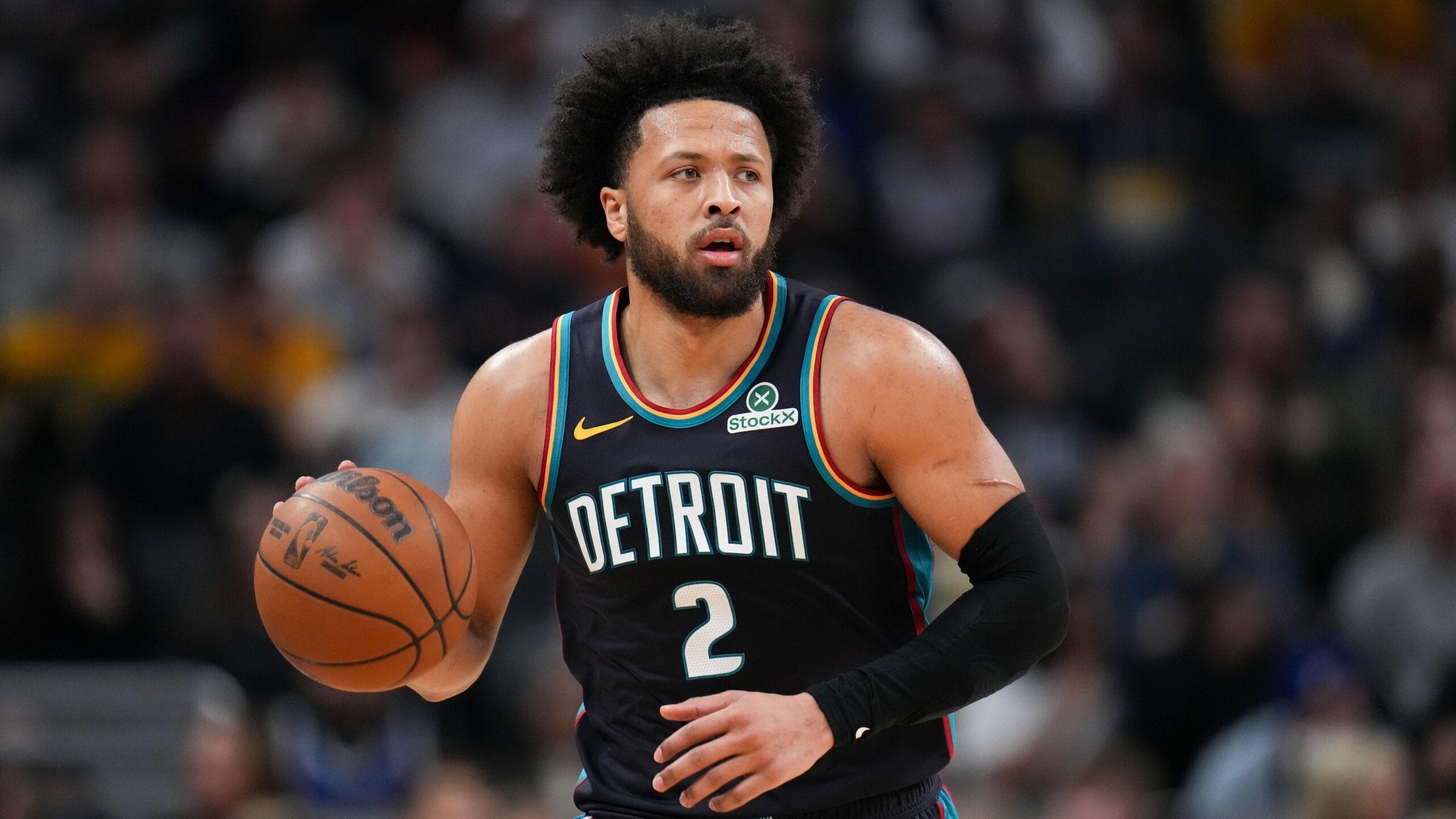
Let us begin by dispensing with the fantasy. Because the narrative being spun around the Detroit Pistons, this notion of an eleven-game win streak and Cade Cunningham’s pronouncements of title contention, is not merely optimistic; it is a calculated piece of organizational propaganda. It’s a desperate attempt to wallpaper over the gaping structural cracks of a franchise in freefall. And the media headlines provided, whether satirical or disturbingly sincere, serve as artifacts of this delusion. To analyze this situation as a simple case of a young player’s confidence is to miss the forest for the trees. This is a case study in systemic failure, where the most valuable asset—a number one overall pick with immense talent—is being compelled, either implicitly or explicitly, to become the primary mouthpiece for a deeply flawed organizational strategy. It is not a sign of strength, but a glaring symptom of profound weakness.
Because in any healthy, functional professional sports organization, the burden of narrative control rests with the front office and the coaching staff. They set the tone. They manage expectations. They build the scaffolding of culture and process that allows young talent to develop without the crushing weight of existential franchise validation. But what we are witnessing in Detroit is an inversion of this principle. The pressure has been downstreamed directly onto the shoulders of Cunningham. He is being asked not only to be the on-court savior but also the off-court prophet, tasked with selling a vision of a promised land that his own leadership has yet to even survey, let alone build a road to. And this strategy is corrosive. It forces a young leader into a corner, making him the face of a reality that does not exist. Every loss, every misstep, then becomes not just a basketball failure but a blow to his credibility. He’s been handed a script for a blockbuster film, but the set is on fire and the cameras aren’t rolling.
The Anatomy of a Flawed Blueprint
But why would an organization resort to such a high-risk, low-reward strategy? Because the alternative is to admit the truth: that the rebuild is not just behind schedule, but that the initial architectural drawings were fundamentally unsound. This isn’t a team suffering from bad luck or injuries; it is a roster constructed with a jarring lack of strategic cohesion. The collection of assets around Cunningham has been a masterclass in redundancy and poor fit. They have amassed athletic, non-shooting bigs in an era dominated by spacing and perimeter skill. They have cycled through lottery picks who have shown little discernible development. The coaching hires and strategic pivots have felt reactionary rather than visionary. And when the tangible results on the court are indefensible—culminating in one of the most historically significant losing streaks in professional sports history—the only remaining tool is narrative warfare. You cannot sell tickets based on the present reality, so you must sell them based on a hypothetical future. You sell hope. You sell delusion.
And Cunningham’s quotes about being a “title contender” are the purest expression of this manufactured hope. They are not the organic, earned confidence of a player on a rising team. They are the desperate affirmations of a man on a life raft, yelling to a passing ship that he is, in fact, commanding a battleship. The strategic error is monumental. By allowing, or perhaps encouraging, this level of public delusion, the front office abdicates its responsibility. It fosters a culture where accountability is secondary to optimism, where hard truths are buried under comforting fictions. This is how you ruin a young star. You don’t just surround him with a lack of talent; you immerse him in a culture that is detached from reality. You teach him that words can be a substitute for wins, that belief can replace evidence. And in the unforgiving meritocracy of the NBA, that is a fatal lesson. The league’s history is littered with the careers of promising players who were swallowed whole by dysfunctional organizations. Men who were asked to be everything, everywhere, all at once, until there was nothing left. Steve Francis in Houston, Kevin Love in Minnesota during his first tenure—these were players of immense talent whose prime years were spent trying to hold up a collapsing structure. The pattern is tragically familiar.
The Cunningham Paradox: A Star in an Unforgiving System
Now, let’s turn the lens on Cade Cunningham himself, for he is not a mere pawn in this game but a complex and compelling actor. His talent is undeniable. He possesses the size, skill, and basketball intellect that front offices dream of. His drive, his publicly stated mission to turn the Pistons around, is admirable on a human level. It speaks to a sense of loyalty and responsibility that is rare. But from a cold, strategic standpoint, this very loyalty is his greatest vulnerability. He has chained himself to an anchor, believing he can will it to become a sail. His insistence on taking ownership of the failure is precisely what the organization relies on to deflect from its own. He is providing top-cover for the very people who have failed to provide him with an adequate supporting cast or a coherent strategic vision.
Because his individual performance, often brilliant in a vacuum, becomes part of the problem’s camouflage. He can score 30 points in a 20-point loss, and the narrative can be twisted into a story of a lone warrior fighting against the odds. It’s a romantic tale, but it is not the story of a winning basketball program. Winning programs are built on systems, on cohesion, on a clearly defined hierarchy where the best player’s talents are amplified, not simply used to plug holes in a sinking ship. What the Pistons have asked Cunningham to do is not to be the centerpiece of a well-oiled machine, but to be the entire machine itself—the engine, the wheels, and the steering column. This is an unsustainable model of team building. It leads to burnout, to inefficiency, and ultimately, to disillusionment. His usage rate may be high, and his box score stats may look impressive, but the context is one of utter futility. He is learning how to be a high-volume player on a terrible team, which is a fundamentally different skillset than learning how to be a winning player in a functional system.
The Path Forward is a Path Through Truth
So, what is the strategic imperative? The organization must abandon this campaign of misinformation. The path to recovery for the Detroit Pistons does not begin with a new trade or another lottery pick; it begins with a brutal, unflinching acceptance of reality. It requires the front office to publicly acknowledge the depth of its failure and to present a clear, logical, and evidence-based plan for rectification. It means taking the microphone away from Cade Cunningham and putting the general manager and owner in front of it to answer the hard questions. It means shifting the organizational focus from selling hope to demonstrating competence. They must stop talking about a championship and start talking about how to build a defense that can get a stop in the fourth quarter. They must stop celebrating the potential of their young core and start holding them accountable for their lack of professional development.
And for Cunningham, the strategic calculus is far more personal and perilous. He must learn to separate his own identity and mission from the organization’s flawed narrative. His goal cannot simply be to “turn the Pistons around” at any cost. He has to protect his own career trajectory, to develop winning habits even in a losing environment, and to use his growing influence to demand a higher standard of competence from the organization he plays for. The truest measure of a man, as the saying goes, is not when he is at his highest, but when he is at his lowest. Cade Cunningham is touching the floor. The question is whether he will allow the organization to keep him there, whispering tales of imaginary win streaks and championship contention, or whether he will use this moment to force a reckoning. Because one path leads to becoming the next Kevin Garnett, a transcendent talent who elevates a franchise to glory. The other path leads to becoming the next DeMarcus Cousins, a phenomenal player whose prime was consumed by chaos, leaving behind a legacy of “what if?” The choice is not entirely his, but his response to this strategic deception will define the entire arc of his career.