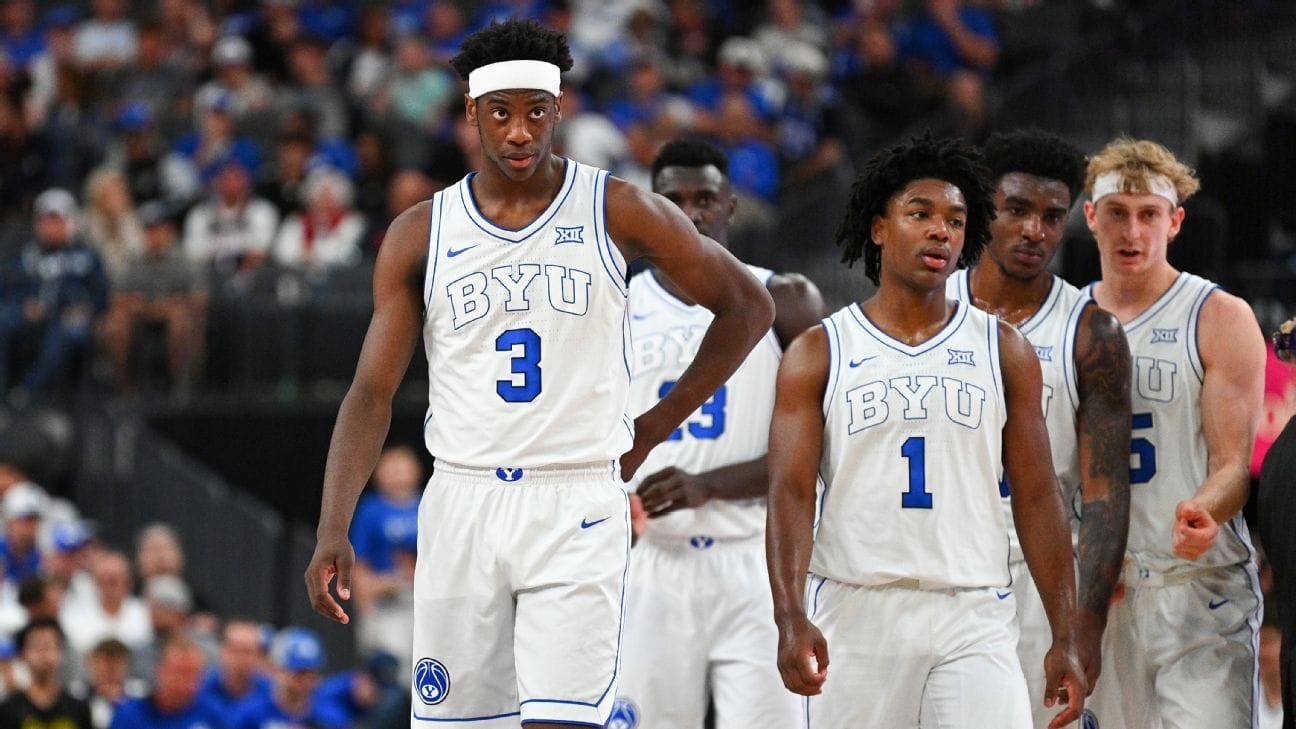
BYU’s New Era: A High-Stakes Bet or Just Delusion?
The Hype Train Is Rolling, But Where Is It Going?
Let’s cut through the noise right now. The media machine has decided that BYU basketball is suddenly fascinating again because they swapped out Mark Pope for Kevin Young. It’s the classic narrative of the new guy with the big NBA credentials swooping in to save a program that, frankly, nobody in the mainstream college sports world really paid attention to before they joined the Big 12. Suddenly, a game against Clemson in the Jimmy V Classic at Madison Square Garden is being framed as a crucial test, a turning point, or a new beginning. I call B.S.
What we’re witnessing is a program having an identity crisis in real-time, trying desperately to keep up with the NIL and transfer portal arms race. Kevin Young isn’t just taking over a team; he’s taking over a culture, and this showdown in New York City is less a statement about a new direction and more a desperate roll of the dice. He’s trying to make BYU fit into the modern, cynical college basketball mold, and it just doesn’t feel right. The whole spectacle feels like a manufactured crisis designed to give us something to talk about in December when the real games are still months away.
The transition from Pope to Young isn’t just a coaching change; it’s a philosophical shift that risks alienating everything that made BYU unique in the first place. The media loves to simplify this kind of transition, painting Young as a savior and Pope as yesterday’s news, but the reality is far more complicated and far less glamorous than what they’re selling. The Jimmy V Classic isn’t a celebration; it’s an autopsy of a program trying to figure out if it can survive in the new landscape it chose to join.
The Kevin Young Experiment: NBA Glamour vs. College Grind
When you hire an NBA assistant coach like Young, you’re buying into a specific kind of allure. You’re buying into the idea that a high-octane, pro-style offense, heavy on pace and space, can work in college basketball where players are still figuring things out. But let’s look at the reality of college basketball. It’s a grind. It’s about recruiting, retention, and managing personalities that are half a decade younger than the guys Young was working with in the NBA. This isn’t the NBA G League; this is the Big 12, a conference defined by toughness and brutal, physical play. Can Young’s system, which probably prioritizes skill and spacing, hold up against the sheer physicality of a Big 12 schedule?
The media keeps telling us about this new, exciting offense, but they forget that college basketball is often won in the trenches and on the boards, not with slick ball movement. BYU’s success in recent years under Pope was based on a specific, unique style of play that relied heavily on veteran leadership and system execution. Young is trying to rebuild that identity from the ground up, and this game against Clemson is the first real test of whether that foundation is stable or made of sand. If they get beat up physically in this game, then all the talk about new-era basketball is just that—talk. The whole thing smells of overconfidence, a program convinced that it can just import NBA philosophy and expect immediate results without the proper personnel or, more importantly, the necessary adjustment period. The Jimmy V Classic is where the rubber meets the road, and I’m skeptical that BYU’s tires are properly inflated for this journey.
The Players: New Hype or Old Problems?
Look at the new faces on this team. AJ Dybantsa, Rob Wright, Richie Saunders—these are the names being thrown around to justify the hype. Dybantsa is a big name, a high-level recruit, exactly the kind of player BYU wasn’t getting consistently in years past. But high-level recruits bring high-level expectations, and a certain level of selfishness, which can clash hard with the traditional BYU culture that emphasizes self-sacrifice and team-first principles. It’s a delicate balancing act, and I wonder if Young has enough experience handling that specific dynamic. Can he manage the egos of one-and-done talent while maintaining the locker room harmony that a program like BYU desperately needs to compete in a powerhouse conference?
This isn’t just about Dybantsa. It’s about a complete cultural reset. BYU needs to figure out if it’s going to prioritize getting the best possible talent for a single season, or if it’s going to return to a more traditional development model that aligns with its mission and values. The Jimmy V Classic is a microcosm of this dilemma. If these new stars don’t perform, or if they look disconnected from the rest of the team, the whole narrative collapses. We’ll be left with a team that has lost its unique identity without gaining the necessary firepower to replace it. It’s a dangerous gamble, and the stakes are higher than a simple early-season ranking boost. The Big 12 isn’t going to wait for BYU to figure things out; they will eat them alive if this experiment fails. The pressure on Saunders, as a veteran presence, to bridge the gap between old and new is immense, and frankly, unfair. He’s the link to the past, but the new guys are the ones getting all the press. It’s a recipe for disaster in the locker room.
Clemson: The Perfect Foil for a Fake Narrative
Clemson, on the other hand, is the quintessential ACC team that doesn’t get enough credit outside of football. They are tough, physical, and well-coached. They aren’t going to be intimidated by the bright lights of MSG or by BYU’s new-look offense. They represent exactly the kind of establishment program that BYU is trying so hard to emulate, but without all the religious baggage and cultural quirks. This game is a test of strength against strength, and a test of identity against tradition. Clemson isn’t going to roll over just because BYU has a new coach; in fact, they’ll probably see this as an opportunity to prove that the ACC still runs a tighter ship than the upstart Big 12.
The media keeps trying to frame this as a heavyweight clash, but let’s be honest: both of these teams are hovering around the edges of the top 10 for a reason. They’re good, but not great. They are the definition of fringe contenders, and that makes the game almost more important in a twisted way. It’s a game where the winner gets to claim national relevance, while the loser slips back into obscurity until conference play begins. The stakes are artificially inflated, which makes for better television, but it doesn’t necessarily mean the game will be a true indicator of either team’s actual potential come March. This whole spectacle, a non-conference game in December, is designed purely to fill a content gap and generate ratings, not necessarily to test a team’s championship mettle.
The Jimmy V Classic: A Symptom of a Broken System
The very existence of events like the Jimmy V Classic highlights everything wrong with modern college sports. It’s less about celebrating the game and more about maximizing revenue streams. Madison Square Garden is a historic venue, yes, but a non-conference game in December shouldn’t be the defining moment of a program’s season. We’ve turned college basketball into a series of highly produced television events, rather than a genuine competition where teams build towards a meaningful tournament. The focus has shifted from the journey to the spectacle, and BYU’s participation in this event, hyped up as it is, perfectly illustrates this shift.
Look at how many of these early-season tournaments exist. They are purely for exposure and recruiting advantages, not for a true measure of where a team stands. The ranking systems are inflated by these early wins against teams that often fall apart by conference play. The whole system is designed to create manufactured narratives, and BYU’s new identity, under Young, fits perfectly into that template. They want to be seen as a national program, and this event provides exactly that kind of visibility. But visibility doesn’t equal viability. A flashy offense and a high-profile coach won’t protect them from the brutal reality of the Big 12 schedule, and if this new identity isn’t genuine, it will unravel when it matters most.
The Verdict: A Mirage in the Big Apple
So, what’s the real story here? BYU is making a radical pivot, attempting to trade its unique cultural identity for a generic, modern basketball identity. This game against Clemson is the first major public test of that pivot. The media will frame it as a success or failure for Kevin Young, but the true implications run much deeper. If BYU loses this game, it’s not just a loss; it’s a sign that the new philosophy might be fatally flawed. If they win, it only validates the hype for a little while longer before the real challenges of conference play begin.
The reality is, BYU is trying to be something it’s not. They are trying to fit into a mold that contradicts decades of program history. This game is less about who wins and more about whether BYU can convince us, and itself, that it can survive in a world where tradition means less than a NIL deal. I’m skeptical. The hype machine is loud, but a closer look reveals a program on thin ice, trying to rebuild itself in the Big Apple, a place where authenticity often gets lost in the bright lights. The whole spectacle feels like a mirage, a fleeting image of success that might disappear when the desert wind finally blows through it.