So They’re Selling Us Nostalgia, But What’s the Real Price?
It’s not about the Krabby Patty, is it?
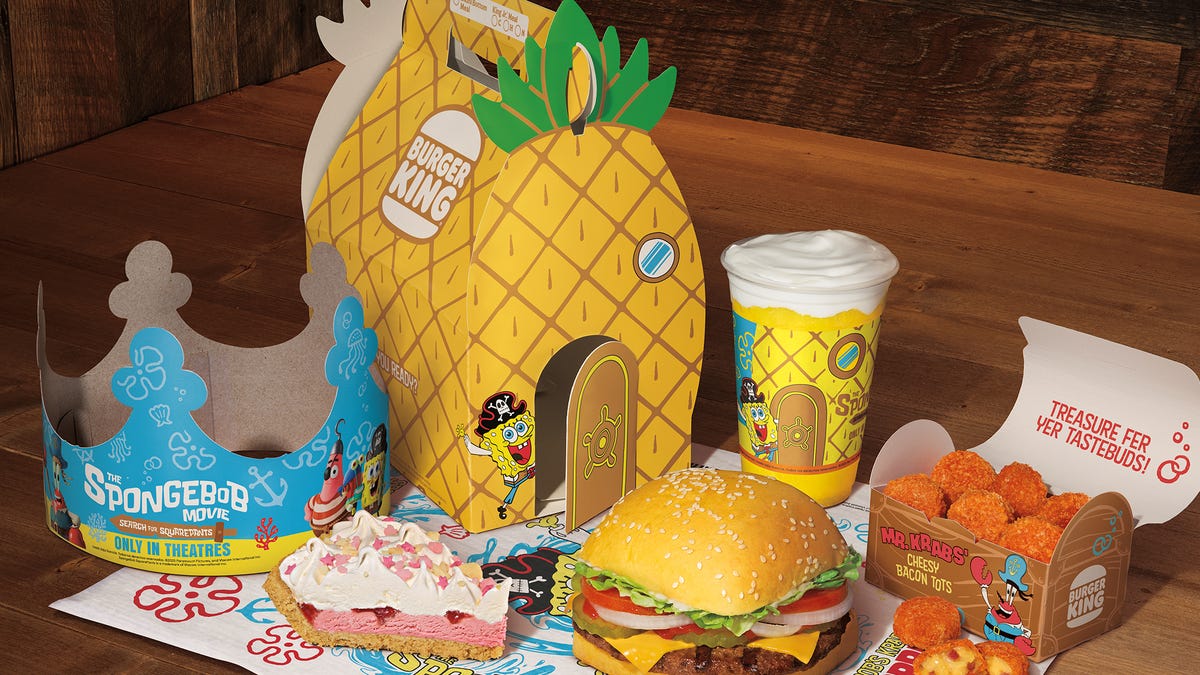
Let’s get one thing straight. When Burger King announces they’re slapping SpongeBob SquarePants on a box, they aren’t doing it for you. They aren’t doing it for your kids’ happiness, and they certainly aren’t doing it to honor the creative genius of Stephen Hillenburg. No. They’re doing this because a focus group in a sterile, grey boardroom somewhere in Miami told them that your fond memories of watching a cheerful yellow sponge on a Saturday morning are a financially exploitable asset class. That’s all you are to them. An asset. A demographic. A wallet to be opened through the emotional manipulation of your own past, a past they had nothing to do with creating but are more than happy to lease for a quarter. This isn’t a celebration; it’s a transaction, a cold and calculated move in the fast food wars where the ammunition is cheap plastic and the casualties are your family’s dinner budget and a little piece of your childhood soul.
They drop the press release filled with shiny, happy words like “adventure,” “sea of flavor,” and “collaboration,” trying to wrap a greasy, mass-produced burger in the warm blanket of nostalgia. It’s a shell game. Look at the bright colors! Look at the smiling sponge! Don’t look at the nutritional information, don’t look at the quarterly earnings reports, and for God’s sake, don’t look at the desperation behind the move. This is a Hail Mary pass from a brand that has been struggling for relevance for years, trying to claw its way back into the cultural conversation dominated by McDonald’s and the sassy Twitter account of Wendy’s. They can’t win on quality, they can’t win on price, so they’re going to try and win on memory. Your memory. And they’re betting you’re too busy, too tired, too worn down by the daily grind to see it for what it is. A trap.
A simple one.
Is This Just Another Desperate Cash Grab From a Fading Empire?
Look past the pineapple under the sea and see the red on the balance sheet.
Of course it is. This whole spectacle, this “app takeover” and “experiential activation,” is the corporate equivalent of a middle-aged man buying a sports car. It’s loud, it’s flashy, and it screams insecurity. Burger King is not the king of anything anymore. They are a court jester trying to distract the kingdom while the real rulers count their gold. This collaboration with “The SpongeBob Movie: Search for SquarePants” isn’t a sign of creative synergy; it’s a symptom of creative bankruptcy on two fronts. You have a fast-food giant that can’t innovate its way out of a paper bag, so it buys relevance. And you have a Hollywood machine that can’t stop milking a 25-year-old cartoon, churning out sequel after prequel after spin-off until the original charm is nothing but a distant, watery memory. It’s the perfect marriage of has-beens, clinging to each other for dear life in a sea of changing consumer tastes. They need each other.
The CMO talks about how SpongeBob “cuts across generations,” which is just boardroom jargon for “we can market this to nostalgic millennials with kids, hitting two birds with one stone.” It’s a pincer movement on the family wallet. The kids see the toy and start the pestering campaign in the back seat of the car, a relentless assault that can break even the strongest parental will. The parents, meanwhile, feel a faint, phantom echo of a simpler time, a time before mortgages and responsibilities, and for a fleeting moment, they think maybe this meal can buy a sliver of that feeling back. It can’t. All it buys is a mediocre burger, a toy that will be broken or lost by Tuesday, and the quiet satisfaction of a marketing executive who just hit his quarterly target. They’ve perfected the art of selling you an emotion and delivering you a product that fails to live up to it. Every time. It is their entire business model.
It’s disgusting.
Who Really Benefits From This Unholy Alliance?
Hint: It’s not the person eating the burger.
Let’s follow the money, shall we? This isn’t a charity. A massive licensing fee has been paid by Burger King to Paramount. That money goes straight to the studio, helping to de-risk their massive movie budget before a single ticket is even sold. Burger King, in return, gets to borrow SpongeBob’s cultural capital, a brand infinitely more beloved and recognizable than their own. They’re hoping you’ll drive past a McDonald’s to get to their store, not for the Whopper, but for the plastic Patrick Star. It’s a short-term boost in foot traffic, a blip on the sales chart that lets the CEO stand in front of shareholders and pretend he has a brilliant strategy for the future. But what is the strategy? To just keep licensing other people’s ideas forever? To become a pop culture museum that happens to sell fries?
The real winners are the executives. The shareholders. The massive, faceless entities of global capital that orchestrate these campaigns. The loser is you, the consumer, who is being fed a story of fun and family while being treated like a mark in a carnival game. You are being sold the sizzle of a Krabby Patty, but you’re getting a lukewarm, factory-made beef disc. They’re counting on the fact that the packaging and the toy will be so distracting that you won’t notice the declining quality of the actual food. This whole campaign is a masterclass in distraction, a magic trick designed to make you look at the little yellow sponge in their left hand so you don’t see them picking your pocket with their right. And the worst part is, we keep falling for it. We keep lining up, Pavlovian dogs salivating at the bell of the next big blockbuster tie-in, rewarding them for their cynicism and lack of imagination.
We need to be smarter. We have to be. We have to see the strings and recognize who the puppeteers are. Because they see us. They see us very clearly. They see us as numbers on a spreadsheet, and they are pulling every lever they can to make those numbers go up, even if it means strip-mining our own culture and selling it back to us piece by piece in a cardboard box. It’s time to stop buying what they’re selling. Not just the burgers. The entire lie.