The Anatomy of Predictable Failure: East New York’s Sweet Sixteen Bloodbath
It’s always the same story, just with different names and slightly altered details. A community event designed for celebration—a birthday party, a graduation, a neighborhood barbecue—becomes a flashpoint for violence, ending not with cheers but with sirens and crime scene tape. In East New York, Brooklyn, the latest iteration of this tragic ritual played out at a Sweet Sixteen party, where six teenagers were shot in an early-morning hail of bullets. The shooters remain on the lam, which is almost as predictable as the violence itself, but the truly damning detail, the one that perfectly encapsulates the current state of urban policy and community activism, is that one of the victims was related to a well-known anti-violence activist family. This isn’t just a random tragedy; it’s a diagnostic snapshot of a broken system where the very families advocating for peace are caught in the crossfire of the conflict they claim to be fighting.
The Illusion of Safety: Deconstructing the Sweet Sixteen Mythos
A Sweet Sixteen party, for most, symbolizes a rite of passage, a transition from childhood to young adulthood, complete with glitter, expensive dresses, and carefully choreographed dance numbers. In East New York, however, where socioeconomic pressures and systemic decay create a tinderbox environment, a large gathering of young people often serves as a magnet for external conflicts looking for a stage. The location, an event venue in a neighborhood grappling with rising gun violence, almost guarantees a level of ambient tension. It is a fundamental miscalculation, perhaps even willful ignorance, to assume that a large group of young, high-energy individuals in a high-risk area can gather without attracting negative elements. The idea that a single event can be walled off from the surrounding social reality is a fantasy, a dangerous delusion that cost these six teenagers their safety. The event itself becomes a target-rich environment for personal disputes, rivalries, and external agitators looking to settle scores or simply cause chaos.
The Chronology of Chaos: What Actually Happened
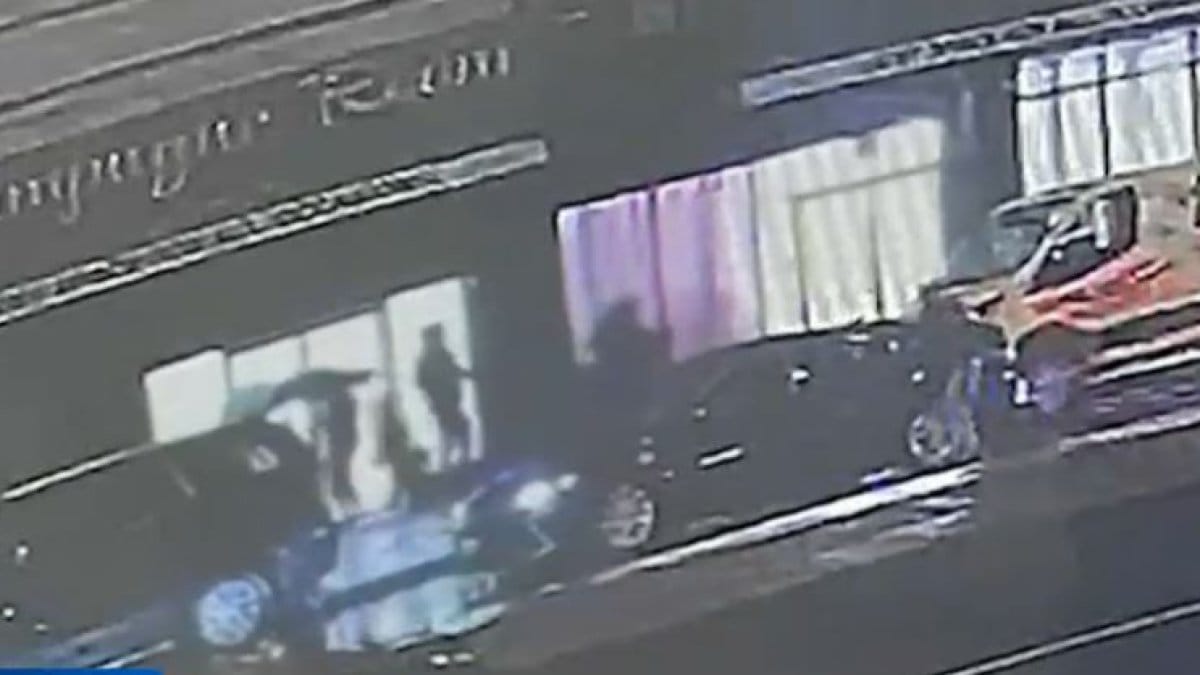
According to reports, the events unfolded in the early morning hours outside the venue. The party itself was likely winding down, with attendees spilling out onto the street. This transition period—from the controlled environment inside to the chaotic, uncontrolled public space outside—is precisely when conflicts escalate. The initial confrontation appears to have involved two gunmen who targeted a specific group of individuals. The subsequent gunfire, however, was indiscriminate enough to injure six people, ranging in age from 14 to 17. The fact that the shooters remain unidentified and on the run further highlights the breakdown of accountability in these scenarios. Surveillance video, a ubiquitous feature of modern urban life, captured the gunmen, but capturing and identifying are two entirely different things. The system relies on cooperation, on community willingness to turn in perpetrators. When that willingness erodes due to fear or a perceived failure of justice, the cycle perpetuates itself without interruption. The irony here is thick: a community constantly pleading for more resources to combat violence, yet often failing to provide the basic information needed to solve the violence that already occurred. This isn’t just about police work; it’s about social contracts and trust, both of which are evaporating rapidly.
The Activist Paradox: When the Solution is the Problem
Let’s talk about the anti-violence activist angle. This detail is crucial because it shatters the prevailing narrative. When a member of a family dedicated to preventing violence becomes a victim of that very violence, it forces an uncomfortable reckoning. The “anti-violence” movement often relies on intervention programs, community outreach, and emotional appeals. It operates under the assumption that dialogue and resources can solve problems rooted in deep-seated social pathology. However, the East New York incident suggests that these methods, while well-intentioned, are ultimately failing to insulate individuals from the reality on the ground. The victim’s family spent years, perhaps decades, trying to make the neighborhood safer, only for their own loved one to be caught in a completely predictable explosion of gunfire. This highlights a fundamental flaw in the approach: anti-violence programs often address symptoms rather than the root cause. They try to apply a Band-Aid to a gaping wound that requires surgery.
The Failure of Prevention: A Deeper Dive into Community Dynamics
The core issue is a power vacuum. When law enforcement retreats or is perceived as ineffective, and when social institutions like schools and family structures weaken, a void is created. This void is inevitably filled by negative influences. The anti-violence activist model, in many cases, assumes a level playing field, where logic and appeals to empathy can compete with the immediate, visceral appeal of street credibility and retaliation culture. It’s a losing battle. The shooting itself wasn’t random; it was likely rooted in a pre-existing conflict, possibly involving gang affiliations or territorial disputes. The celebration simply provided the opportunity. The anti-violence movement, by focusing on general appeals rather than targeted, high-impact interventions and robust law enforcement presence, fails to prevent these flashpoints from igniting. It creates a false sense of security while ignoring the very real dangers that lurk just outside the perimeter of the event space they’ve designated as safe.
The Political Response: A Cycle of Empty Rhetoric
The predictable political response to this kind of incident is already in motion. We will see calls for increased funding for youth programs, more community meetings, and promises to “get guns off the street.” These are hollow gestures, performed for public consumption. The reality is that these incidents are systemic. They are the result of decades of neglect, failed policies, and a shift in focus from proactive policing to reactive community engagement. The focus on a “root cause” analysis often ignores the immediate threat, leaving communities vulnerable to repeat offenses. The political class fears addressing the core issue of accountability and enforcement, preferring instead to throw money at programs that offer a feel-good narrative without measurable results. This shooting, like so many others, will be a headline for exactly three days before being buried under the next catastrophe. No genuine structural changes will be implemented. The shooters will likely remain free for some time, and the teenagers will be left to deal with the physical and psychological scars. The media cycle will move on, leaving the community to pick up the pieces and wait for the inevitable next incident.
The Long-Term Prognosis: A Bleak Future
Looking at the trajectory, the future for areas like East New York remains bleak. The anti-violence movement, by prioritizing rhetoric over results, has created an environment where a family dedicated to peace cannot even protect its own members. The political establishment, by focusing on appeasement rather than hard-nosed enforcement, has created a situation where basic public safety is compromised for ideological purity. The logical deconstructor must conclude that these shootings are not isolated events but rather predictable outcomes of a deliberate policy choice to de-emphasize law and order. The Sweet Sixteen shooting is merely a data point in a larger, upward trend of social disarray. Until there is a fundamental shift in approach, one that prioritizes the safety of the law-abiding majority over the abstract rights of the law-breaking minority, these stories will continue to repeat themselves with horrifying regularity. The irony of the activist’s family being involved is not a coincidence; it is a direct result of the system’s failure, and the movement’s, failure.