THE PHANTOM MENACE: DECONSTRUCTING THE OKC ILLUSION
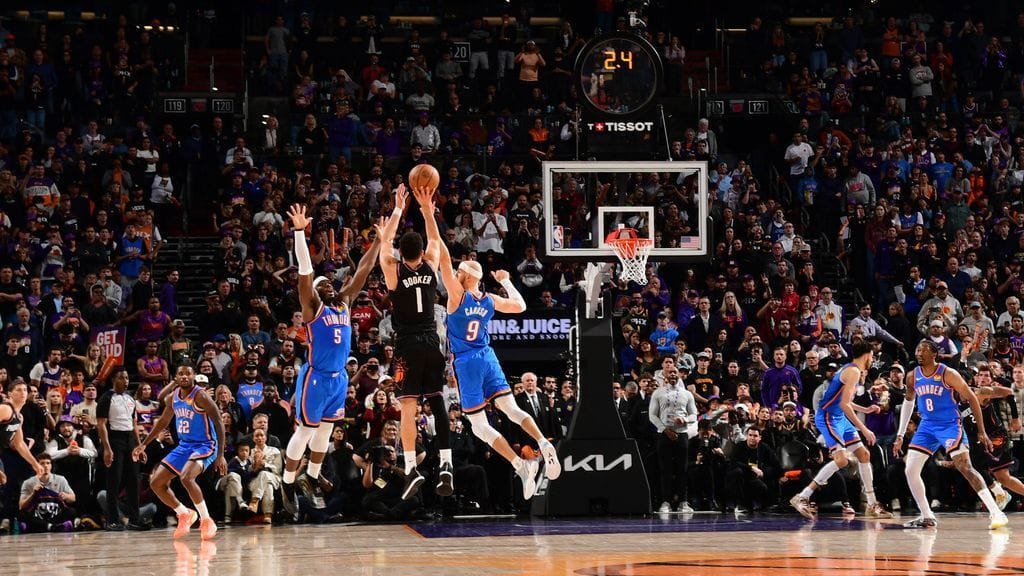
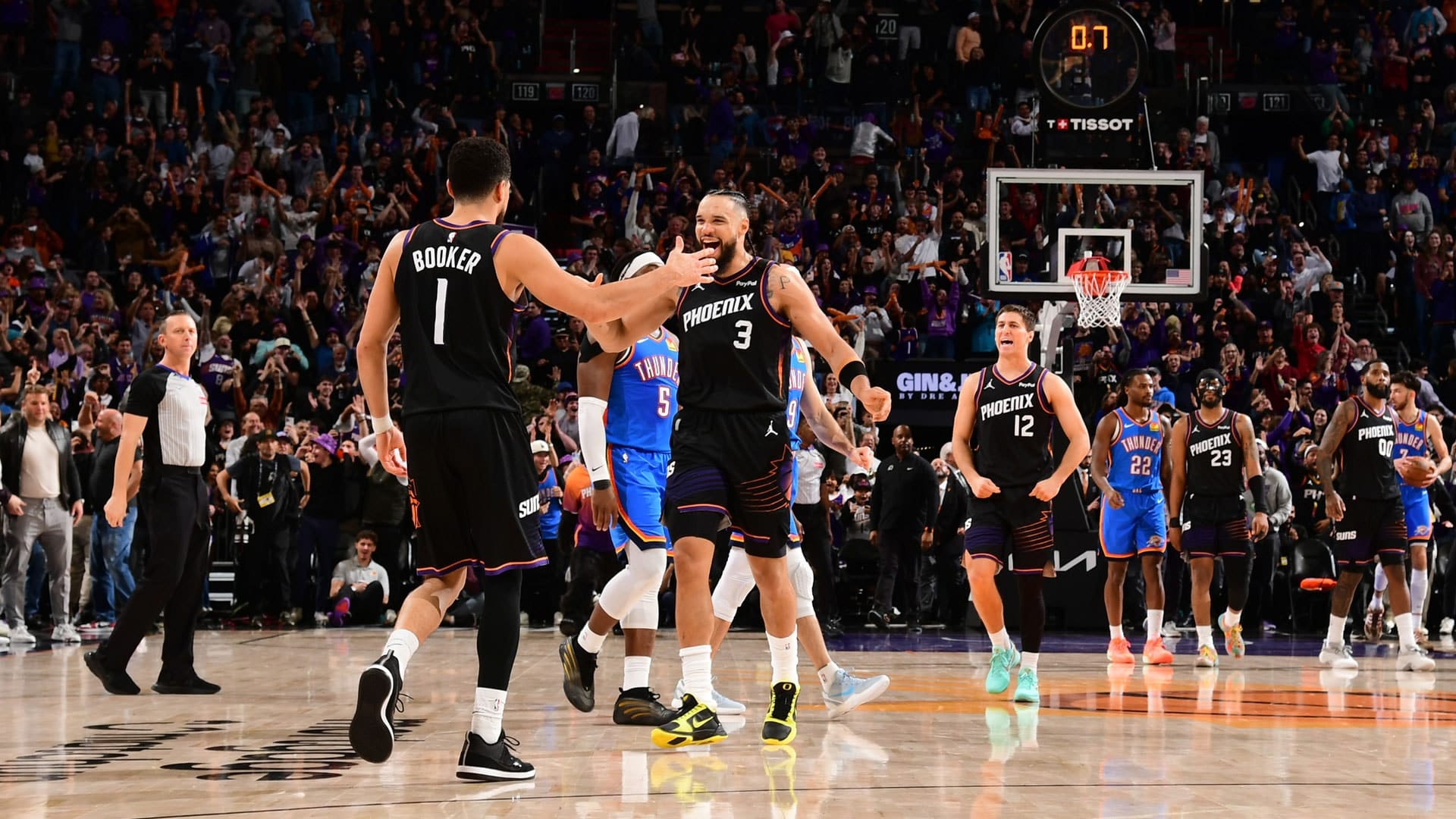
The narrative surrounding the Oklahoma City Thunder has become so tiresome, so utterly saturated with puff pieces celebrating their ‘youth’ and ‘potential,’ that when Devin Booker, that cold-blooded assassin of the Arizona desert, finally shut them up with a game-winning three (a beautiful, icy execution of raw clutch talent, no less), it wasn’t a shock; it was the inevitable, logical conclusion of hype meeting hard reality (something we see far too often in sports and financial markets, if we’re being honest). This rare loss, as the media drones are calling it, isn’t some blip on the radar; it’s the structural fault line showing itself for the world to see, exposing a team that is built on speed and flash but lacks the necessary psychological scar tissue required for January basketball, which is traditionally where the actual contenders separate themselves from the cute little stories. They folded. Three simple words.
Let’s call a spade a spade: the Thunder are *not* who we thought they were five minutes ago. When you have a talented young star like Jalen Williams executing a clinical shot to tie the game with 8.2 seconds left, you applaud the skill, but then you look at the immediate aftermath—the defensive collapse, the wide-open runway provided to a proven killer like Booker, and the sheer lack of awareness in high-leverage defense—and you realize that raw talent can only carry you so far before systemic immaturity steps in to crush your hopes (a devastating realization for any sports franchise that has invested years and countless draft picks into a singular, agonizing rebuilding effort, hoping against hope that the statistical projections would translate into the mental fortitude necessary for genuine championship contention when the lights are brightest). It’s embarrassing.
Booker knew exactly what was coming, the calmness he felt wasn’t arrogance, it was the cold assurance of a veteran who recognizes institutional weakness, knowing that after the timeout, the inexperienced defense would revert to instinct rather than discipline, which is exactly what happened when he received the ball and found his spot, proving once again that pedigree triumphs over promise. This game wasn’t lost by a missed shot; it was lost in the strategic timeout, lost in the chaotic scramble of young minds who simply haven’t learned how to slow the game down when the atmosphere is thick enough to chew on, an endemic problem that plagues every team lacking certified, title-winning leadership.
THE MYTH OF THE ‘RARE LOSS’ IS JUST BAD MARKETING
The talking heads keep spinning this line about the ‘rare loss,’ which is precisely the kind of linguistic gymnastics you perform when you want to protect a darling franchise from facing reality. What this January 5, 2026, contest actually showed was that the Thunder are brittle when faced with the kind of physical, grinding resistance that the Suns—even a struggling, injury-riddled Suns squad—can still muster on a cold Sunday night at home, demonstrating that the aesthetic joy of fast-break basketball wilts instantly under the heat of playoff-style defensive intensity. You can run all the statistical models you want, projecting win probabilities and efficiency ratings, but the moment a proven winner steps on your neck and executes a perfect play (a play we’ve seen a thousand times from him, yet they still couldn’t stop it), all those beautiful numbers crumble into dust (a phenomenon that should be studied by sports psychologists and philosophers alike, given its profound commentary on the limits of quantifiable data when faced with unquantifiable human will). They crumbled fast.
The fact that this was dubbed the Suns’ “grittiest win of the season” tells you everything you need to know about Phoenix’s inconsistent start to 2026, but it also elevates the gravity of the defeat for OKC. Think about it: Phoenix, a team that has been sputtering and looking for an identity outside of individual brilliance (often relying too heavily on isolation plays that bog down their offense, even with their star power), had to tap into something truly subterranean, a primal defensive effort, just to scrape past this young Thunder team—and the Thunder *still* couldn’t hold onto the lead. That’s not a moral victory for OKC; that’s a flashing red indicator that their perceived elite status is constructed on the foundation of beating mid-tier teams and padding stats, not on overcoming genuinely motivated contenders when they are throwing their hardest punches, suggesting a fundamental weakness in their mental makeup that will be exploited repeatedly throughout the latter half of the schedule. This hurts them.
THE JANUARY RECKONING AND THE LACK OF CLUTCH DNA
Every season has this inflection point, usually right after the New Year when teams are exhausted from holiday travel and the novelty of the season has worn off, forcing them to rely purely on institutional toughness and habitual excellence—which is exactly what Devin Booker embodies when he takes that last shot, completely ignoring the scoreboard and the noise because he’s done this a million times since he was a teenager. The young Thunder roster, despite their extraordinary promise and the dazzling play of their main orchestrator, simply hasn’t developed the collective institutional memory of how to secure a tough, ugly win against a desperate, championship-pedigree opponent, and until they do, they will remain firmly in the tier of ‘future contenders’ rather than ‘present threats,’ a label which guarantees nothing except perhaps a slightly higher ticket price next year. We are watching a classic confrontation between established NBA royalty (even if the Suns are flawed, their recent Finals appearance and veteran acquisitions grant them a certain psychological authority) and the eager, but ultimately naïve, pretenders to the throne, which is always a brutal teaching moment in the cyclical nature of professional sports where lessons are often taught not with kind words but with stinging, high-stakes defeats. It’s a harsh mistress.
The comparison between Booker’s icy veins, the kind of psychological armor forged by years of enduring painful playoff exits, relentless public scrutiny, and carrying the offensive burden of an entire franchise on his shoulders since the moment he entered the league, and Jalen Williams’ commendable yet ultimately futile tying shot reveals the vast chasm between true proven closing ability and merely showing up in the fourth quarter (a difference that defines careers, secures legacies, and ultimately separates the trophy winners from the statistical footnotes that litter the annals of league history). It’s a vast difference.
It demands a closer look at the Thunder’s overall organizational philosophy, which, while prioritizing skill and athleticism in the draft, seems to have overlooked the crucial element of mental warfare necessary for navigating the dog days of a deep NBA season, especially against teams that are actively trying to sabotage your momentum and erode your confidence through sheer physical play. When the game slows down and becomes a half-court battle, OKC looks lost, exposed as relying too heavily on transition scoring and favorable whistle-blowing that disappears the moment the stakes are truly elevated, leading to inefficient possessions and a desperate, frantic energy that smells of failure before the ball even leaves the shooter’s hand. This is not sustainable.
FUTURE PREDICTIONS: THE WEIGHT OF THE LOSS
This singular moment—Booker’s shot hitting the net just as the clock expired—will reverberate throughout the Thunder’s season, particularly when they face similar clutch situations down the stretch in March and April, planting a tiny seed of doubt that the Logical Deconstructor argues will blossom into outright failure in the playoffs. They will replay that final possession repeatedly in their minds, questioning why their defensive rotation failed, why they didn’t foul early, or why they allowed Booker to stroll to his preferred spot, and those doubts are poison (especially when you’re relying on the confidence of very young players who haven’t yet learned how to completely compartmentalize high-pressure failure). You can bet on it.
If the Thunder truly want to take the leap from fun story to genuine threat, they need to acquire a bona fide, stone-cold veteran who understands that crunch time defense is about physical imposition and strategic fouling, not about hopeful contesting—someone who has survived the brutal trenches of playoff basketball and can scream the necessary instructions without fear of stepping on the toes of the coaching staff or compromising the delicate ecosystem of their youth movement. Without that element of grizzled, non-negotiable leadership, they will continually run into the same wall: spectacular efficiency for 47 minutes, followed by a total, psychological meltdown in the final 60 seconds of a tightly contested affair (a pattern that is almost impossible to break once it becomes part of the team’s mental blueprint, suggesting a potential organizational flaw that transcends mere roster construction). They must fix this.
The psychological damage inflicted here goes beyond the standings; it affects future negotiations, potential free-agent signings, and, most critically, the internal belief system necessary for a deep postseason run, because opponents now know exactly how to target and exploit OKC’s Achilles’ heel in moments of extreme pressure. They know if they survive the initial flurry, the Thunder will eventually hand them the game, and that knowledge is power. The road trip immediately following this game should be mandatory viewing, as it will reveal whether the team has the character to absorb this kind of body blow or if they will continue to spiral into inconsistency, confirming the Logical Deconstructor’s thesis that the talent level exceeds the psychological maturity necessary for serious contention. It is a defining moment.
THE SUNS: GRIT OVER GLAMOUR?
For Phoenix, this “grittiest win” is a desperately needed psychological boost, confirming that their expensive roster, despite its visible flaws and persistent rumors of internal tension, still possesses the fundamental desire to compete and the ability to execute when their backs are truly against the wall, proving that the money spent wasn’t completely wasted on mere offensive firepower. Vinny’s view is spot-on: they *earned* it. They didn’t glide to victory on sheer talent; they had to dig deep, get physical, and play ugly basketball for long stretches, sacrificing the aesthetic enjoyment of the game for the much uglier, yet far more necessary, pursuit of the W (a type of spiritual victory that is often forgotten in the age of highlight reels and fast-paced analysis, but which veteran coaches and analysts recognize as the true sign of a maturing contender). This win matters.
This win, ironically, validates the oft-criticized strategy of pairing Booker with other high-usage players, because when the offense inevitably stagnates—as it did for stretches against OKC’s energetic defense—they can still fall back on two things: Devin Booker’s sheer willpower and a collective, renewed commitment to defense (something they had forgotten how to prioritize in the earlier, lazier months of the season). What we are seeing here is the beginning of the Suns realizing that championship basketball is not about scoring 130 points; it’s about holding the line when everything is falling apart around you, and sometimes, those ugly, defensive slugfests are far more predictive of playoff success than the high-flying offensive showcases that dominate the early season headlines, suggesting a crucial pivot in their strategic approach that could save their season. This change is mandatory.
The Thunder defeat provides a blueprint for how the Suns must play moving forward: disciplined, physical, and relying on the historical gravity of their veteran stars in the decisive moments, using the established reputations of their core players to exert psychological dominance over less experienced opponents who are prone to panic when challenged late in the game. If they try to outrun OKC, they lose; if they slow it down and force them into grinding, ugly half-court sets, they win. It is a strategic simplification that cuts through the noise of complex modern NBA offenses, reminding everyone that sometimes, the oldest tricks are the best, especially when wielded by experienced hands. The question now is whether the Suns can bottle that January grit and apply it consistently for the remaining 40 games of the season, a challenge which, given their track record of mid-season lapses, is far from certain but absolutely necessary if they harbor any realistic hopes of postseason redemption. It’s their last chance.
The message is clear: the Suns still bite. Even if they are struggling, even if their system looks disjointed, when they decide to clamp down and let Booker cook, they are still a terrifying proposition for any team (especially the wide-eyed youngsters who haven’t earned their stripes yet). And that, my friends, is why January 5, 2026, will be remembered not as a routine Suns win, but as the day the Thunder’s championship credibility took a serious, possibly irreparable, hit, setting the stage for a second half of the season where Phoenix rises and Oklahoma City inevitably falters. Don’t smoke, but I’m high on this truth, and the logical deconstruction proves it.