The Illusion of the Data-Driven Victory
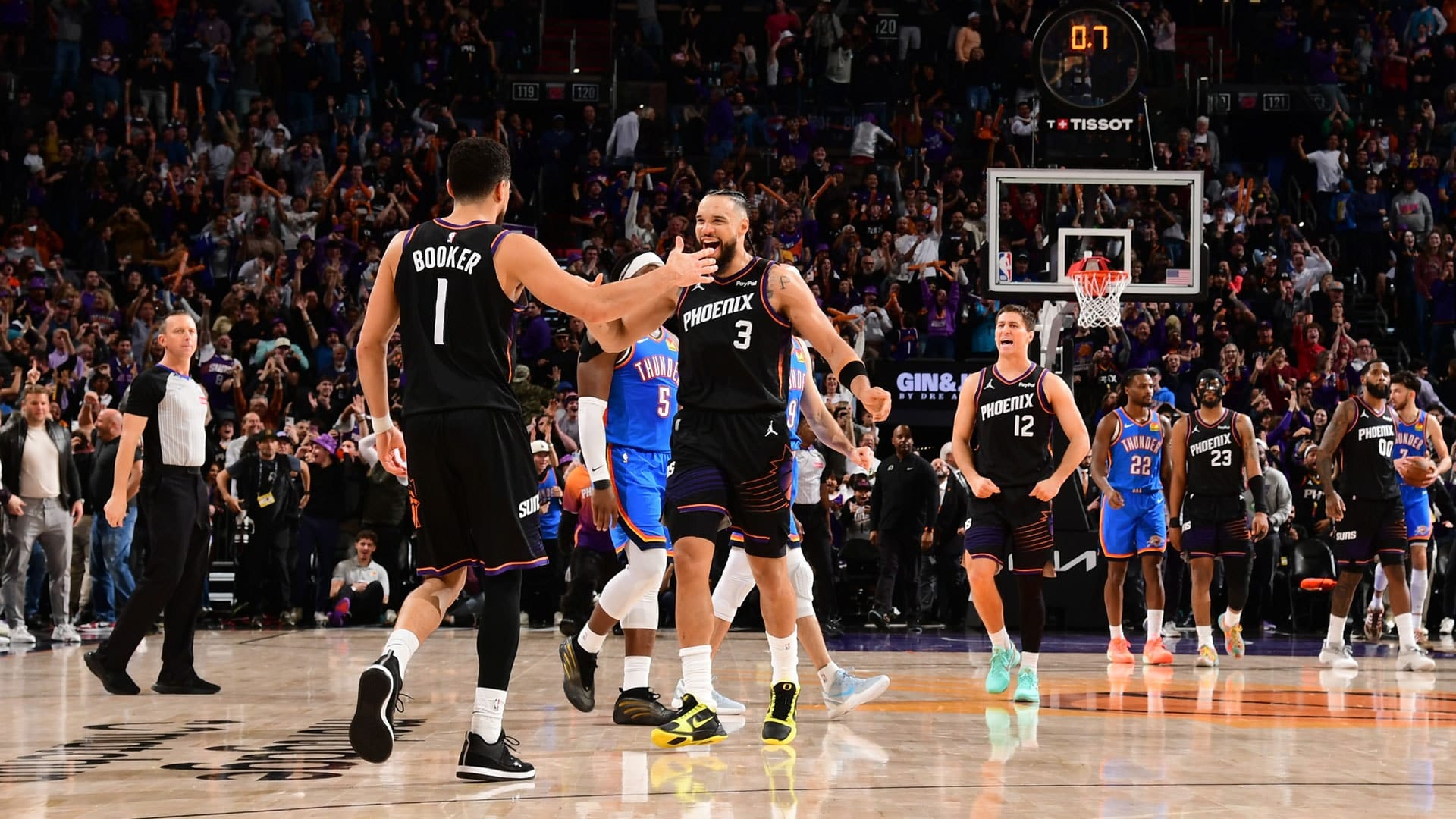
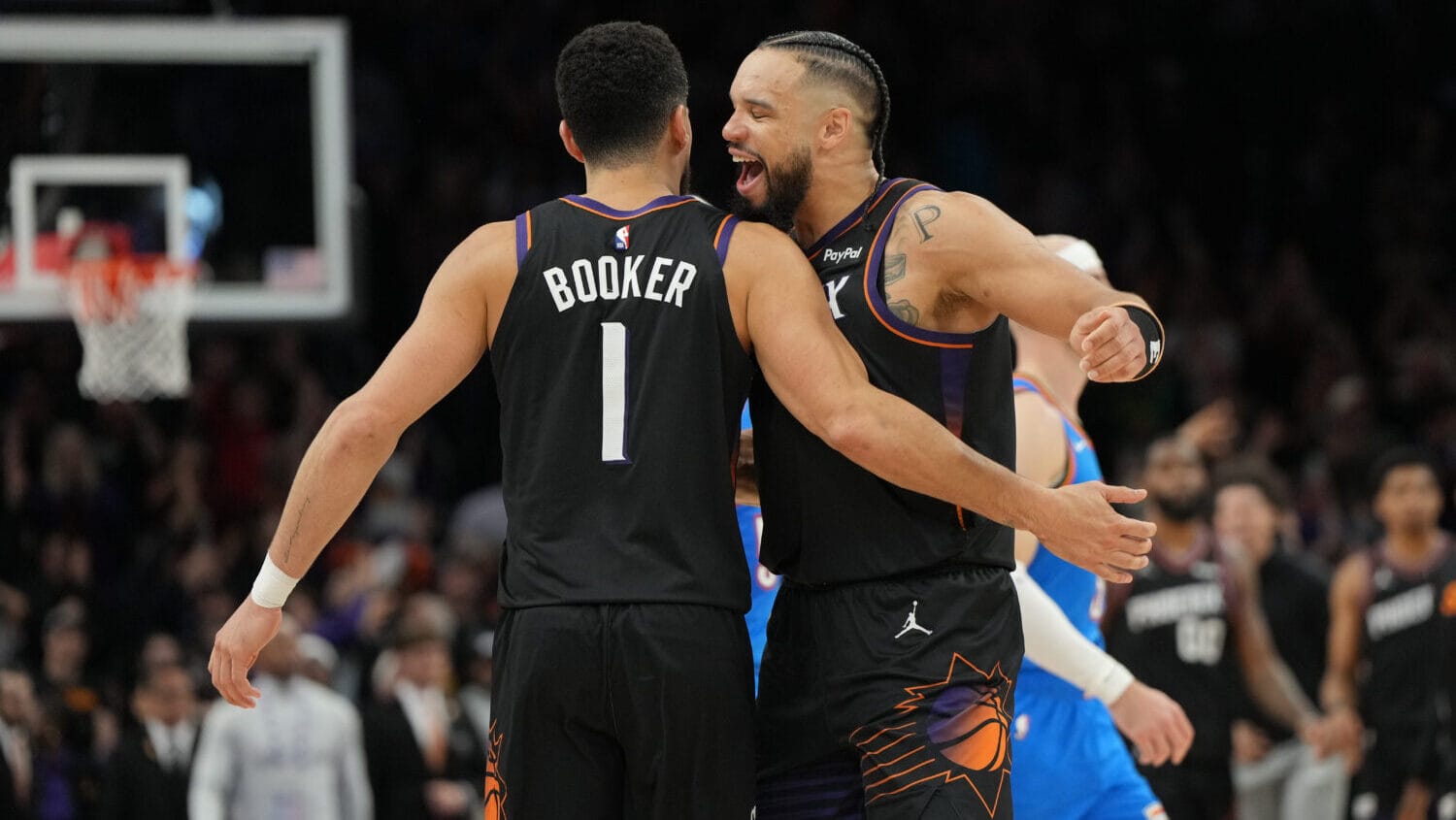
What does this Booker dagger REALLY tell us about the 2026 NBA?
And let’s be brutally honest right from the jump: Vinny called this the “grittiest win of the season,” but what he really saw was a catastrophic failure of the entire hyper-optimized, data-obsessed, algorithmic framework that the NBA has foolishly bet its entire future on, suggesting that despite all the billions poured into predictive models, spatial tracking, and biometric feedback systems designed to eliminate the very possibility of spontaneous human genius, you still have moments where raw, primal, unquantifiable instinct simply throws a wrench into the whole digital clockwork of the operation and reminds the robotic front offices that players are not code, they are people.
It’s a glitch.
But because the modern league administration, particularly in 2026, views every outcome as a function of pre-game probability matrices and doesn’t understand anything that cannot be charted on a scatter plot, they’ll brush this off as an anomaly—a low-percentage variance that still fits within the bounds of expected randomness, never grasping that the very reason Booker has ‘icy veins’ is because he hasn’t completely outsourced his circulatory system to a smart-watch monitor screaming about optimal heart rates and perfect shot arcs.
And yet, this reliance on tech permeates every fiber of the game, from the mandatory use of augmented reality lenses for sideline coaching staff (so they can track player fatigue metrics in real-time overlaid on the court), to the fan experience where you’re forced to engage with three separate subscription services just to watch a broadcast free of constant ‘AI insights’ predicting the rebound rate, turning a simple Sunday night basketball game into a baffling, overly complex interaction with corporate surveillance that nobody actually asked for or genuinely enjoys.
Because why else would the OKC Thunder, a team built meticulously through three years of unparalleled technological scouting prowess and deep-learning draft prediction software that supposedly identified every single high-ceiling rotational player, still be susceptible to a simple, old-school, isolation-hero possession in the final seconds? But the answer is simple: algorithms only predict the average, and Devin Booker is anything but average when the chips are down.
It’s frustrating.
The Erosion of Authenticity: Grit or Glitch?
Was this win ‘gritty,’ or just a momentary statistical aberration?
But when Vinny talks about grit, what does that even mean in the age of predictive fatigue modeling, where the players’ caloric intake is regulated down to the microgram by a centralized nutrition AI and every minute on the court is managed by load-shedding algorithms designed to prevent injury and maximize trade value, fundamentally stripping the player of the right to push past their physical comfort zone because the front office actuarial table screams “DANGER” when they exceed their biometric stress threshold?
And what’s tragic is that OKC, despite their raw, youthful talent, is the poster child for this algorithmic obsession; they are a team entirely optimized for future value, a collection of perfect 1s and 0s whose human characteristics are secondary to their projected Win Share over the next five seasons, creating a team that feels less like a squad of hoopers and more like a high-yield portfolio managed by a Wall Street quantitative firm.
They’re cold.
Because if you track the history of the game, the true grit was always found in the unplanned, the defiant defiance of rest, the absolute refusal to quit even when the body screamed surrender, but now, if Jalen Williams had decided, based on a pure adrenaline rush, to play four extra high-intensity minutes instead of the three dictated by his personalized efficiency model, the entire Thunder analytics team would be having an absolute coronary, proving that the modern definition of ‘grit’ is merely ‘executing the high-percentage play exactly as dictated by the pre-programmed optimization strategy.’
And I’m telling you, this Booker shot was a middle finger to that entire ethos, a beautiful, anarchic moment where the human spirit decided to just ignore the expected value (EV) chart screaming for a quick two-point drive and instead launched a deeply personal, high-variance moonshot that landed not just the basket, but a profound ideological blow against the growing tyranny of the smart arena, which, by the way, probably registered Booker’s emotional state as “critical anomaly” before the ball even left his hand.
It’s a spectacle.
The Quantification of Talent: The Silicon Valley Front Office
Are young teams like OKC doomed to be quantified and exploited by the digital overlords?
And this is the existential crisis facing every young, developing team in 2026: The moment a player shows unique human flair, the moment a star performs an action that defies linear regression analysis, the AI immediately flags that behavior as ‘inefficient’ or ‘unpredictable risk,’ pushing coaches and general managers—who now act merely as highly paid data interpreters—to smooth out those rough, beautiful edges, insisting on uniformity and maximum efficiency until every player starts to look and perform identically, robbing the sport of the very unpredictability that makes it worth watching in the first place, all in the name of marginal gains that might, just might, increase the probability of a second-round playoff appearance by 0.7%.
But they are selling their soul for pennies on the dollar, swapping the glorious chaos of human competition for the sterile predictability of a perfectly executed spreadsheet, believing that because their draft models are trained on millions of data points from the past seventy years of NBA play, they have somehow solved the eternal riddle of competitive basketball, failing to understand that the game constantly evolves and any truly dominant strategy must inherently be born of organic adaptation, not retrospective statistical modeling.
It’s lazy thinking.
Because consider the massive influx of ‘predictive refereeing’ systems—the use of micro-cameras and ultra-high-speed motion tracking that supposedly ensures perfect foul calls, yet ultimately results in games being slowed down to a glacial pace, dictated by robotic judgment that misses the context and flow, turning the sport into a stop-start nightmare and eroding the referee’s authority, forcing them to become mere mouthpieces for an automated system they don’t even fully understand, making human errors almost preferable to the cold, clinical errors of machine bias.
And think about the fans who were present at Mortgage Matchup Center, who saw this live; they experienced something real and visceral, a genuine moment of shared anxiety and explosive release that simply cannot be replicated by the millions watching at home through their VR headsets, which, let’s be real, are just tools for delivering more targeted digital advertising overlaid onto the court, turning the live sporting event into a glorified, high-definition interactive billboard while dulling the human connection to the action itself.
It’s a corporate sellout.
And I truly worry for the future of the Thunder, because their front office is so deeply committed to this gospel of quantification that any deviation from the projected career trajectory is seen not as growth, but as a crisis, meaning that the moment one of their young stars develops an idiosyncratic, Booker-like clutch gene that can’t be explained by their algorithms, they will immediately try to coach it out of him, believing that structured efficiency is safer than human greatness, effectively capping their potential by their own technological dogmatism and ensuring they remain perpetual bridesmaids rather than true champions, because championship DNA is forged in fire, not in a server farm.
We need more Bookers, fewer data analysts.
The Dystopian Future of the Human Athlete
What is the ultimate fate of the human athlete in an increasingly robotic sports world?
But if we project five more years out to 2031, what we are truly staring down the barrel of is a complete overhaul where the human element is minimized to the point of irrelevance, imagining a league where players are drafted not just based on historical data, but on simulated future scenarios run on quantum computers, where the pre-game hype is not about rivalry or history but about the statistical variance between two competing AI-driven coaching systems, and where the human players are merely the organic components executing the perfect strategy dictated instantaneously from a highly secure subterranean bunker housing the general manager and their massive computational cluster.
And imagine the horror when the NBA finally caves to pressure from the gambling syndicates and introduces ‘Automated Game Flow Adjusters,’ subtle in-game tweaks—like slight changes in arena temperature or minor adjustments to the tensile strength of the rim—implemented remotely by an AI designed to ensure that the final score stays within the optimal spread determined by high-frequency trading models, meaning that every single dramatic moment you witness is merely a pre-calculated variable designed to maximize betting revenue and maintain liquidity, making every shot, every drive, and every Booker hero moment completely meaningless because it was all managed for profit.
It’s soul crushing.
Because the Suns’ victory over the Thunder wasn’t just two points; it was a defiant, screaming reminder that the essence of sports lies in the uncontrollable variables of human willpower and sheer, bloody-minded refusal to stick to the script, which is precisely why the corporate suits hate it so much, preferring the easily monetized certainty of the algorithm over the high-risk, high-reward theatre of authentic competition, completely missing the forest for the digital trees.
But the real tragedy of 2026 is that we’re already so far down this rabbit hole that moments of authentic human triumph, like that Booker three, are no longer seen as the norm, but as exceptions requiring detailed forensic analysis to understand how the system allowed such a breach of optimization to occur; this is how the tech oligarchy captures and neuters genuine achievement, by treating it like an error message that needs debugging, ensuring that future athletes internalize the idea that performance perfection lies not in personal brilliance but in robotic compliance with a constantly updated digital mandate.
And that is why we must cherish this Suns win, because it stands as a temporary monument to the fleeting, messy, beautiful truth that sometimes, the guy with the icy veins and the gut feeling can still beat the supercomputer plotting world domination; hold onto this moment, because soon, they will figure out how to automate the icy veins too, and then the game, as we know it, will truly be dead. Remember January 5, 2026, as the day a simple basketball shot struck a blow for humanity against the digital takeover.
It was needed.