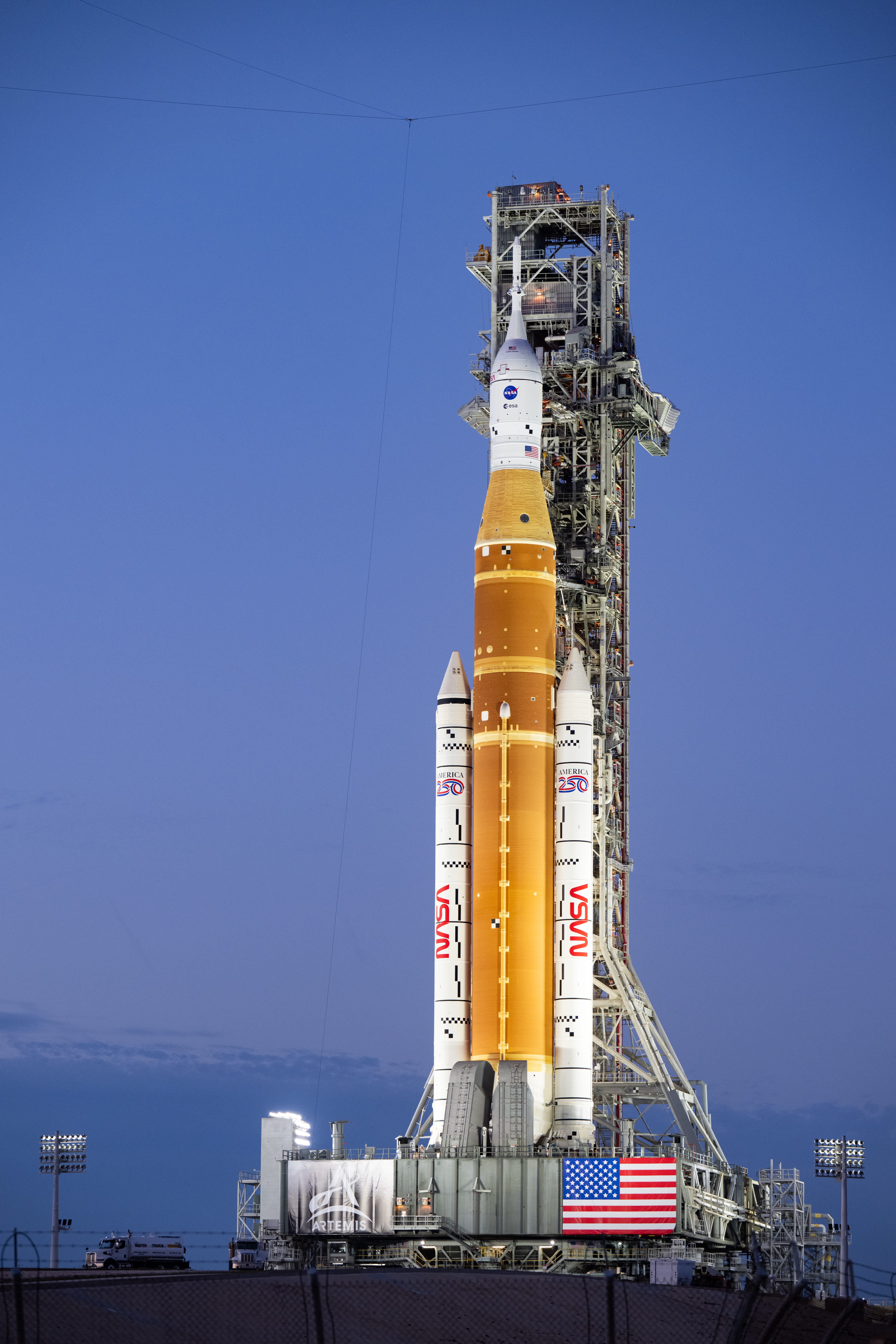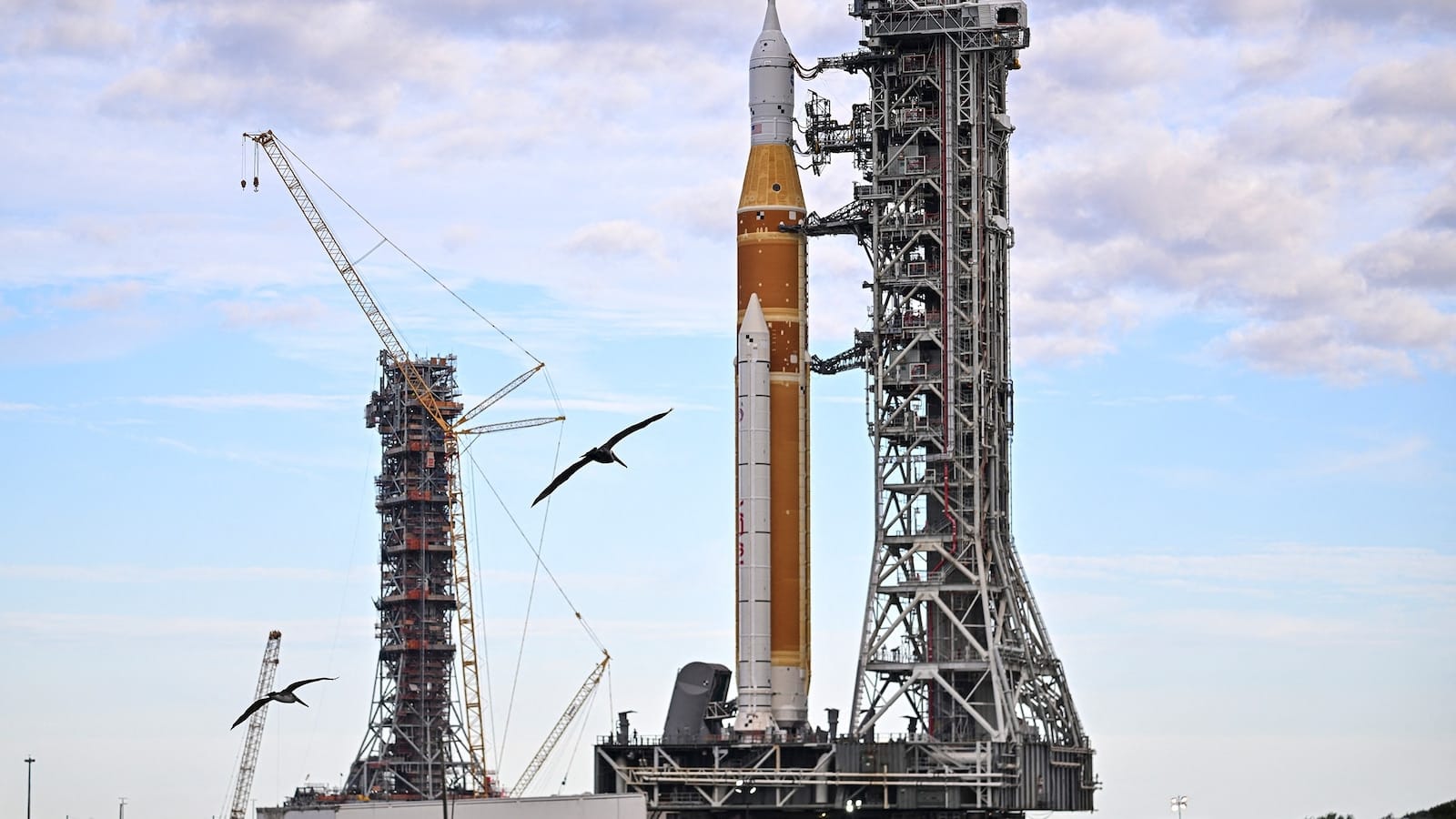
NASA’s Artemis II rocket, the mighty Space Launch System (SLS), has successfully reached its launch pad, marking a pivotal milestone in the mission to send humans around the Moon. This achievement brings humanity closer to its first crewed lunar journey in over five decades, with the mission currently targeted for 2026.
The arrival of the Artemis II stack at the launch complex signals the culmination of extensive preparations and rigorous testing. This mission represents a crucial step in NASA’s broader Artemis program, which aims for a sustainable human presence on the Moon and, eventually, human exploration of Mars.
A New Chapter in Lunar Exploration
For the first time since 1972, the United States is preparing to send humans on a path toward the Moon. The Artemis II mission is designed to take four astronauts on a comprehensive test flight, orbiting the Moon before returning to Earth, validating the spacecraft and its systems with a crew onboard.
This mission will not involve a lunar landing but is an indispensable precursor to future missions that will. It will thoroughly test the Orion spacecraft’s life support systems, communications, and navigation capabilities in the deep-space environment, ensuring the safety and success of subsequent lunar landings.
The Significance of Artemis II
Artemis II follows the highly successful uncrewed Artemis I mission, which extensively tested the SLS rocket and the Orion spacecraft in late 2022. That mission demonstrated the vehicle’s immense power and validated key systems necessary for deep-space travel without risking human lives.
With Artemis II, the focus shifts to human-rated systems and operational procedures, putting astronauts at the forefront of this new era of lunar exploration. Their experiences will provide invaluable data, shaping the future of lunar habitation and space travel far beyond Earth’s immediate vicinity.
The Legacy of Apollo: A Preamble to Artemis
The U.S. remains the only country to have ever sent humans to the Moon, a feat accomplished during the dramatic backdrop of the Cold War. In 1961, amidst intense competition with the Soviet Union, President John F. Kennedy famously challenged the nation to land a man on the Moon and return him safely to Earth before the decade was out.
This bold ambition fueled the Apollo program, a monumental undertaking that pushed the boundaries of human ingenuity and technology. From Apollo 11’s historic first steps in 1969 to Apollo 17’s final mission in December 1972, the program achieved an unparalleled series of human spaceflight triumphs.
The Cold War Space Race and its Aftermath
The space race with the Soviet Union was a defining feature of the mid-20th century, driving rapid advancements in rocketry, computing, and materials science. It showcased national prestige and technological superiority, captivating global audiences with each launch and lunar landing.
After Apollo 17, the focus of human spaceflight shifted from lunar exploration to low Earth orbit, with programs like Skylab, the Space Shuttle, and the International Space Station (ISS). This period emphasized long-duration missions, scientific research in microgravity, and the development of reusable spacecraft technologies.
For over fifty years, the Moon remained an unreachable destination for human explorers. Policy shifts, budget priorities, and the immense technical challenges of deep-space travel contributed to this hiatus. However, the allure of the Moon, with its scientific mysteries and strategic potential, never truly faded.
The Artemis Program: A Grand Vision for Deep Space
The Artemis program represents a renewed national and international commitment to lunar exploration, but with objectives far grander than simply revisiting old landing sites. It aims to establish a sustainable presence on the Moon, utilizing its resources and serving as a proving ground for future missions to Mars.
Artemis II is a crucial bridge between the uncrewed test flights and the ambitious goal of Artemis III: landing humans back on the lunar surface. Subsequent missions will involve building the Lunar Gateway, a small space station orbiting the Moon, which will provide continuous support for lunar surface missions and serve as a waypoint for deep-space travel.
The Space Launch System (SLS): Powering the Future
Central to the Artemis program is the Space Launch System (SLS), NASA’s super heavy-lift rocket, now positioned on the launch pad. The SLS is designed to be the most powerful rocket in the world upon full completion, capable of launching the Orion spacecraft and large payloads to the Moon and beyond.
The immense power of the SLS is comparable to the Saturn V rocket of the Apollo era, yet it incorporates modern advancements in propulsion and avionics. Its core stage, powered by four RS-25 engines, combined with two solid rocket boosters, provides the thrust needed to escape Earth’s gravity and send spacecraft on a translunar injection trajectory.
The Orion Spacecraft: Humanity’s Deep-Space Vessel
Perched atop the SLS is the Orion spacecraft, a state-of-the-art capsule designed for deep-space missions. Orion is built to safely transport astronauts thousands of miles beyond the Moon, providing life support, communication, and navigation systems for journeys lasting several weeks.
The spacecraft consists of a Crew Module, where the astronauts reside, and a European Service Module (ESM), provided by the European Space Agency (ESA). The ESM provides Orion’s propulsion, electrical power, water, oxygen, and thermal control, highlighting the international collaboration essential for modern space exploration.
During Artemis II, the Orion spacecraft will be put through its paces, with the crew manually testing its systems and performing various maneuvers. Its advanced heat shield will also be crucial for the high-speed re-entry into Earth’s atmosphere upon mission completion, ensuring the crew’s safe return.
Rigorous Preparations and Milestones Ahead
The journey to the launch pad for Artemis II is the culmination of years of design, manufacturing, and testing. It involves complex integration procedures, where each component of the rocket and spacecraft is meticulously assembled and verified.
A specific milestone in preparations, such as an update regarding the wet dress rehearsal timeframe, occurred on January 17, underscoring the ongoing rigorous testing and readiness checks. These rehearsals simulate launch day procedures, including fueling the rocket, to ensure all systems and teams are prepared for the actual launch countdown.
Before the 2026 target launch, further critical tests, simulations, and final systems checks will be conducted. The crew — Commander Reid Wiseman, Pilot Victor Glover, Mission Specialist Christina Koch, and Canadian Space Agency astronaut Jeremy Hansen — will undergo extensive training, preparing for every conceivable scenario during their historic mission.
Global Collaboration and Scientific Frontier
While the U.S. leads the Artemis program, international partnerships are integral to its success and the broader future of space exploration. The contribution of the European Space Agency to the Orion spacecraft exemplifies how global collaboration enhances capabilities and shares the immense costs and risks of deep-space endeavors.
Such large-scale missions foster scientific and technological advancements that benefit all of humanity. Innovations in materials science, propulsion, life support, and computing developed for space travel often find practical applications on Earth, improving everyday lives and driving economic growth.
The return to the Moon also opens new frontiers for scientific research. Geologists, astrophysicists, and planetary scientists eagerly anticipate the data and samples that future Artemis missions will retrieve. Studying the Moon’s polar regions, for instance, could reveal crucial information about the solar system’s history and the presence of water ice, a vital resource for future lunar bases and missions to Mars.
Inspiring the Next Generation of Explorers
Beyond the scientific and technological gains, missions like Artemis II hold profound inspirational value. They ignite curiosity in young minds, encouraging students to pursue careers in science, technology, engineering, and mathematics (STEM). The vision of humans returning to the Moon and venturing to Mars serves as a powerful symbol of human potential and the enduring spirit of exploration.
As the Artemis II rocket stands ready on the launch pad, it symbolizes not just a return to a familiar celestial body but a bold leap forward into humanity’s multi-planetary future. It is a testament to perseverance, innovation, and the shared dream of expanding our horizons beyond Earth.