So, We’re Doing This Again? Another Pop Star Tragedy?
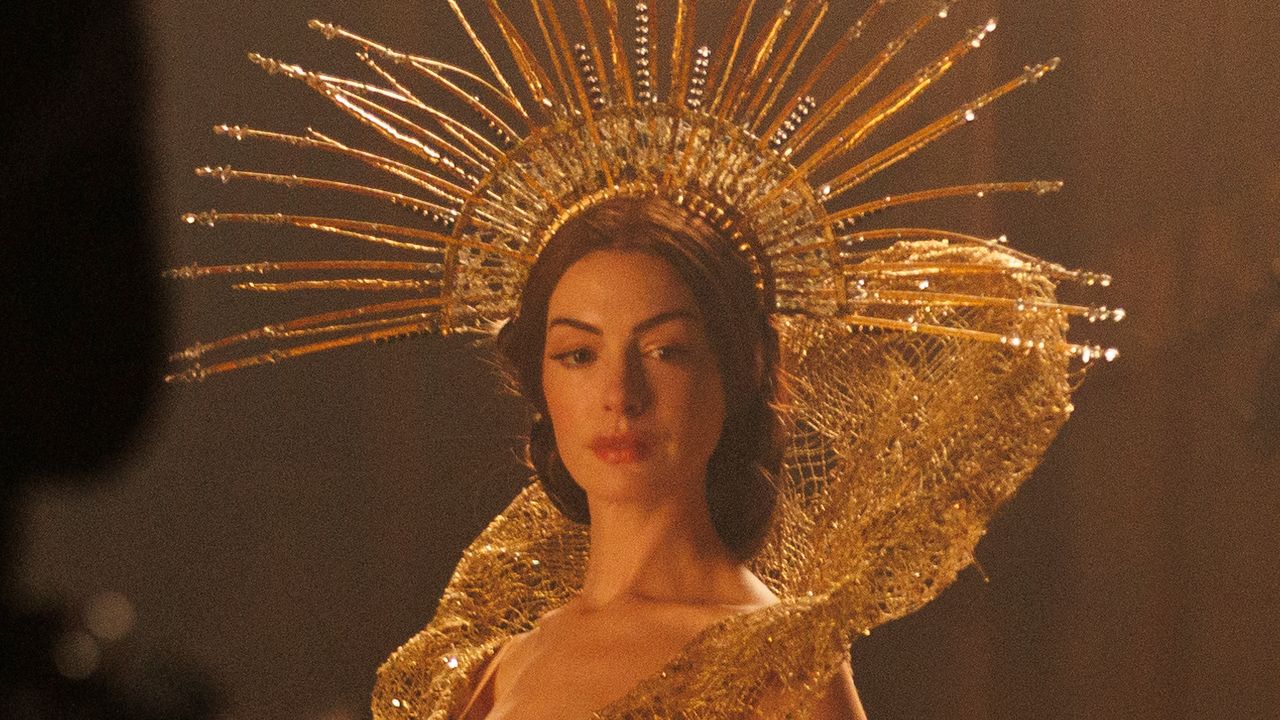
Let’s dispense with the pleasantries. The trailer for David Lowery’s “Mother Mary” has arrived, carried on the wings of A24’s meticulously crafted hype machine, and the immediate reaction is a Pavlovian drool from the cinephile community. Anne Hathaway as a pop icon. Michaela Coel as her creative counterpoint. Music by Jack Antonoff and Charli XCX. It’s a perfect storm of marketable prestige, a checklist of names calibrated to simultaneously trigger Film Twitter, the poptimist blogs, and the fashion glossies. But are we observing the birth of a new cultural artifact, or are we simply witnessing the most sophisticated act of brand synergy in recent memory? The evidence points overwhelmingly to the latter. This isn’t art. It’s an algorithm made flesh.
It’s a product. Plain and simple.
Is This Film Even Necessary?
The core narrative function of the “beleaguered pop star” has been bled dry for decades. We have seen this story in every conceivable permutation, from the tragic rise and fall in “A Star Is Born” (all five versions of it) to the satirical deconstruction in “Vox Lux” and the raw, uncomfortable psychodrama of “Her Smell.” Each iteration claims to reveal some new, profound truth about fame, femininity, and the soul-crushing machinery of the music industry. So the first logical question is not “Will this be good?” but “What is left to say?” David Lowery, a director whose entire brand is built on quiet, meditative, and often glacially paced examinations of time and loss, is now at the helm of a “pop epic.” This isn’t a bold creative leap; it’s a strategic anomaly that demands forensic scrutiny. Is Lowery being used to lend an unearned sense of arthouse legitimacy to what is, at its core, a highly commercial concept? You bet he is. A24 is playing the oldest game in the book: wrapping a chocolate bar in a gold foil wrapper and calling it couture.
Deconstructing The Hathaway Variable
Why Anne Hathaway, and why now? Her career trajectory is a fascinating case study in public perception management. She was America’s sweetheart in “The Princess Diaries,” then a serious Oscar-winning actress in “Les Misérables,” followed by a bizarre period of public backlash—the so-called “Hathahate”—for being perceived as too earnest, too theatrical, too… much. And now? A full-circle return to a role that weaponizes that very theatricality. Placing her in the role of a globally adored pop star is a meta-commentary on her own journey with fame, a calculated move designed to be endlessly dissected in think pieces. It’s brilliant, in a cold, corporate sort of way. We are not meant to see a character named Mother Mary; we are meant to see Anne Hathaway *performing* the idea of a pop star, constantly aware of the actress underneath. It’s a performance insulated from criticism by its own self-awareness. It dares you to call it inauthentic.
That ’90s Hair Isn’t Just Hair, Is It?
No. Of course not. The mention of her “polarizing ‘90s hair trend”—the chunky highlights, the platinum blonde—is not a throwaway detail for a fashion blog. It is a critical piece of the machinery. It is a manufactured signifier. This hairstyle immediately evokes a specific era of pop music: the post-Madonna, pre-Britney wilderness where artifice was everything. It screams constructed identity. It’s a visual shorthand that tells the audience this film is *about* the construction of a pop persona, saving the script the trouble of having to do any heavy lifting. It’s a nostalgic trigger for millennials, the target demographic, and a cheap way to inject a pre-packaged aesthetic into the film’s DNA. This isn’t character development. It is brand positioning. The hair is doing more marketing work than the movie posters.
The A24 Industrial Complex At Work
We must talk about the studio. A24 has cultivated an almost religious following by marketing itself as the antithesis of the Hollywood machine, yet it has become the most effective machine of all. It no longer sells movies; it sells a lifestyle. An A24 film comes with a built-in set of cultural bona fides. Owning their merchandise, posting their trailers, and championing their releases has become a way for consumers to signal their own sophisticated taste. “Mother Mary” appears to be the apotheosis of this strategy. They’ve taken a mainstream genre—the musical—and filtered it through their signature aesthetic of moody lighting and existential dread, with a director who guarantees critical attention.
This is their play for the big leagues, an attempt to produce a pop culture moment on the scale of “Barbie” but with the unimpeachable cool of “Moonlight.” It’s an attempt to have their cake and eat it too, to be both the indie darling and the mainstream kingmaker. It’s an incredibly risky gambit. If it fails, it exposes the formula. It reveals that the A24 magic is not magic at all, but just a very, very clever marketing plan. They are banking on the idea that their brand is now so powerful that it can transform any material, no matter how derivative, into a must-see cultural event. We are the test subjects in this experiment.
And The Music? A Symphony of Predictability.
The choice of Jack Antonoff and Charli XCX to helm the soundtrack is the final, most revealing piece of the puzzle. It’s almost too perfect. Antonoff has become the go-to producer for a very specific brand of introspective, critically acclaimed pop for artists like Taylor Swift, Lorde, and Lana Del Rey. His sound is the sonic equivalent of an A24 film: melancholic, meticulously produced, and catnip for critics. Charli XCX, on the other hand, represents the bleeding edge of hyperpop, a genre that deconstructs and satirizes pop tropes while simultaneously creating perfect pop hooks. Putting them together is not a bold creative choice; it’s the most logical, risk-averse decision they could possibly make. It guarantees a soundtrack that will be praised for being both emotionally resonant (Antonoff) and intellectually clever (Charli XCX). It’s a focus-grouped masterpiece. The music will be algorithmically perfect, engineered to be dissected and lauded, but will it have a soul? The production process suggests not.
The entire “Mother Mary” project, when viewed through a logical, deconstructive lens, ceases to be a film and reveals itself as a meticulously assembled product. It’s a collection of high-performing assets—Hathaway’s meta-narrative, Lowery’s prestige, A24’s brand power, Antonoff’s sonic signature—combined in a laboratory to yield a predictable result: a critically acclaimed, commercially viable cultural moment that feels important without ever having to say anything new. They are simply too seated, too comfortable in their market dominance, to do anything truly dangerous. It will be beautiful, it will be sad, it will be praised. And it will be utterly, completely, and terrifyingly hollow.