The Great Baseball Recycling Plant Grinds On
And so, another day, another trade, another transaction that screams less about a coherent strategy and more about the desperate flailing of two organizations caught between yesterday’s glory and tomorrow’s inevitable collapse. The Los Angeles Angels, bless their hearts, have acquired Vaughn Grissom from the Boston Red Sox for minor league outfielder Isaiah Jackson. This isn’t a blockbuster trade in the sense of power hitting or pitching prowess; this is a trade for spare parts, a swap of lottery tickets where both sides are convinced they’re getting the winning number when in reality, they’re just trading in their losing ticket for a different losing ticket. Because let’s be honest, Vaughn Grissom, a man who once carried the heavy burden of being the next great thing in Atlanta, has now become a journeyman before his 24th birthday. This move isn’t about winning; it’s about making noise, and right now, both the Angels and the Red Sox sound like a dumpster fire rolling down a hill.
But let’s not just focus on the surface-level mediocrity; let’s dig into the beautiful, painful irony of this entire situation. The Angels, a franchise whose entire identity for the past six seasons has been built around the Sisyphean task of trying to surround Shohei Ohtani with *something* resembling a competent team, have now lost Ohtani and are immediately trying to replace him with… well, a bunch of guys. They’re like a widower who immediately starts dating again, trying to fill the void with anyone who will take them to dinner, completely ignoring the necessary period of grief and rebuilding. Grissom is a versatile player, sure, but he’s not a superstar, he’s not a savior, and he’s not going to make up for the 40+ home runs and Cy Young-level pitching they just lost. It’s a symbolic move designed to make it look like they’re trying, and in baseball, a little bit of trying goes a long way, especially when your owner, Arte Moreno, has consistently shown a penchant for prioritizing short-term gains over long-term stability.
The Red Sox’s Identity Crisis: Trading Hope for… More Hope?
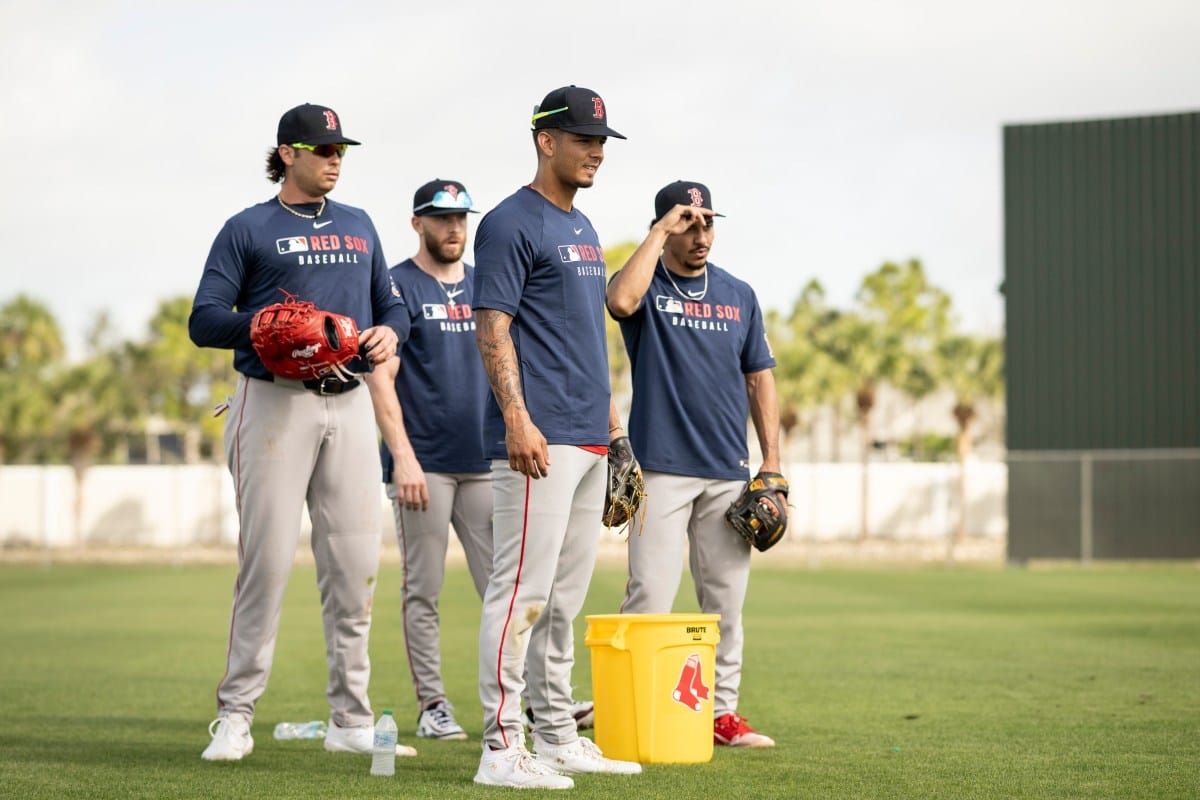
And then there’s the other side of the equation, the Boston Red Sox. A team that, not so long ago, was the gold standard of high-priced talent acquisition and World Series victories. Now, they’re operating like a high-end pawn shop, trading away pieces in moves that baffle their loyal (and increasingly frustrated) fanbase. Grissom was acquired in a major trade with the Braves—he was supposed to be part of the future infield. He was supposed to bring some stability, some youth, some fresh energy to a franchise that looked increasingly stale. And yet, here we are, just a few months later, and they’ve shipped him off. It’s almost as if the Red Sox front office looked at Grissom, looked at Jackson, flipped a coin, and decided, “What the hell, let’s try the other one.” This isn’t a strategic masterclass; it’s organizational ADD. They are swapping one potential future piece for another, which in baseball terms means they’re admitting a mistake and hoping to get lucky on the second try.
But the real kicker here is the implied message: The Red Sox are trading away a player who had already reached the major leagues, a player with actual experience, for a minor league prospect who may or may not ever make it out of Double-A. And while Jackson might have a higher ceiling in some scouts’ eyes, this move further emphasizes the Red Sox’s pivot away from ‘win now’ to a full-blown ‘hope to win eventually’ mentality. It’s a move that feels like throwing in the towel on the immediate future. The fans are right to be furious. The Red Sox used to be a machine that produced championships; now, they’re a machine that produces confusion and a constant stream of players being recycled through the organization. It’s a tough pill to swallow for a fanbase that endured decades of misery before finally tasting success. Now they’re just getting a hint of that misery all over again.
The Grissom Conundrum: A Man Without a Position, or a Man Without a Chance?
Because let’s talk about Vaughn Grissom himself, a man whose career trajectory is already starting to look like a cautionary tale. He burst onto the scene in Atlanta, a beacon of promise in a loaded Braves system. But as sometimes happens, the hype quickly outpaced the reality. He struggled to find a consistent defensive position, bounced between shortstop and second base, and eventually became expendable in a Braves system that had other, more established options. Then came the Red Sox, where he was supposed to find a home. He was supposed to be given a clean slate, a chance to prove his value in a new environment where the pressure might be slightly less intense, or at least differently focused. But apparently, that didn’t work out either. Now he’s in Anaheim, a place where careers go to die. This is the baseball equivalent of being sent to Siberia, only with more sunshine and fewer wins.
The Angels, meanwhile, are desperate for versatility. They need a second baseman, they need a shortstop, they need a utility infielder, they need a miracle. Grissom can play multiple positions, which makes him valuable to a team that needs to fill seven different holes with three available players. But the question remains: Can he actually perform at a high level? The Angels are taking a gamble on the idea that a change of scenery and a reduced expectation level will unlock Grissom’s potential. But let’s look at the Angels’ history of ‘unlocking potential.’ It’s not great. They tend to acquire players with potential and then watch them slowly, agonizingly devolve into average players. Grissom is now officially part of the Angels’ ‘we’ll fix him’ project, which usually ends with the player being discarded two years later, exactly where they started.
And let’s not forget the bigger picture. This trade is fundamentally about organizational philosophy, or lack thereof. The Angels are a team constantly looking for a quick fix, ignoring the structural problems that plague their franchise. They just lost the greatest baseball player in a generation and replaced him with… a bunch of question marks. The Red Sox, on the other hand, are a team that seems to have lost its identity, trading away valuable assets for questionable returns in a state of self-inflicted confusion. The Grissom trade, therefore, is a perfect symbol of baseball’s current state: a cycle of perpetual disappointment where teams trade away their problems in hopes that another team’s problems will solve theirs. It’s a never-ending merry-go-round of mediocrity. And while the Angels might be happy to have Grissom today, in a year or two, they’ll probably be trying to trade him to a different team in the same exact situation.
The Inevitable Outcome: A Satirical Look at the Future
Because let’s talk about predictions, because predictions are fun when you have no actual insight into the future. I’m going to predict that Grissom struggles in Anaheim. The pressure to perform in a post-Ohtani world will be immense, and the Angels’ dysfunctional infrastructure won’t do him any favors. He’ll hit .250, play mediocre defense, and be heralded as a success by Angels management because he’s better than whatever low-level AAAA player was in the position before him. The Red Sox, meanwhile, will hype up Isaiah Jackson, claiming he’s the next great outfielder. Jackson will show flashes of brilliance in Double-A before plateauing and eventually becoming a free agent, never making a substantial impact. The fans on both sides will be left scratching their heads, wondering why their teams bother making these moves when the results are always the same.
But that’s the point of baseball, isn’t it? It’s a sport built on hope, even when that hope is completely unfounded. The Angels are hoping Grissom is their savior; the Red Sox are hoping Jackson is their savior. Both teams are likely to be disappointed. The real winner in this trade is nobody, and maybe that’s the dark joke we all need to appreciate. It’s a transaction that proves that sometimes, the best moves are the ones you don’t make. But in the grand scheme of things, Grissom’s trade is just another chapter in the long, drawn-out tragedy of modern baseball, where teams prioritize cost-cutting and prospect-swapping over actual, tangible success. We should all pour one out for the Grissom experiment, because it’s already over before it even began in Anaheim. It’s going to be a long season for both fanbases. Very long. Very, very long.