The Anatomy of Failure: Algeria’s Penalty Heartbreak as a Microcosm of Deeper Problems
The Inevitability of Collapse
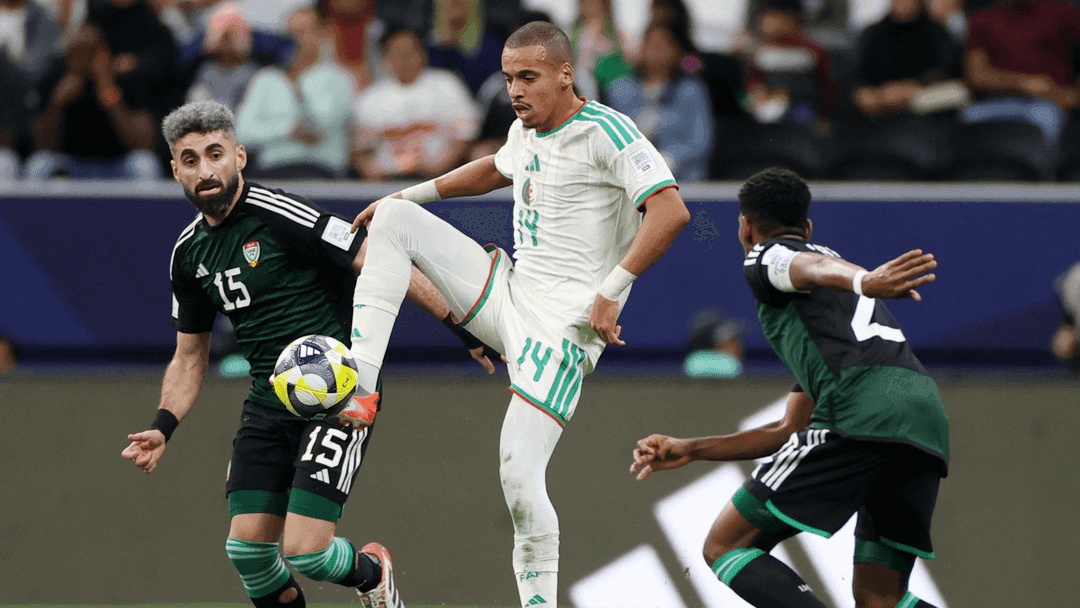
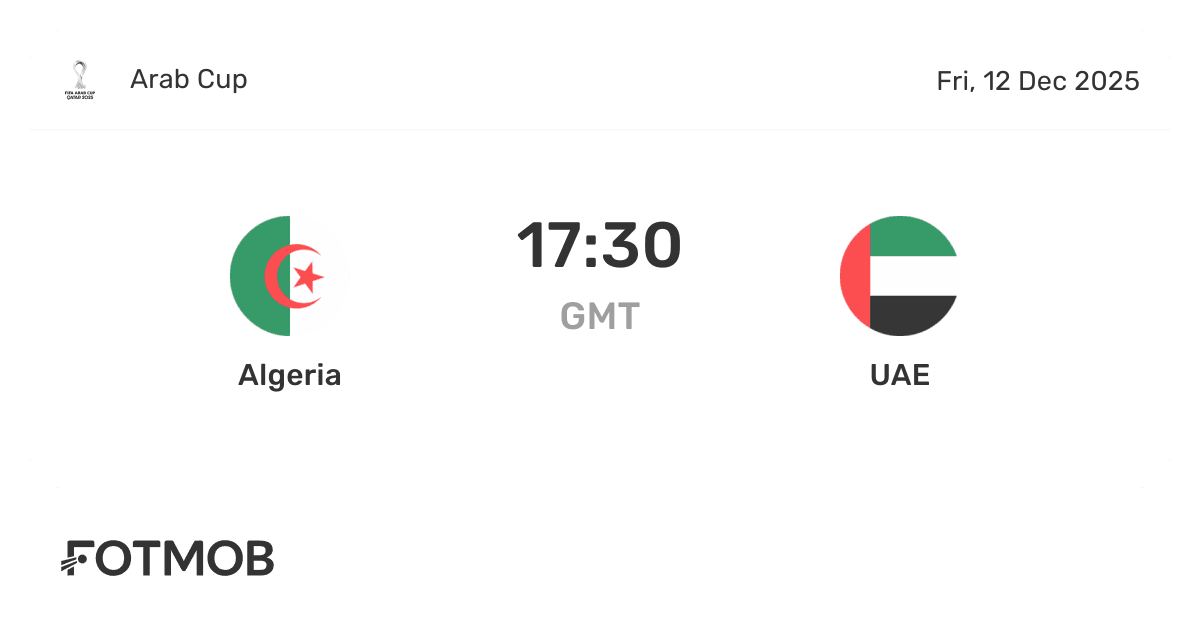
To view Algeria’s quarter-final defeat in the FIFA Arab Cup against the United Arab Emirates as simply a matter of bad luck, a roll of the dice in a cruel penalty shootout, is to ignore the structural and psychological weaknesses that were so starkly exposed when the pressure gauge hit critical mass. This was not a random event; it was an inevitability. When a team built on the volatile foundation of raw emotion and historical identity, the so-called “Desert Foxes” of North African football, encounters an opponent defined by cold, hard precision and strategic investment, the outcome is predictable when the game’s fate hinges entirely on mental fortitude rather than fleeting athletic prowess. This match, far from being a simple sporting contest, served as a diagnostic tool for a nation’s footballing health, revealing a deep-seated pathology that extends far beyond the pitch. Algeria didn’t just lose; it failed to adapt to the modern game where technical precision and psychological resilience trump nostalgic passion every single time. The data, sparse as it is—an extended penalty shootout, a flurry of shots and shots on target that ultimately meant nothing when the final kick mattered most—paints a picture of a team that simply couldn’t handle the heat when the furnace was truly lit.
The penalty shootout itself, particularly one stretching into eight rounds as the results suggest, is less about football and more about psychology under duress. It is a crucible where a team’s collective character is forged or shattered. For Algeria, a team whose identity has historically been defined by its fiery temperament and an almost chaotic brilliance, this pressure proved to be the Achilles’ heel. While fans and pundits often romanticize this intensity, describing it as the very soul of North African football, this match served as a biting counterpoint. That passion, so effective in igniting a crowd and inspiring aggressive play during open-field action, transforms into a liability when calculation, composure, and a sterile lack of emotion are required. This wasn’t a failure of talent; it was a failure of nerve, a mental breakdown exacerbated by an almost fanatical reliance on emotion over process. The UAE, in stark contrast, represents a different kind of footballing culture—one where strategic investment and technical precision are prioritized over historical weight. They are, essentially, the analytical counterpoint to Algeria’s visceral approach. When it came to the ultimate test of nerves, the clinical approach always prevails over the emotional one.
The Mirage of Past Glory
Algeria’s football history is rich with moments of brilliance, from their World Cup appearances to their recent Africa Cup of Nations victories. This legacy, however, has become a heavy cloak rather than a shield, creating a false sense of security and perhaps breeding a certain complacency within the footballing establishment. The “Desert Foxes” are, by name and nature, expected to fight fiercely, to claw back from adversity through sheer force of will. But expectation, when not backed by robust structural development, turns into pressure that crushes the very individuals tasked with fulfilling it. We saw this phenomenon play out in real-time as the penalty shootout wore on, shot after agonizing shot. While the data snippet mentions “8 total shots,” referring perhaps to a single team’s attempts or a statistical summary, the real story lies in the psychological narrative of an extended high-stakes contest. The longer a shootout goes, the less individual skill matters and the more collective psychological training takes precedence. The question isn’t whether Algeria had good penalty takers; the question is whether they had good *mental preparation* for a scenario where failure carried maximum consequences.
The UAE’s victory, from this perspective, represents a deeper trend in international football: the triumph of calculated investment over traditional passion. While Algeria has historically relied on a strong diaspora and homegrown talent, the UAE has strategically poured resources into infrastructure, coaching, and long-term development plans, often prioritizing technical skill over emotional intensity. This quarter-final match, therefore, becomes a symbolic battle between two competing philosophies of football development. The old guard, represented by Algeria, believes that passion, history, and raw talent will eventually win out. The new guard, represented by the UAE, understands that success in modern football requires a scientific approach, where every aspect of performance, including psychological resilience in high-pressure situations, is meticulously engineered. Algeria’s loss suggests that the era of relying solely on “heart” and historical narrative to overcome superior organization and resources is rapidly fading. The world of football, like the world itself, is shifting towards those who prepare clinically rather than those who simply dream big. The data point of “Shots on target 3” versus “Shots on target 4” (for the respective teams in the source data) hints at a level of inefficiency on Algeria’s part; they may have had more shots overall, but the quality of chances, and more importantly, the execution under pressure, clearly favored the UAE when it mattered most.
The Geopolitical Scorecard: A Proxy Battle Beyond Football
We cannot discuss this match without acknowledging the geopolitical subtext, which is often dismissed as irrelevant by casual observers but fundamentally shapes the narratives of these regional tournaments. The FIFA Arab Cup, in particular, serves as a high-stakes arena where regional rivalries play out in athletic form. Algeria and the UAE represent different models of economic and political influence in the Middle East and North Africa. Algeria, often seen as a political heavyweight in the region with a focus on national sovereignty and a powerful military, faces off against the UAE, a financial powerhouse focused on soft power projection and economic diversification through global investment. When these two meet on the football pitch, it’s never just about the game. It is a proxy for national pride and ideological supremacy. The UAE’s victory provides a powerful narrative for their soft power strategy, suggesting that their model of development and investment is superior even in arenas traditionally dominated by North African footballing heavyweights. The emotional impact of this loss in Algiers will undoubtedly resonate far beyond the sports pages, striking at the core of national identity and pride that has been cultivated through football successes in previous decades.
The defeat also exposes significant shortcomings in Algeria’s footballing administration and youth development systems. While Algeria’s national team often benefits from players developed in European academies (a key part of their historical success), this reliance on external development can sometimes mask a lack of investment in robust domestic structures. When the team is forced to compete in a regional tournament, against a side like the UAE that has meticulously cultivated a domestic league and prioritized technical training, the differences become glaringly obvious. This match highlights a critical juncture for Algerian football: either embrace a more modern, data-driven, and structurally sound approach to player development, or risk being left behind by emerging powers that understand the value of long-term strategic investment. Passion alone, as this match proved, is simply not enough to compete at the highest level against a well-oiled machine. The historical rivalry between North African nations (Algeria, Morocco, Egypt) and Gulf nations (UAE, Saudi Arabia, Qatar) is intense, and the results of this tournament will be analyzed not just for sporting implications, but for the broader shifts in regional influence. For Algeria, this loss represents a significant symbolic setback in a battle for regional prestige where football often serves as the most potent weapon of public diplomacy.
The Psychological Autopsy of a Choke
Let’s conduct a forensic analysis of the psychological breakdown, which is the defining characteristic of this entire affair. The term “choke” is often used carelessly, but in this context, it applies perfectly. A team chokes not because of a sudden lack of skill, but because the pressure overwhelms their cognitive processes, leading to errors in execution that are entirely preventable. When we look at the data snippets provided—a high-stakes quarter-final, an extended penalty shootout, the context of a regional rivalry—we see all the ingredients for a high-pressure scenario designed to induce a mental collapse. The question must be asked: did the Algerian team have a mental performance coach? Was there a structured approach to preparing for high-stakes pressure moments, or was the strategy simply to rely on individual talent and hope for the best? The fact that the UAE emerged victorious in a scenario that requires icy nerves suggests that their preparation was superior. They were not just technically better; they were mentally tougher. This match serves as a painful lesson that modern sports require more than just talent; they require a comprehensive approach to mental conditioning. The era of “football as a battle of wills” in the romantic sense is over; it has been replaced by “football as a test of engineered psychological stability.” Algeria failed this test spectacularly, and the consequences will be felt long after the final whistle. The data snippet noting “Penalty-shootout – 1 – 2 – 3 – 4 – 5 – 6 – 7 – 8” further emphasizes the agonizing length and pressure involved in this contest, where every single kick became a moment of existential dread. It was in this extended, high-stakes scenario where Algeria’s passionate foundation finally crumbled under the weight of expectation.
Conclusion: A Turning Point, Not an Anomaly
This defeat in the FIFA Arab Cup quarter-final should be viewed not as an isolated incident, but as a turning point in the trajectory of Algerian football. It signals a critical moment where the traditional model of relying on passion and individual brilliance must yield to a modern framework of strategic investment, technical precision, and psychological resilience. The UAE’s victory is not just a sporting upset; it is a symbolic triumph for a new paradigm in regional football, one where resources and calculation are proving to be more effective than historical identity. The “Desert Foxes” must look inward and recognize that the fire in their bellies is no longer enough to win against opponents who prioritize ice in their veins. The time for romanticizing their footballing style is over; the time for clinical, structural reform has arrived. If Algeria fails to address these fundamental issues, they risk being relegated to a secondary status in a region increasingly dominated by financial powerhouses who treat football not as a game, but as a precise instrument of national strategy. The defeat in the quarter-final, therefore, is a wake-up call to adapt or fade into irrelevance. The “Desert Foxes” lost more than a game; they lost a vital battle in the changing landscape of international sports, regional football.