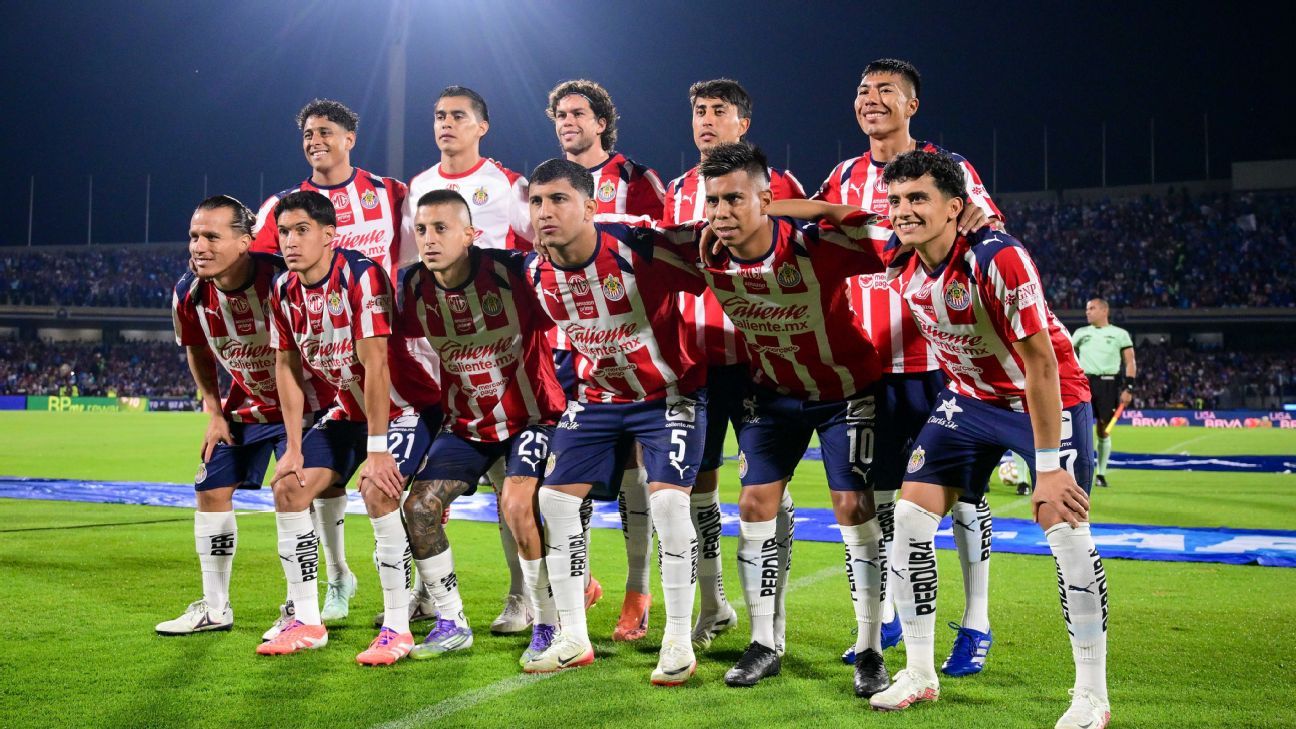
The Trojan Horse in the Stadium
So, Cruz Azul and Chivas played to a tense, scoreless draw. A classic Liguilla scenario. The stage is set for a dramatic second leg in Mexico City, a pressure cooker where legacies are made or, in Cruz Azul’s infamous case, spectacularly unmade. This is the stuff of legend. It’s human drama, raw and unscripted, played out on a field of grass. It’s about passion, history, and the beautiful, agonizing chaos of sport. It is everything.
And then you see it. Tucked into the headlines, presented as a quirky little feature: “The Artificial Intelligence Prediction for Cruz Azul vs Chivas.” It seems harmless, doesn’t it? A bit of fun. A technological curiosity. But it’s not. It’s a symptom of a terminal illness, a digital cancer metastasizing in the heart of the games we love. This isn’t just about one match; it’s about the deliberate, systematic assassination of unpredictability, the very soul of competition. They are building the Matrix and we are cheering them on, asking for the latest odds from the machine. What a joke.
We are being conditioned to accept the algorithm as the ultimate arbiter of truth, to value its cold probability over the fire of human endeavor. The narrative is shifting from “Who wants it more?” to “What does the model say?” This sterile, data-driven forecast (disguised as harmless fun) is a Trojan horse, wheeled into our stadiums and our living rooms, and inside its hollow shell is a future where sport is no longer a contest of will, but a solved equation. A pre-written script performed by athletes for an audience of data consumers. The joy is being surgically extracted.
The Lie of the Algorithm
Let’s be brutally honest about what this “AI prediction” actually is. It’s not some omniscient oracle peering into the future. It’s a glorified calculator, a pattern-recognition machine fed a diet of historical data so vast it would make your head spin. Every pass, every shot, every tackle, every player’s sleep pattern, every fan’s social media post screaming into the void after a loss—it all gets churned into the great digital stomach. The machine digests it all and regurgitates a percentage. A sterile, lifeless number.
And who benefits from this? Certainly not the fans. Not really. The real winners are the monolithic entities that lurk behind the curtain. The betting industry, for one, which thrives on creating an illusion of predictability to entice more and more people to place bets based on what the ‘smart’ machine suggests. It’s the house whispering the winning numbers in your ear, knowing the house always wins. Media conglomerates are another victor, using these predictions to generate endless, low-effort content, driving clicks and engagement by framing every match as a battle against the inevitable. Man versus The Machine. It’s a cheap, manufactured storyline. So cheap.
But the true, dystopian endgame is far more sinister. We’re moving toward a future where this data isn’t just used to predict the game, but to influence it. Imagine a world where a team’s training regimen is so minutely dictated by an AI that it optimizes for a 1-0 victory because that outcome has the highest probability of maximizing streaming viewership for the second leg of a tournament. Think about player substitutions being suggested not by a manager’s gut feeling (that beautiful, flawed human instinct) but by a tablet showing which player combination will most likely appease the fantasy league owners. It sounds like science fiction, but every single piece of that technology exists right now. They’re just waiting for us to accept it as normal. This Cruz Azul vs Chivas prediction is part of the normalization process. It’s a test balloon.
The athletes themselves risk becoming mere puppets, their bodies and careers governed by algorithms that see them not as people but as assets with performance metrics. Their creativity, their flair, their moments of spontaneous genius—the very things that make us fall in love with the game—will be sanded down and optimized away because they are unpredictable variables in an otherwise clean equation. The ‘magic’ of the game will be programmed out of existence.
The Death of Fandom
What happens to us, the fans, in this brave new world? What is the point of watching a game when its most probable outcome has been calculated and presented to you beforehand? The emotional investment, the core of what it means to be a supporter, withers and dies. It’s a slow, creeping death. It starts with checking the AI prediction for a laugh, then checking it for a bit of insight, and before you know it, you’re not watching the game to see what happens, you’re watching to see if the machine was right.
The communal experience of sport is predicated on shared uncertainty. The collective gasp of a near-miss, the explosion of joy after an impossible last-minute goal, the shared, gut-wrenching agony of a defeat snatched from the jaws of victory (a phenomenon Cruz Azul fans know all too well, the famed ‘cruzazuleada’). These are the sacraments of fandom. They bind us together. An algorithm cannot replicate this. It can only dilute it, explaining it away as a statistical anomaly. The machine tells you there was a 3.7% chance of that goal happening. Suddenly, the miracle isn’t a miracle anymore. It’s just an outlier. The magic is dead. Utterly and completely gone.
We are being turned from passionate supporters into passive data analysts. We become slaves to the percentage, our emotional reactions pre-validated or invalidated by a line of code. If your team wins against the odds, the joy is tempered by the ‘shock’ of the result. If they lose as predicted, the pain is replaced with a hollow resignation. “Well, the AI said this would happen.” It’s a tranquilizer for the soul. It robs us of the extreme highs and the devastating lows that make the journey worthwhile. It’s the emotional equivalent of beige.
This isn’t just about soccer, or Cruz Azul, or Chivas. This is the blueprint for the future of all human experience. The arts, relationships, career choices—everything is being fed into the algorithmic maw, which promises to optimize our lives by eliminating risk, chance, and failure. But in doing so, it also eliminates discovery, surprise, and the messy, beautiful, and often painful business of being human. So when you see that headline, that cute little AI prediction, don’t see it as a novelty. See it for what it is: a tombstone being carved for the beautiful game. And we are the ones handing them the chisel.