The Anatomy of a Foreseeable Failure
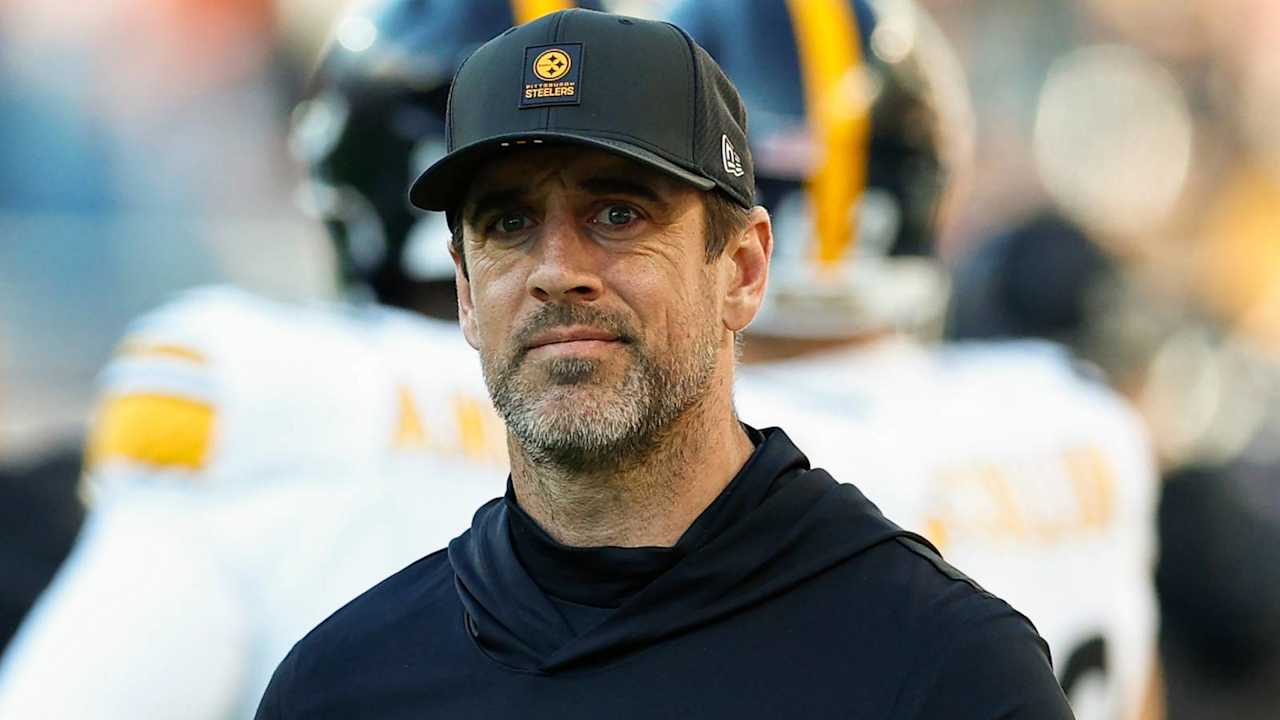
Let us dispense with the romanticism immediately. What transpired on that field was not a testament to the iron will of a warrior quarterback refusing to yield to injury. It was not a heroic last stand. It was, from a purely strategic perspective, an act of profound organizational malpractice, a decision so fundamentally flawed it borders on the absurd. The Pittsburgh Steelers, a franchise that once built its identity on stoic competence and ruthless efficiency, knowingly deployed a compromised, high-value asset into a hostile environment against a superior predator. The result was not just predictable; it was mathematically inevitable. Aaron Rodgers, with multiple fractures in his wrist, was a dead man walking. Joey Bosa was simply the executioner.
A Failure of Asset Management
In any other multi-billion dollar enterprise, the decision to utilize a critical piece of machinery that is demonstrably broken would be grounds for immediate termination of the leadership responsible. An NFL quarterback, particularly one of Rodgers’ stature and salary, is not merely a player; he is the single most valuable asset in the organization. His ability to throw, to grip the ball, to protect himself from a 300-pound lineman—these are the core functions of the asset. The Steelers’ coaching staff and front office, led by Mike Tomlin, looked at an asset with at least three documented points of failure in its primary operating limb and declared it ‘all systems go’. What does that tell you? It speaks not of confidence, but of sheer, unadulterated desperation. It is the gambler’s final, foolish bet, pushing all the chips in on a hand they know is weak, praying for a miracle that the cold laws of physics and biology will not grant. They were not playing to win; they were playing not to lose, a fatal distinction in the unforgiving calculus of the NFL.
This entire spectacle was a desperate gambit to salvage a season that was already circling the drain, propped up by the fading aura of a future Hall of Famer. But a reputation does not reinforce fractured bones. Did they truly believe that the legend of Aaron Rodgers could somehow intimidate a pass rusher like Bosa into not doing his job? The hubris is staggering. This wasn’t a calculated risk. A calculated risk involves weighing potential rewards against plausible negative outcomes. The negative outcome here—aggravated injury and the definitive end of any competitive hope—was not just plausible; it was the most likely scenario by a massive margin. The reward? A slim, fleeting chance at a victory that would have ultimately meant nothing in the grand scheme of a flawed season. They sacrificed the king for a pawn. Terrible strategy.
The Myth of the NFL Ironman
The league, and the media that covers it, loves to perpetuate the myth of the ‘Ironman’—the player who battles through unimaginable pain for the glory of the team. We are fed stories of Ronnie Lott amputating a finger, of Jack Youngblood playing on a broken leg, of Brett Favre’s legendary toughness. These tales are treated as modern epics, foundational myths of football’s gladiator culture. But we must ask a more detached question: what is the strategic value of this narrative? It serves the owners and the league by creating a culture where players are incentivized to sacrifice their long-term health for short-term organizational goals. It is a brilliant piece of psychological conditioning. But it is a trap. Rodgers fell into that trap, and he dragged the Steelers in with him.
A History of Diminishing Returns
Let’s examine the historical precedent. Willis Reed limping onto the court for the Knicks in the 1970 Finals is the gold standard. But that was a different era, a different sport, and a different understanding of kinesiology and long-term trauma. It was a singular moment for a championship. The Steelers were fighting for a mid-season game to maybe, just maybe, limp into a Wild Card spot where they would be summarily executed by a truly elite team. The risk-reward ratio is laughably skewed. More recently, we saw Robert Griffin III, a dynamic young quarterback, destroyed by a coaching staff that allowed him to play on a compromised knee in a playoff game. That single decision effectively ended his career as an elite player. Is that what we call heroism? Or is it a catastrophic failure of duty of care by the organization that holds the player’s contract and, by extension, his future?
Rodgers, at this stage in his career, should know better. His ego, his burning desire to control his own narrative and prove he is still the same player he was a decade ago, clouded his judgment. But the ultimate responsibility lies with the organization. Mike Tomlin is paid not just to coach, but to lead. Leadership, true leadership, sometimes means protecting your most valuable assets from themselves. It means making the unpopular but correct strategic decision to sit a player, absorb the short-term loss, and preserve the possibility of future success. The Steelers failed this basic test of leadership. They chose sentimentality and hope over cold, hard logic. And they paid the price in front of a national audience. The sight of Mason Rudolph trotting onto the field wasn’t just a substitution; it was the waving of a white flag. It was the physical manifestation of a strategy collapsing in on itself.
The Bosa Inevitability and the Future
Joey Bosa did nothing wrong. To frame him as the villain is to misunderstand the ecosystem of the NFL entirely. Bosa is a predator, and his function is to hunt the quarterback. The Steelers painted a giant target on Rodgers’ back by announcing to the world that he was wounded. They might as well have sent a gazelle with a broken leg into a lion’s den. What did they think was going to happen? The Bills’ defensive game plan was surely the simplest in NFL history: attack the left side. Force Rodgers to move. Make him feel pressure on the very limb that was compromised. The sack that took him out was not a moment of bad luck; it was the logical conclusion of a flawed premise. It was cause and effect in its most brutal and elegant form.
A Franchise Adrift
This single event is a microcosm of the current state of the Pittsburgh Steelers. This is a franchise caught between eras. They are clinging to a ‘toughness’ identity that is becoming obsolete in a league increasingly dominated by analytics and sports science. They are terrified of a full rebuild, so they keep patching holes with aging veterans and engaging in wishful thinking. Putting a broken Rodgers on the field is the ultimate symbol of this institutional decay. It’s a sign that the foundational principles of the organization—stability, foresight, and sound judgment—have eroded. They are now just another team, making emotional, short-sighted decisions and hoping for the best. Where do they go from here? Mason Rudolph is not the answer. He is a placeholder, a signal that the season is functionally over. The questions now become much larger. Is Tomlin’s message growing stale? Does the front office have a coherent long-term plan? This one disastrous decision to play Rodgers has peeled back the curtain, and what lies behind it is not pretty. It is an organization that has lost its way.
And for Rodgers? This may be the end. Not just of his season, but of his time as a relevant, starting quarterback. He had a chance to go out on his own terms, perhaps. Instead, he chose to write this pathetic final chapter, one defined not by a heroic stand, but by a predictable, ego-driven defeat. He proved nothing, except that he is mortal and that Father Time, aided by a 280-pound defensive end, is undefeated. This wasn’t a tragedy. It was a reckoning. It was the moment a storied franchise and a legendary quarterback had to face the consequences of their own hubris. The final score of the game is irrelevant. The real result is the confirmation that the Steelers’ season is over, and the Rodgers era is likely over with it. The ledger is now balanced.