CONTEXTUAL ANALYSIS: Neural DSP’s Compact Revolution
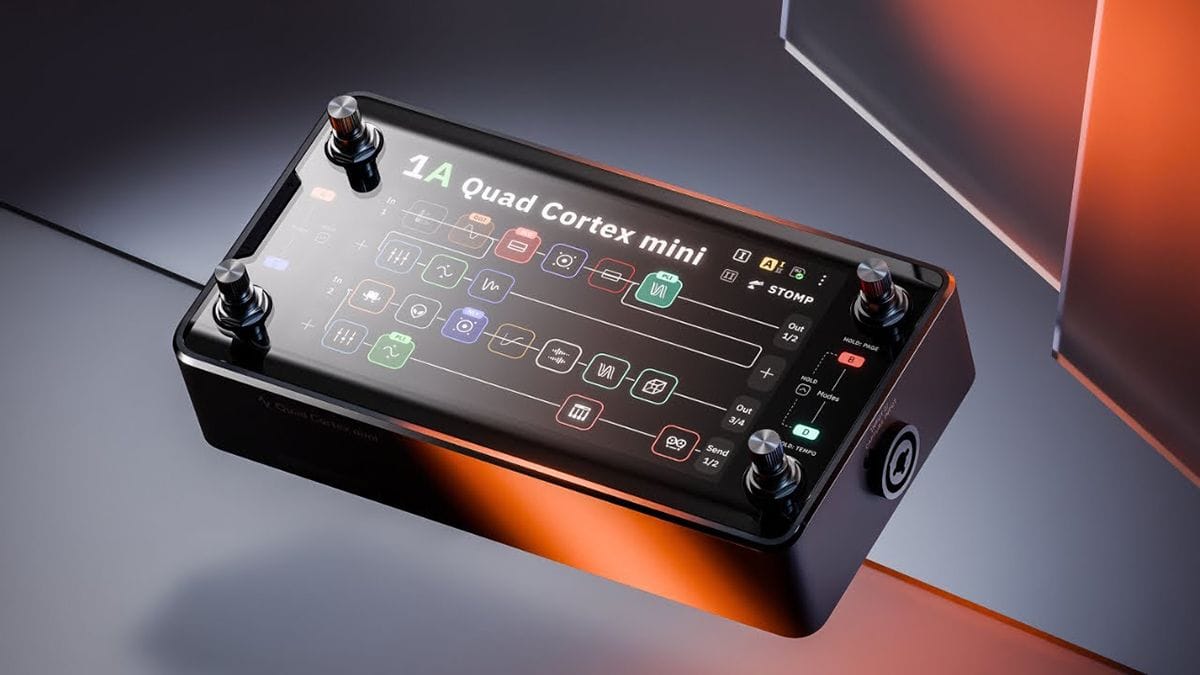
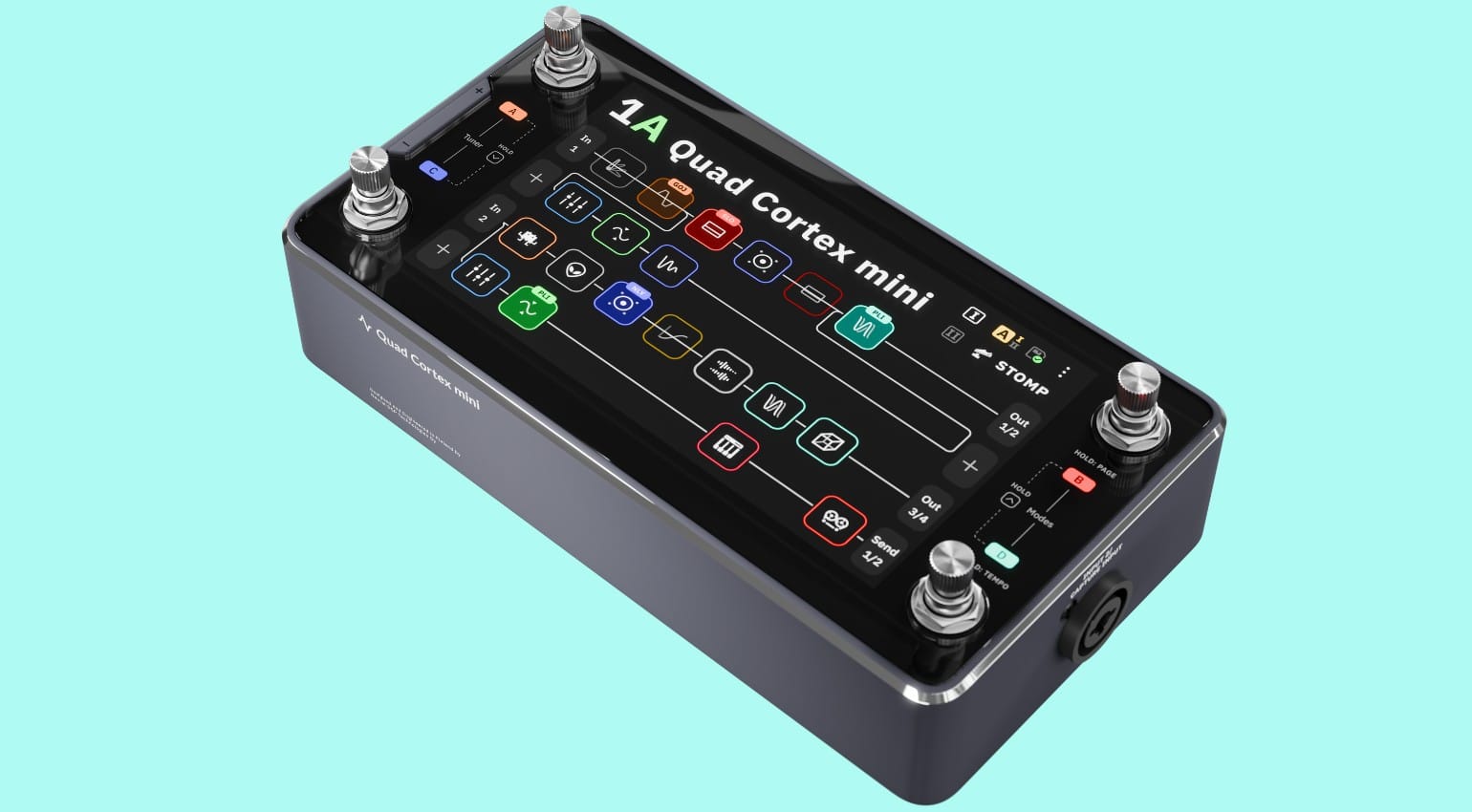
The global music technology landscape is consistently shaped by innovation, and the recent unveiling of the Neural DSP Quad Cortex Mini at NAMM 2026 marks a significant moment. Neural DSP, known for its cutting-edge digital signal processing, has introduced a smaller, more portable version of its highly acclaimed flagship Quad Cortex, promising the ‘full QC experience into its smallest format yet.’ This new device is centered around a 7-inch touchscreen and features what are described as ‘plenty of connections’ and ‘professional sound,’ positioning it as a potent tool for musicians.
This move is encapsulated by Neural DSP’s compelling declaration: ‘A more compact form without compromise,’ and ‘Size shouldn’t dictate what a professional rig is capable of.’ These statements underline a clear strategic intent: to provide the unyielding power and versatility of their top-tier modeler in a footprint designed for modern demands. For an industry increasingly reliant on portability and streamlined setups, this miniaturization without sacrificing performance represents a critical development.
Why This Matters: Reshaping Professional Music Setups
The introduction of the Quad Cortex Mini is more than just another product launch; it reflects and accelerates several pivotal trends within the music industry. Foremost among these is the escalating demand for highly portable yet uncompromising professional-grade gear. Musicians, whether touring artists, studio professionals, or home recording enthusiasts, constantly seek ways to reduce the bulk and complexity of their setups without diminishing sound quality or creative potential.
Traditional guitar rigs, comprising multiple amplifiers, cabinets, and an array of individual effects pedals, are inherently heavy, cumbersome, and expensive to transport. The logistical challenges, costs, and potential for damage associated with moving such equipment across venues or continents are substantial. A device like the Quad Cortex Mini, which promises to consolidate the capabilities of an entire backline into a single, compact unit, directly addresses these pain points. It offers a solution that fits easily into a backpack or carry-on luggage, drastically simplifying travel and setup.
Furthermore, this development underscores the ongoing evolution of digital modeling technology. What began as rudimentary emulations in the late 20th century has matured into sophisticated algorithms capable of faithfully replicating the nuances of classic and modern amplifiers, cabinets, and effects with astonishing accuracy. The promise of the Quad Cortex Mini delivering ‘equally powerful’ performance as its flagship predecessor signifies that the technological barriers to achieving high-fidelity sound in a small form factor are continually being overcome. This empowers artists to access a vast palette of sounds on demand, from pristine cleans to aggressive high-gain tones, all within one device.
The emphasis on ‘professional sound from Neural DSP’ is also crucial. In an era where audio quality standards are higher than ever, musicians cannot afford to compromise on tone. Whether recording in a professional studio, performing on a large stage, or streaming live from home, the sound produced must be impeccable. The Mini’s ability to maintain the high sonic integrity associated with Neural DSP’s larger units ensures that artists can achieve studio-quality results in virtually any environment, further democratizing access to top-tier sound for a broader range of musicians globally.
Broader Trends: Miniaturization, Digitalization, and Accessibility
The unveiling of the Quad Cortex Mini fits seamlessly into several overarching technological and cultural trends that are reshaping not just the music industry, but the broader consumer electronics market. The relentless drive towards miniaturization, seen across smartphones, laptops, and various smart devices, is now profoundly impacting musical instruments and professional audio gear. Consumers expect powerful technology to be increasingly compact, lightweight, and efficient.
Digitalization remains a dominant force in music production. The transition from purely analog workflows to hybrid or fully digital setups has provided unprecedented flexibility, consistency, and recallability. Digital modelers, such as the Quad Cortex Mini, are central to this paradigm shift, offering virtually limitless sonic possibilities without the maintenance, space requirements, or acoustic limitations of traditional analog gear. They enable artists to create complex signal chains, switch between elaborate presets instantly, and integrate seamlessly with digital audio workstations (DAWs).
This focus on compact, powerful digital solutions also aligns with a growing emphasis on sustainability and efficiency. By replacing racks of amplifiers and pedalboards with a single unit, musicians can reduce their carbon footprint, consume less power, and minimize the need for manufacturing and transporting numerous individual components. This aspect, while perhaps not the primary driver for every musician, is an increasingly important consideration for an environmentally conscious global audience.
Furthermore, the Quad Cortex Mini’s design, featuring a 7-inch touchscreen and ‘plenty of connections,’ reflects the contemporary user interface expectations. Intuitive touch-based controls simplify navigation and parameter adjustment, while comprehensive connectivity options ensure compatibility with various external devices, including expression pedals, MIDI controllers, and audio interfaces. This blend of powerful internal processing with user-friendly external controls is essential for modern musical tools.
Looking Ahead: The Future of Performance and Production
The implications of products like the Neural DSP Quad Cortex Mini extend far into the future of music performance and production. For touring musicians, the ability to carry their entire sound rig as a personal item transforms logistics and reduces costs significantly. This freedom allows artists to accept more diverse performance opportunities, potentially expanding their reach and touring circuits.
In the studio, a compact yet powerful modeler offers unparalleled versatility and efficiency. Engineers and producers can quickly audition different amplifier and effect combinations, re-amp tracks with ease, and ensure sonic consistency across multiple projects. The ‘full QC experience’ in a smaller box means that the powerful profiling and capture capabilities of the flagship unit are likely to be available, allowing musicians to digitally replicate their favorite unique gear, further personalizing their sound library.
Neural DSP’s strategic move with the Quad Cortex Mini also solidifies its position as a leading innovator in the music technology sector. By demonstrating that high-end performance can be achieved in a significantly reduced form factor, they set a new benchmark for competitors and raise consumer expectations across the board. Other manufacturers of digital modelers and effects units will undoubtedly feel pressure to innovate further in terms of size, power, and user experience.
Ultimately, the Quad Cortex Mini represents a continued push towards a future where the creative possibilities for musicians are limited only by their imagination, not by the constraints of their equipment. It empowers artists with professional-grade tools that are accessible, adaptable, and robust enough to meet the rigorous demands of any musical endeavor, heralding an era of even greater sonic freedom and innovation.